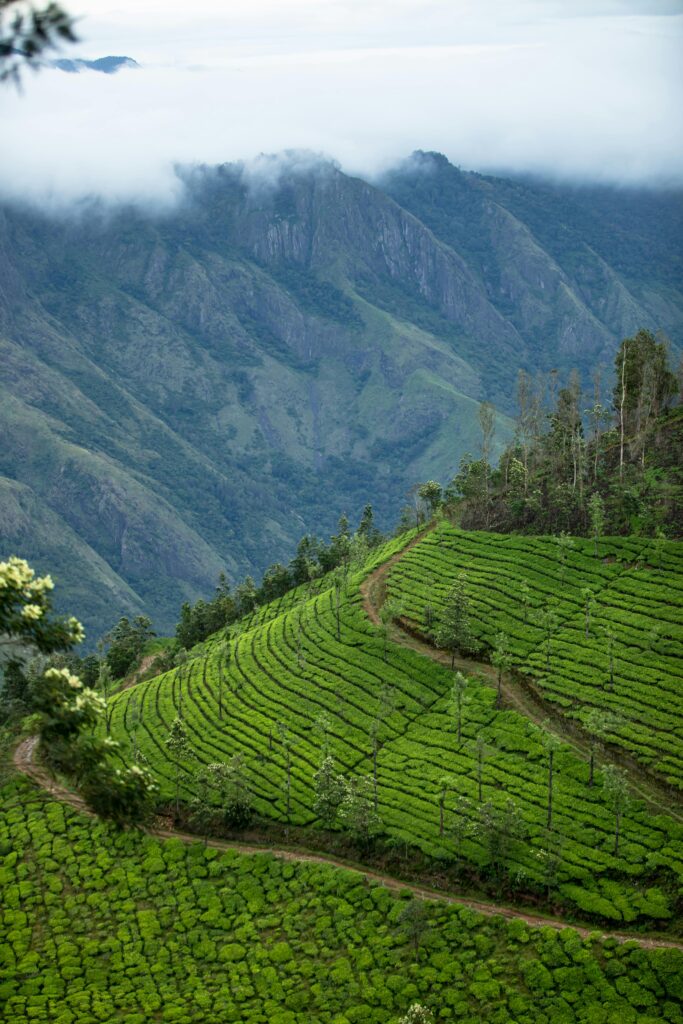
Son La: Moc Chau Tea and Matcha Claims
Son La includes the tea hills of Moc Chau. Explore the documented tea landscape and why it does not alone establish local matcha production.Definition of Son La
Son La is a province in northwestern Vietnam that includes the tea-growing Moc Chau Plateau. Reports document tea cultivation and tea tourism there, but those activities do not by themselves establish shade-grown tencha production, a matcha-specific elevation range or a uniform flavor for provincial teas.
Learn more
A province and a plateau
Vietnam News Agency reporting locates Moc Chau Plateau within Son La Province and describes its tea hills as an agricultural landscape and visitor destination. The plateau provides a specific geographical reference within a mountainous province that contains many different localities. A provincial name and a specific growing locality answer different questions about a tea.
Tea cultivation is directly documented
VietnamPlus describes picking tea buds, work with harvested leaves and the role of cultivation in local livelihoods. It also connects the tea hills with cultural experiences, local cuisine and visits to the plateau. These are concrete aspects of the tea economy. A photograph or account of morning picking establishes a harvesting activity, not that all leaves are destined for matcha or picked on one universal schedule.
Where the matcha inference stops
The account of tea at Moc Chau mentions stages including withering, drying and roasting, but does not identify a complete tencha route or a named matcha production line. It would be misleading to insert a generic Japanese recipe and then describe it as locally verified. Equally, these sources do not prove that no producer in Son La can make matcha. They establish a sourcing limit, not a national or provincial exclusion.
Elevation is not a product certificate
A mountain or plateau setting does not document controlled pre-harvest cover. Mist is not a shading record, and a height above sea level does not establish amino-acid content or sweetness. The cited sources do not support a matcha-specific limit of 1,800 metres. They also do not verify a province-wide organic status, fertilizer ratio, export share or one named company’s output. Those details should be obtained at the farm, company or lot level, not invented from scenery.
What makes a powder matcha
The Japan Matcha Association describes matcha as powdered tencha. Tea leaves are cultivated under shade, steamed and dried without rolling before milling. This distinguishes the manufacturing route from simply grinding an ordinary leaf tea. It is a general processing reference, not evidence that every farm in the place named here uses that method. The local sources above must establish their own production claims; the process definition cannot fill gaps in a regional report.
Reading the origin on a package
Separate the place where leaves were grown from the locations of processing, milling, packing and sale. Ask for a named producer, the actual leaf origin, the tea category before milling and the harvest or lot information. Where an organic claim is made, request the current certificate and its operator and product scope. A location name, scenic field or retailer address is not a substitute for these records.
Comparing the actual tea
Use product-specific information when comparing taste, color and value. A broad climate description cannot establish a batch’s amino-acid content, sweetness or absence of astringency. Compare named teas prepared in similar ways and keep sensory observations attached to those products. This lets documented regional history remain useful without turning it into an unsupported promise about every powder sold under the place name.
Sources
- Moc Chau tea hills – a captivating destination — Vietnam News Agency / VietnamPlus
- Enjoying tea on Moc Chau Plateau — Vietnam News Agency / VietnamPlus
- What is MATCHA — Japan Matcha Association
Sources and references

Accessed: 2026-09-08
Language: en
Moc Chau Plateau within Son La Province; tea hills as agricultural and tourism assets, not matcha process evidence.
Accessed: 2026-09-08
Language: en
Tea cultivation, hand-picking, leaf processing and livelihoods; no complete tencha process described.
Accessed: 2026-09-08
Language: en
General processing only: shaded leaves steamed and dried without rolling, then milled; matcha is powdered tencha. Not used for local production, health or historical origin claims.

Emilie Schol
Founder of Best MatchaFrequently asked questions
Here are some frequently asked questions and answers.Does Son La grow tea?
Does Son La grow tea?
Yes. Vietnam News Agency reports document Moc Chau tea cultivation and tea hills within Son La.
Do those reports prove matcha production?
Do those reports prove matcha production?
No. They do not identify a named local producer with a complete tencha protocol.
Does that mean Son La cannot make matcha?
Does that mean Son La cannot make matcha?
No. It is a limit of the cited evidence, not proof of absence.
Does altitude guarantee sweeter matcha?
Does altitude guarantee sweeter matcha?
No. Geography alone does not establish a finished product's taste or processing method.