Hadong: Traditional Tea Farming and Matcha Context
Hadong’s recognized tea heritage includes Hwagae mountain fields and hand roasting. Learn why that history does not certify a matcha grade.Definition of Hadong
Hadong is a county in South Korea’s South Gyeongsang Province, associated with traditional tea farming in Hwagae. FAO recognizes that agricultural system’s heritage, not a matcha grade. Its mountain fields and hand-roasted teas should be distinguished from the specific cultivation and processing required for tencha-based powder.
1 term related to Hadong
Learn more
Hadong’s recognized tea landscape
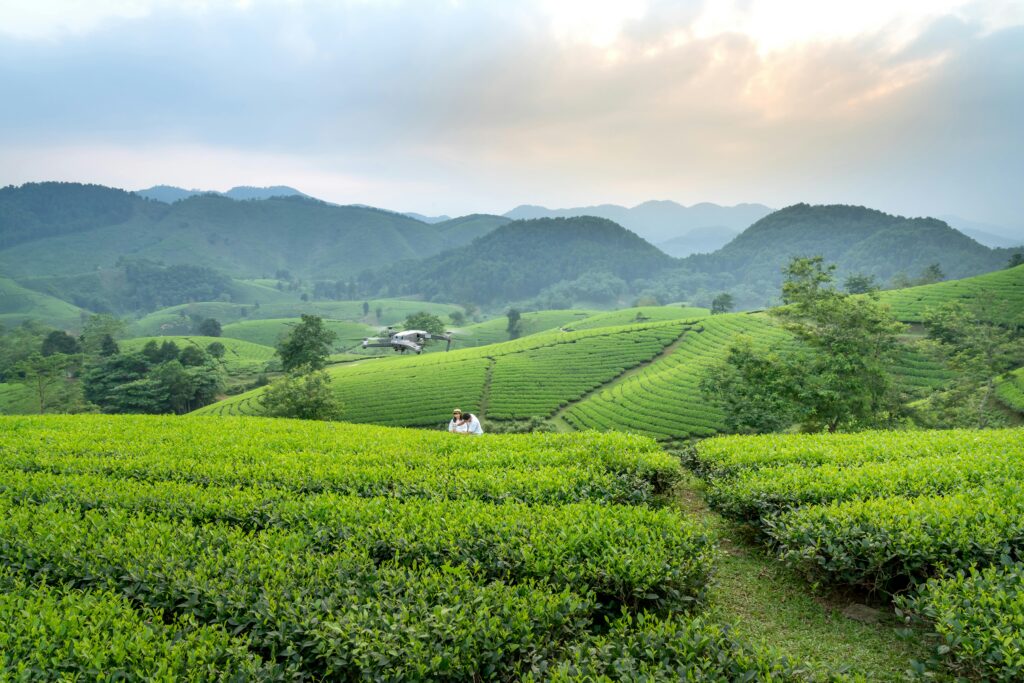
Hadong is a county in South Gyeongsang Province, South Korea. Its tea heritage is closely associated with Hwagae-myeon, where fields occupy rocky mountain settings near Jiri Mountain. FAO’s official profile recognizes the Traditional Hadong Tea Agrosystem in Hwagae-myeon as a Globally Important Agricultural Heritage System, designated in 2017.
The location in the designation matters. Details about Hwagae’s steep land or farming households should not automatically be presented as measurements for the whole county. The recognition concerns the relationship between farming, livelihoods, traditional knowledge and biodiversity. It is not an organic certificate or a grade assigned to a retail matcha.
Practices that the source actually describes
FAO describes gaengsin, the shaping or pruning of tea trees, and pulbibae, traditional weed and soil management involving hand work and organic material. It also records the spreading of pruning by-products in tea fields. These details give substance to the phrase traditional cultivation rather than leaving it as a vague claim of natural purity.
The profile describes picking budding leaves by hand and roasting tea in iron pots. Tea knowledge is transmitted within families and through monastic traditions. This does not mean the plants receive no management, or that every Hadong business uses an identical method. Preserving a living tradition can involve adaptation; it need not mean that all techniques have stayed fixed for 1,200 years.
Dating the origin account
Hadong County’s history page quotes the Samguksagi account of an envoy returning from Tang China with tea seeds in 828 and a royal order to plant them at Jiri Mountain. It also notes that tea was known in Silla before that event. The careful wording is therefore a recorded planting tradition, not an assertion that tea first existed in Korea in 828.
The county history also recounts Hwagae tea supplied as tribute and its place in poetry and Buddhist tea culture. These accounts establish cultural importance. They do not measure today’s matcha output, prove that every current bush descends directly from one planting, or establish a single modern sensory profile.
How Hadong tea relates to matcha
The traditional iron-pot-roasted leaf tea described by FAO should not be relabeled matcha merely because it can be ground. The Japan Matcha Association explains a tencha process involving shade cultivation, steaming and drying without rolling before milling. Those are product-making steps, not consequences of a heritage designation.
For a Hadong powder, ask the producer about leaf origin and manufacture, including any deliberate shading. Mountain mist is not a substitute for a stated covering regime. Compare the actual sample for aroma, texture and astringency instead of assuming that rocky fields make a powder smoother or better than mechanized tea. Hadong’s documented value lies in its agricultural and cultural system; the quality and identity of a particular powder need their own evidence.
Sources and references


Accessed: 2026-09-08
Language: en
Hwagae-myeon within Hadong; GIAHS designation in 2017; rocky mountain fields, biodiversity, gaengsin, pulbibae, hand picking and iron-pot roasting. Statistical figures on this undated profile are not used.
Accessed: 2026-09-08
Language: en
Local history quotes Samguksagi on tea seeds planted at Jiri Mountain in 828; tea was known earlier; later Hwagae tea tribute and monastic literary traditions.
Accessed: 2026-09-08
Language: en
Matcha process only: shaded leaves, steaming, drying without rolling, and milling tencha; not its speculative history or health claims.

Emilie Schol
Founder of Best MatchaFrequently asked questions
Here are some frequently asked questions and answers.What practices does FAO describe in Hadong’s tea system?
What practices does FAO describe in Hadong’s tea system?
Its Hwagae profile describes pruning or shaping, traditional weed and soil management, hand picking and iron-pot roasting, alongside cultural knowledge and biodiversity.
Is hand-roasted Hadong tea automatically matcha when ground?
Is hand-roasted Hadong tea automatically matcha when ground?
No. Grinding changes its form but does not establish the shaded, steamed, unrolled tencha process. A powder’s actual method needs separate documentation.