

Kenko Organic Ceremonial Grade Matcha

Kenko Organic Ceremonial Grade Matcha is USDA certified organic and grown in Kagoshima, with delicate sweetness, grassy notes, and light astringency.
  • Subtotal

    {{ currencyFormat( pricing_summary.total_amount ) }}

USDA certified organic Kagoshima matcha for whisked tea

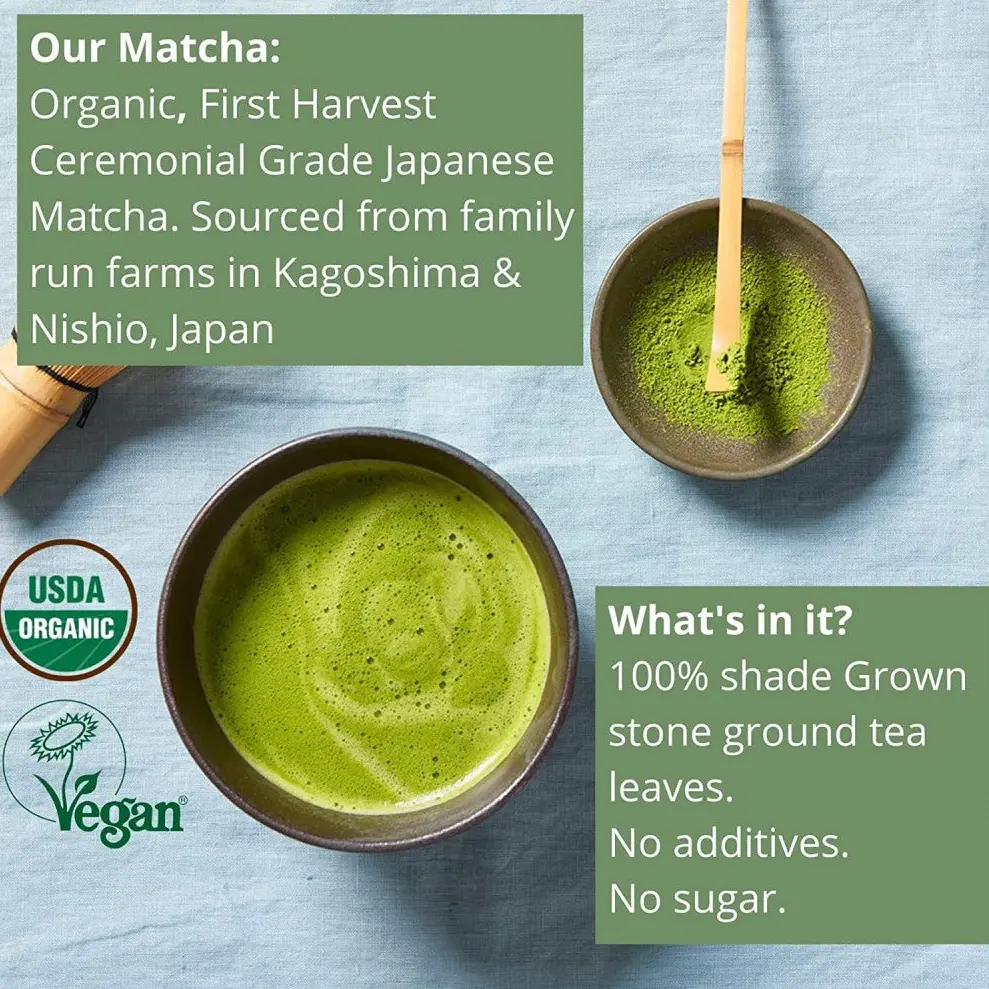
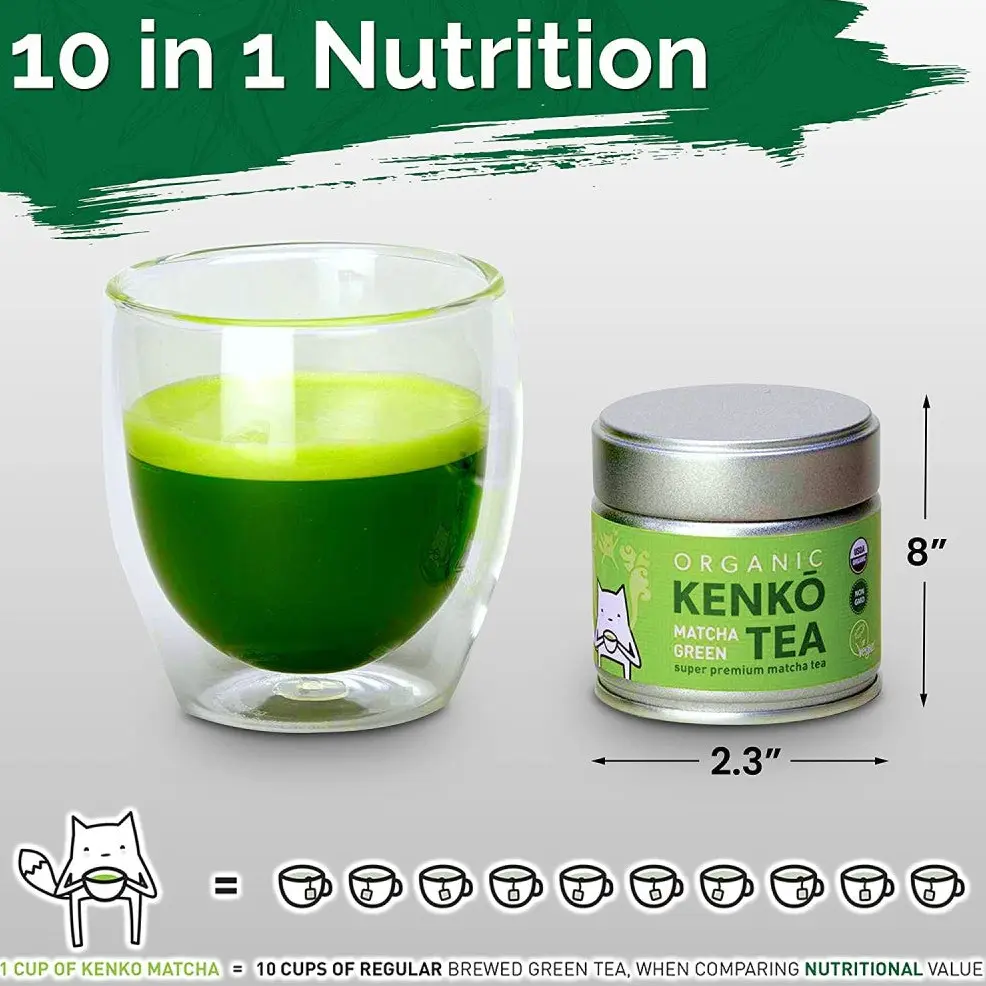
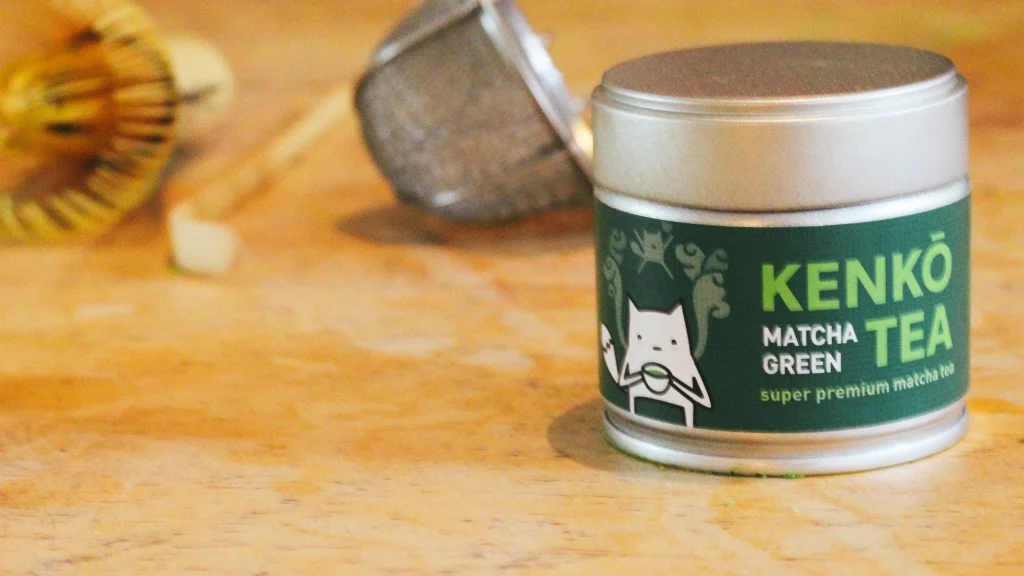
Kenko Organic Ceremonial Grade Matcha is a USDA certified organic matcha powder grown in the Kagoshima region of southern Japan. The 1.06 oz product combines an intense jade-green color with delicate sweetness, grassy overtones, and very light astringency. When whisked, it produces a creamy froth.

How does this Kagoshima matcha taste?

The flavor profile balances gentle sweetness with grassy notes and restrained astringency. Its very light astringency keeps bitterness from dominating the stated profile, while the creamy froth adds body to the prepared tea. The powder contains L-theanine, although the product details do not specify an amount per serving.

  • Color: Intense jade green
  • Taste: Delicate sweetness and grassy overtones
  • Astringency: Very light
  • Prepared texture: Creamy froth when whisked
  • Grade: Ceremonial grade

Where is Kenko Organic Ceremonial Grade Matcha grown?

This matcha is grown in Kagoshima, a region in southern Japan. It is USDA certified organic and presented as a 100% organic version of Kenko Premium Ceremonial Grade Matcha. The product is also identified as non-GMO, gluten-free, and dairy-free.

Testing covers heavy metals, pesticides, and radiation. This testing statement identifies the substances covered but does not provide numerical results or testing thresholds.

What preparation and serving style suits it?

The powder is intended to be whisked into tea, producing a creamy layer of froth. Its suggested serving occasions include a morning cup or an afternoon treat. The product details do not specify a water temperature, powder-to-water ratio, whisking time, or serving yield, so those variables are not prescribed here.

Which catalog formats can buyers choose?

The named product size is 1.06 oz. Best Matcha lists two purchase formats: 1 Tin and 3 Tins. Both retain the same organic ceremonial-grade matcha profile, Kagoshima provenance, and whisked preparation style. Select the format that matches the desired quantity before continuing to the merchant.

Reviews

Reviews on Kenko Organic Ceremonial Grade Matcha

Find below the taste profile of this product based on reviews found on Kenko Tea’s website.
Learn more about how Best Matcha generate matcha taste profiles
This review has been generated by Best Matcha sensory profiling system, and represent the reviews aggregated below.
Color Vibrancy
8 review details
  1. I retain vibrant green but do not endorse the inference that colour authenticates ceremonial grade. Color Vibrancy: Vibrant. “a beautiful color of vibrant green” — Karen (2018-09-25).Karen — 2018-09-25
  2. For cold-water preparation, I read the stated gain in vibrancy without promoting it to an exceptional absolute level. Color Vibrancy: Vibrant. “so much greener and more vibrant than others” — J16 (2016-03-27).J16 — 2016-03-27
  3. I use the direct bright-green observation and disregard price and repurchase frequency. Color Vibrancy: Vibrant. “bright green color” — Ket4ce (2019-05-01).Ket4ce — 2019-05-01
  4. I interpret super bright green as exceptional brightness, independent of the quality claim. Color Vibrancy: Very vibrant. “It’s super bright green” — Trevor (2019-07-20).Trevor — 2019-07-20
  5. At two teaspoons per half cup of hot water without milk, I read a vivid, lustrous green. Color Vibrancy: Vibrant. “The color remained a vibrant & lustrous green.” — anntieem (2016-08-08).anntieem — 2016-08-08
  6. I use vibrant green for colour rather than the separate froth and taste observations. Color Vibrancy: Vibrant. “Beautiful vibrant green!” — RZ (2018-06-26).RZ — 2018-06-26
  7. For the iced-tea use, I retain the clear bright-green description. Color Vibrancy: Vibrant. “beautiful bright green” — Shepherdess (2017-02-15).Shepherdess — 2017-02-15
  8. I judge appearance from vibrant emerald green, not the elongated smooth-taste praise. Color Vibrancy: Vibrant. “Vibrant, emerald green” — shellee rae (2017-12-12).shellee rae — 2017-12-12
4.1(8 reviews)
Bitterness
8 review details
  1. I read a little bitter as a mild intensity despite the reviewer enjoying it. Bitterness: Mild. “Still a little bitter” — J. Rhodes (2018-04-13).J. Rhodes — 2018-04-13
  2. I distinguish disliking bitterness from reporting a particularly strong intensity. Bitterness: Moderate. “it has a bitterness to it which I didn't like.” — Angie Marakas (2018-07-16).Angie Marakas — 2018-07-16
  3. I preserve the non-bitter taste report, including plain preparation, without letting clumps change bitterness. Bitterness: Minimal. “a smooth non-bitter taste” — Moonpie (2019-02-28).Moonpie — 2019-02-28
  4. After allowing boiled water to cool, the reviewer still finds a little bitterness, which I keep as mild. Bitterness: Mild. “it was still a bit bitter” — Eric (2016-03-28).Eric — 2016-03-28
  5. I use never bitter as an explicit minimal-intensity statement rather than generic approval. Bitterness: Minimal. “never bitter” — Kristin N. (2019-01-26).Kristin N. — 2019-01-26
  6. I retain the slight bitterness in the reviewer’s carefully prepared daily cups. Bitterness: Mild. “slightly bitter” — R. (2017-12-15).R. — 2017-12-15
  7. An explicit absence of bitter taste supports my Minimal reading without using sweetness as a proxy. “No bitter taste at all.” — Amazonian, 2019-03-15.Amazonian — 2019-03-15
  8. The direct no-bitterness statement supports my Minimal assessment without endorsing the seller’s purity assurances. “there was no bitterness” — Rachel Pedeaux, 2016-07-21.Rachel Pedeaux — 2016-07-21
1.6(8 reviews)
Smoothness
7 review details
  1. I use persistent clumps despite repeated whisking as the physical texture evidence. Smoothness: Gritty. “this was by far the most clumpy matcha I've ever had. No matter how much I wisked it there were always clumps left over.” — Lydia (2019-03-06).Lydia — 2019-03-06
  2. I attribute gritty texture to Kenko and do not borrow the comparison powder’s smooth creaminess. Smoothness: Gritty. “has a very grassy taste & gritty texture” — Gene Hahn (2018-05-04).Gene Hahn — 2018-05-04
  3. I read substantial clumping of Kenko, while noting that the preparation method is unstated. Smoothness: Gritty. “It's very clumpy” — Joseph s (2019-01-30).Joseph s — 2019-01-30
  4. I preserve almost velvety as a qualification instead of treating it as fully silky. Smoothness: Smooth. “Smooth, almost velvety texture and taste” — Kristin N. (2019-01-26).Kristin N. — 2019-01-26
  5. I retain the preparation condition: no clumping after appropriate sifting and whisking. Smoothness: Smooth. “no clumping when sifted and whisked appropriately” — Michael Lucas (2018-06-28).Michael Lucas — 2018-06-28
  6. I read the silk comparison and creaminess as an explicit physical texture description. Smoothness: Silky. “Smooth as silk and creamy.” — Walker (2017-09-18).Walker — 2017-09-18
  7. I base the severe texture rating on numerous persistent clumps after two attempts to break them up. Smoothness: Gritty. “Even after a lot of whisking and a work around with the bamboo scoop, I still have a lot of clumps left at the bottom of my cup” — Allison Todd (2016-06-17).Allison Todd — 2016-06-17
2.4(7 reviews)
Frothability
8 review details
  1. I use the stated successful froth without inferring exceptional ease or stability. Frothability: Easy. “I get a nice froth” — J. Rhodes (2018-04-13).J. Rhodes — 2018-04-13
  2. I retain a successful thick froth but lower the former maximum because ease and stability are not established. Frothability: Easy. “produces a thick froth” — Trevor (2019-07-20).Trevor — 2019-07-20
  3. Whisking produces the reported frothy cup, which I retain as Easy frothability rather than use the price comparison. “whisks into a nice, frothy cup” — Dan in NC, 2018-02-22.Dan in NC — 2018-02-22
  4. In the rice-milk context, I read good frothing but not enough detail for the maximum level. Frothability: Easy. “it froths amazingly” — Olga Chausovsky (2019-08-02).Olga Chausovsky — 2019-08-02
  5. Explicit ease of obtaining froth supports my Easy classification; awesome alone would not establish it. “it is easy to get the awesome froth” — Ana Gutierrez, 2017-01-29.Ana Gutierrez — 2017-01-29
  6. I assess the nice frothing result and keep sifting separate from foam production. Frothability: Easy. “frothed up nicely” — Julie Moran (2017-11-08).Julie Moran — 2017-11-08
  7. Whipped froth is the preparation evidence I retain at Easy, separate from the smoother-taste comparison. “Whips a nice froth.” — LoveDogs, 2018-02-23.LoveDogs — 2018-02-23
  8. With sifted powder, five ounces of water and a kitchen whisk, I use the few-second frothing time. Frothability: Easy. “It only took a few seconds for it to froth.” — Ariel101 (2019-03-09).Ariel101 — 2019-03-09
4.0(8 reviews)

Frequently asked questions

USDA certified organic Kagoshima matcha for whisked tea Here are some frequently asked questions and answers.

Is Kenko Organic Ceremonial Grade Matcha USDA certified organic?

Yes. Kenko Organic Ceremonial Grade Matcha is USDA certified organic and presented as 100% organic.

Where is this Kenko matcha grown?

It is grown in the Kagoshima region of southern Japan.

What does Kenko Organic Ceremonial Grade Matcha taste like?

It has delicate sweetness, grassy overtones, and very light astringency. The prepared tea develops a creamy froth when whisked.

How is this ceremonial-grade matcha prepared?

Whisk the powder to produce a creamy froth. The product details do not specify a water temperature, powder ratio, or whisking time.

When is this matcha intended to be served?

It is intended for a morning cup or an afternoon treat.

Which purchase formats are available?

The catalog lists 1 Tin and 3 Tins as the available formats.

Is this matcha non-GMO gluten-free and dairy-free?

Yes. The product is identified as non-GMO, gluten-free, and dairy-free.

What substances is this matcha tested for?

Testing covers heavy metals, pesticides, and radiation. Numerical results and testing thresholds are not specified.