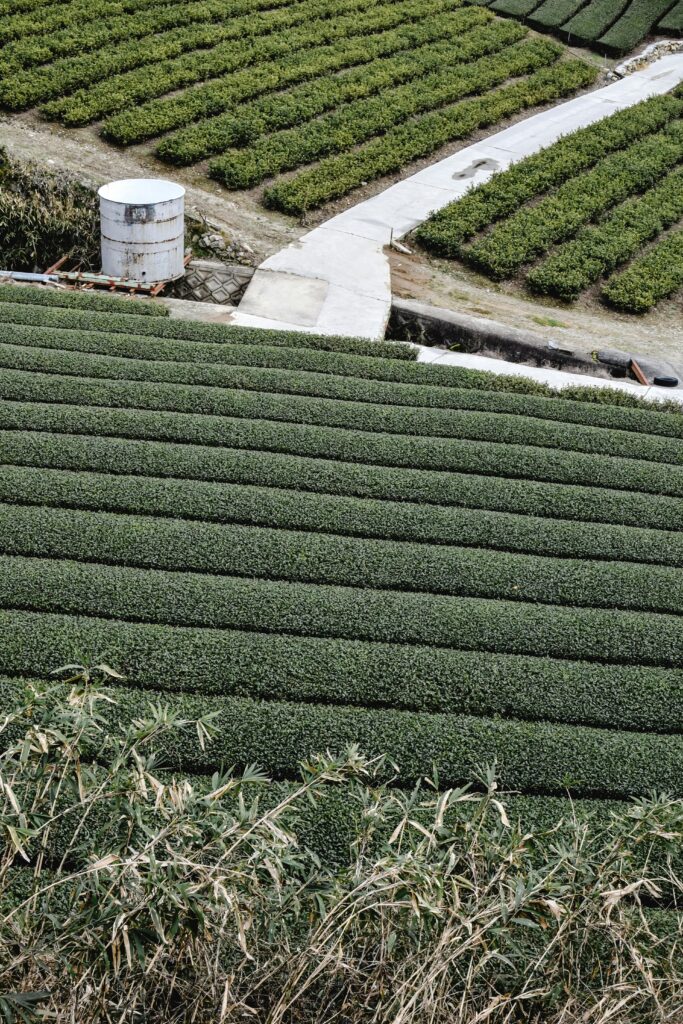
Ōishita-en: A Covered Tea Garden
Ōishita-en means a covered tea garden. Distinguish the garden from shade cultivation, traditional materials, hand-picking, and matcha processing.Definition of Ōishita-en
Ōishita-en is a covered tea garden where growing shoots are shaded before harvest. The term names the garden, while oishita saibai refers to the cultivation practice. Such gardens supply shaded teas, including tencha for matcha, but the name does not guarantee traditional materials, hand-picking, or a particular quality grade.
Learn more
A garden, rather than a synonym for a method
Ōishita-en (覆下園) means a covered tea garden. The related expression oishita saibai refers to covered cultivation: growing tea shoots under shading material before picking. The garden is the place; cultivation is the practice carried out there.
The Japan Tea Central Association uses 覆下園 in its description of the covered gardens supplying gyokuro and 覆下茶園 in its explanation of tencha. Its terminology also allows newer materials and simpler covering methods. A covered garden therefore need not use only a historical straw-and-reed structure.
What happens under the cover
Kyoto Prefecture defines covered cultivation as shading a tea garden for a period while new shoots grow. It groups kabusecha, gyokuro, and tencha as covered teas. These categories share a cultivation principle without sharing every processing step or identical covering schedules.
The prefecture describes green color and characteristic aroma, sweetness, and umami in covered tea. These are reasons the practice matters, but the garden name alone is not a measurement of theanine or chlorophyll. Light reduction, timing, plant material, and subsequent processing must be documented if a seller wants to make a more specific claim.
Covering arrangements and materials
Two arrangements are described in Kyoto’s agricultural guidance. An overhead structure holds the cover above the plants; a direct cover lies on the surface of the bushes. Black shade cloth is common in overhead systems, while some gardens use the traditional combination of reed screens and straw known as honzu covering.
These are separate details worth preserving in a product description. “Covered garden,” “overhead frame,” and “honzu” do not all mean the same thing. Nor does the presence of a frame prove that only natural materials are used. A photograph or a general regional description should not replace evidence about the particular harvest.
Historical significance in Uji
The Agency for Cultural Affairs’ Japan Heritage account places the development of covered cultivation in sixteenth-century Uji. It describes using reed screens over tea gardens in response to tea practitioners’ preferences, producing tencha with reduced astringency. It also identifies Shirakawa in Uji as a place where traditional natural-reed covering continues.
This history helps explain the cultural importance of shaded tea landscapes. It does not mean every covered garden today uses an unchanged sixteenth-century technique, or that tea from one historic area is always superior. Modern materials are compatible with the broader idea of a covered tea garden.
From a covered garden to matcha
The harvested leaf must still be processed. MAFF distinguishes tencha, which is steamed and dried without rolling, from rolled leaf teas. After refinement, tencha is milled into matcha. Gyokuro also comes from covered cultivation but follows a rolled-leaf route and is normally infused rather than whisked as powder.
This distinction explains why “grown under cover” is insufficient on its own to identify matcha. The site description concerns cultivation; the processing record establishes what kind of tea was made. Neither should be substituted for the other.
Harvesting and quality claims
The word Ōishita-en does not specify hand-picking. If a producer identifies the harvest as hand-picked, that is an additional production claim requiring its own support. The same applies to cultivar, exact shade percentage, duration, and the origin of a blend.
- Use the garden term to describe a covered growing environment.
- Use the cultivation term when explaining the shading practice.
- Name materials and harvesting methods only when documented.
- Assess flavor and intended use independently of heritage or price claims.
Keeping these distinctions clear preserves the specific agricultural and historical value of the term without turning it into a promise of exceptional sweetness, an exclusive regional origin, or a universal ceremonial grade.
Sources and references

Accessed: 2026-09-08
Language: ja
Table 1: kabusecha covered approximately seven days and processed like sencha; 覆下園 in gyokuro definition; tencha clarification includes newer materials/simpler cover methods. Table 2: shincha tea first produced in spring of current year. Prohibits ambiguous out-of-season/always-shincha expressions. Does not define universal ceremonial quality grades.
Accessed: 2026-09-08
Language: ja
Covering during shoot growth; kabusecha, gyokuro and tencha as covered teas; overhead versus direct-cover arrangements; black cloth, silver-surfaced direct-cover materials, and traditional reed/straw honzu. Does not guarantee hand-harvest or grade.
Accessed: 2026-09-08
Language: ja
Historical account places covered cultivation in sixteenth-century Uji with reed screens and identifies continued natural-reed honzu cultivation in Shirakawa. Used for history, not regional superiority or health claims.
Accessed: 2026-09-08
Language: ja
April 2022 overview: kabusecha about one week of covering; gyokuro about twenty days; Mie/Nara/Fukuoka listed for kabusecha; temperature-dependent brewing descriptions; tencha steamed and dried without rolling then refined and milled for matcha.

Emilie Schol
Founder of Best MatchaFrequently asked questions
Here are some frequently asked questions and answers.Is Ōishita-en the same as oishita saibai?
Is Ōishita-en the same as oishita saibai?
They are related but not identical. Ōishita-en names the covered garden; oishita saibai describes covered cultivation.
Must a covered garden use straw and reeds?
Must a covered garden use straw and reeds?
No. Kyoto Prefecture also describes synthetic shade cloth, and the association terminology includes newer materials and simpler covering methods.
Does the name guarantee hand-picking?
Does the name guarantee hand-picking?
No. Harvesting method is a separate fact that must be documented for the tea concerned.