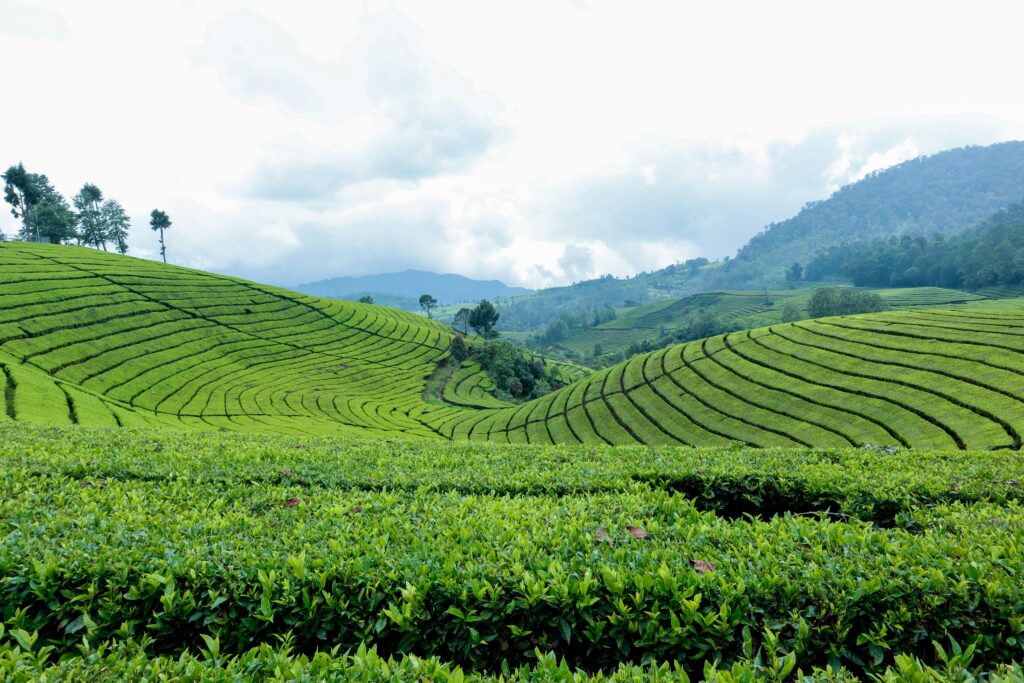
Central Province: Ceylon Tea Geography and the Matcha Distinction
Central Province is a Sri Lankan tea origin including Kandy and Nuwara Eliya. Its Ceylon tea heritage does not establish matcha production.Definition of Central Province
Central Province is a tea-growing province in Sri Lanka’s central highlands, associated with Ceylon tea districts such as Kandy and Nuwara Eliya. Their different elevations help explain regional tea descriptions, but established black-tea production does not itself demonstrate local manufacture of tencha-based matcha.
Learn more
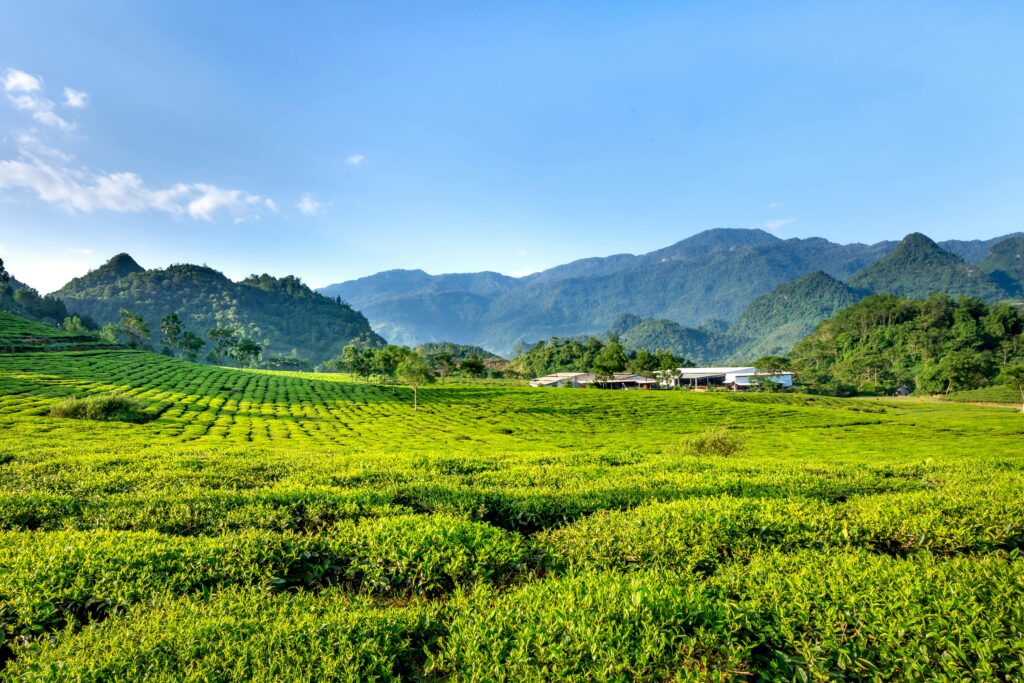
Central Province Tea Growing Landscape
Central Province is part of Sri Lanka’s central tea-growing highlands. Kandy and Nuwara Eliya are useful reference points for understanding its Ceylon tea heritage. Their names describe places and tea districts, not evidence that every type of powdered tea is made there.
The distinction between Ceylon tea and matcha matters in a matcha glossary. Tea-growing expertise and a mountainous setting are real regional context, but neither establishes a local tencha industry. No local matcha-production claim is made here without a named producer and an account of its cultivation and manufacturing process.
Elevation: Kandy Is Not the Whole Province
The Sri Lanka Tea Board gives Kandy’s tea-growing elevation as roughly 650–1,300 meters. That range belongs to the Kandy tea district. It is not an upper elevation limit for Central Province as a whole.
The same authority places Nuwara Eliya town on a plateau 1,868 meters above sea level and describes the tea district as mountainous, cool and sometimes frosty at night. A town elevation is not the altitude of every estate, but it makes clear why a Kandy range cannot summarize the entire provincial landscape. Estate-level altitude is the better detail when comparing two particular teas.
Ceylon Tea History and Tasting Language
The Tea Board associates Kandy with James Taylor and the beginnings of the Ceylon tea industry. Its Nuwara Eliya account describes tea plantations flourishing by 1875 after the decline of coffee. These are histories of the region’s tea economy, not dates for the arrival of matcha.
The Board describes Kandy infusions as coppery and full-bodied and Nuwara Eliya tea as pale golden and fragrant. Such descriptions concern the Ceylon teas presented on those pages. They should not be renamed “Kandy matcha” or “Nuwara Eliya matcha,” and a description of brewed black tea is not a prediction of the appearance or taste of a green powder.
What Would Establish Matcha Production?
JETRO describes matcha’s raw material as tencha made from shaded tea leaves that are steamed and dried without rolling, then refined and milled. NARO also identifies shade-grown new shoots and specialized manufacturing. This is more specific than saying tea can be grown, processed green and ground.
Natural cloud cover, shade trees or the availability of a stone mill do not alone document that sequence. A powder’s seller should identify the leaf source and describe the actual production route. If those details are unavailable, “powdered green tea from Sri Lanka” may be a more informative description than assuming equivalence with tencha-based matcha.
Reading a Central Province Origin Claim
- Distinguish the administrative province from the tea district and the individual estate.
- Check whether the product is black tea, loose green tea or a powder.
- Ask for cultivation and processing details before interpreting a powder as matcha.
- Keep estate tasting notes attached to the product they describe.
This approach preserves the region’s established Ceylon tea identity without inventing emerging matcha farms, experimental shading programs or regional powder flavors. It also leaves room for a producer to document a specific product in future: absence of evidence here is not a claim that production is impossible.
Sources and references
Accessed: 2026-09-08
Language: en
Kandy tea-growing district is part of Central Province; tea cultivation altitude 650–1300 m applies to Kandy. Descriptions of coppery infusion and body concern Ceylon tea, not local matcha.
Accessed: 2026-09-08
Language: en
Nuwara Eliya town plateau is 1868 m; tea district has cool and sometimes frosty nights. Historical tea plantations flourishing by 1875; tasting notes and OP/BOP descriptions concern Ceylon tea.
Accessed: 2026-09-08
Language: en
Shaded leaves are steamed and dried without kneading for tencha, refined then milled. Uji and Nishio are traditional production centers; Kyoto, Aichi and Shizuoka are named. Usucha is whisked; koicha uses less water and is kneaded. Mechanical powdering as well as stone milling is described.
Accessed: 2026-09-08
Language: en
Matcha uses shade-grown new shoots and specialized manufacturing; report concerns cultivation, manufacture and history, not a universal harvest-based grade ladder.

Emilie Schol
Founder of Best MatchaFrequently asked questions
Here are some frequently asked questions and answers.Does Kandy’s 1,300-meter figure apply to all Central Province?
Does Kandy’s 1,300-meter figure apply to all Central Province?
No. The Tea Board applies it to Kandy tea cultivation. It separately places Nuwara Eliya town at 1,868 meters.
Is Central Province an established matcha origin?
Is Central Province an established matcha origin?
The sources here establish Ceylon tea cultivation, not a regional tencha-based matcha industry. A specific matcha claim needs producer-level evidence.
Can black-tea tasting notes describe local matcha?
Can black-tea tasting notes describe local matcha?
No. The Tea Board’s coppery Kandy and pale golden Nuwara Eliya infusions describe the Ceylon teas on its pages, not matcha.