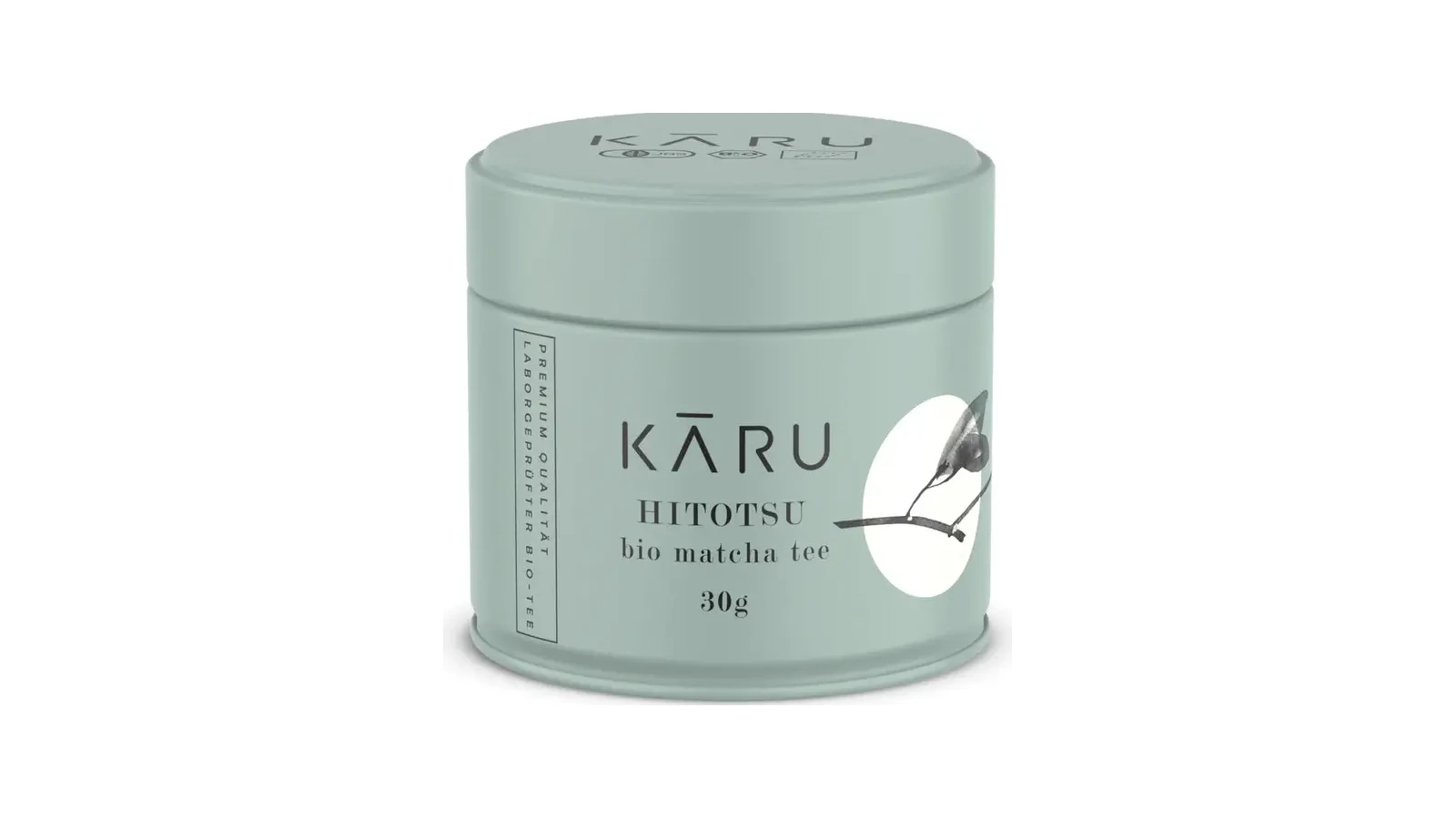
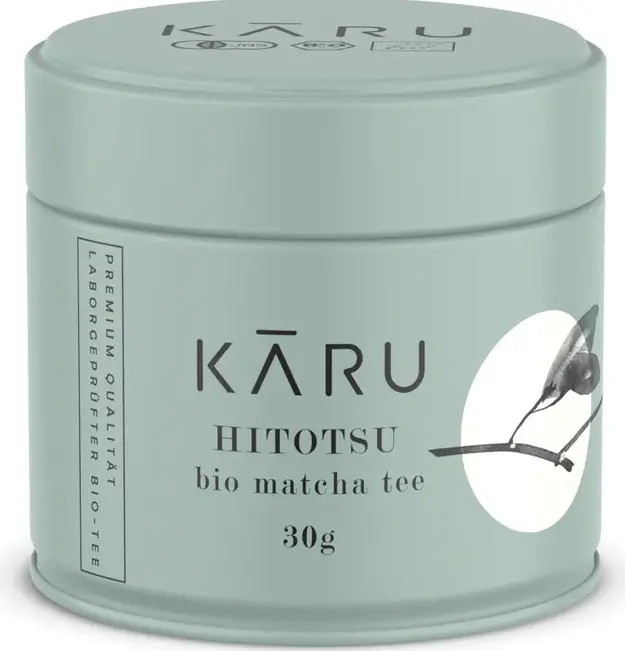
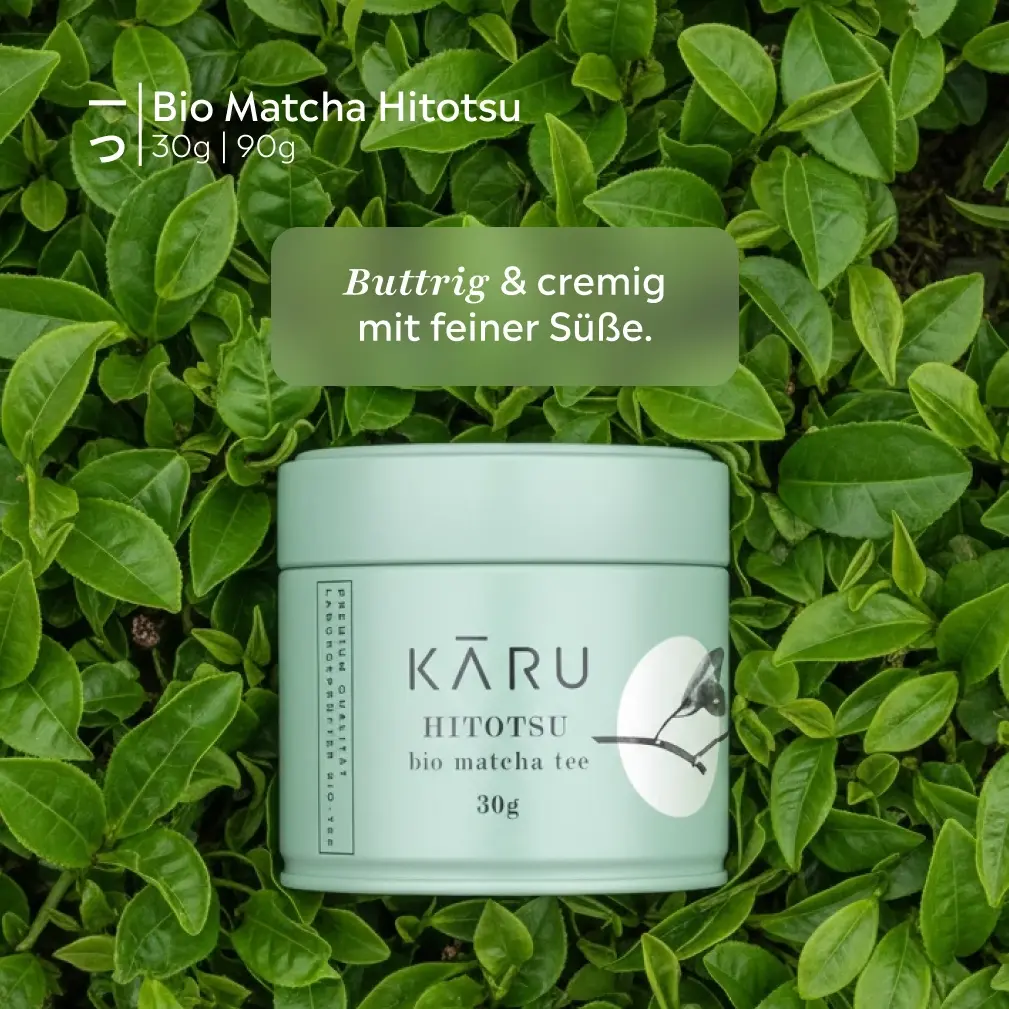
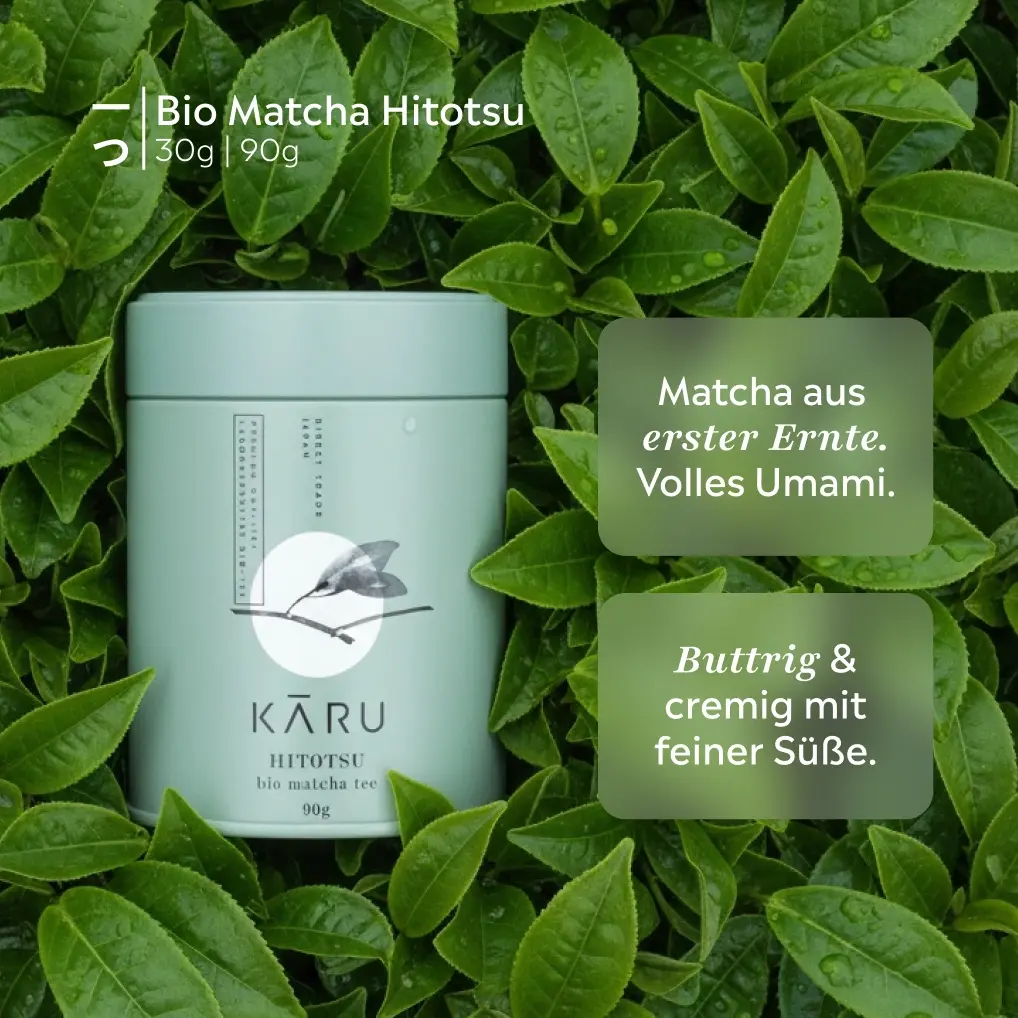
Matcha Kāru Bio Matcha Hitotsu is an organic matcha from Kirishima in Kagoshima, Japan. Made from a first harvest of the Okumidori cultivar, it combines full umami with a creamy body, fine sweetness, a light buttery note, and complex aromas. Its sweet, rounded character also makes it suitable for koicha, the thick style of matcha.
What does Bio Matcha Hitotsu taste like?
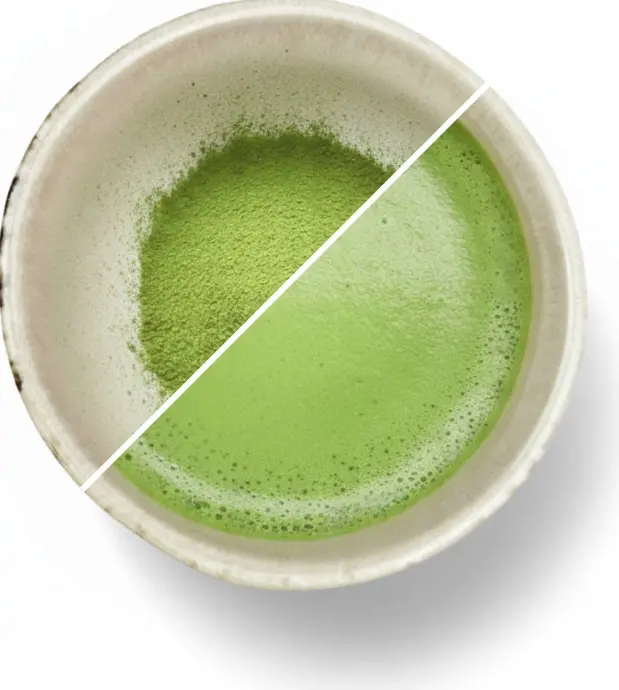
Hitotsu has a full-bodied profile built around umami, sweetness, and buttery notes. The texture is creamy, while the aromas are described as layered rather than single-note. A long-lasting, gentle finish follows the tea’s rounded character. The product page also identifies it as non-bitter, creamy, and foamy.
The Okumidori cultivar is specifically linked to the matcha’s fine sweetness. Taken together, the stated profile suits buyers looking for a sweeter organic matcha with a pronounced body rather than a sharply bitter cup.
Where is this organic Okumidori matcha grown?
Bio Matcha Hitotsu comes from Kirishima, Kagoshima. It is made with tea from the first harvest and is fully shaded for more than 30 days before harvest. These details distinguish Hitotsu by region, harvest, cultivar, and shading period rather than by a broad grade label alone.
- Origin: Kirishima, Kagoshima, Japan
- Cultivar: Okumidori
- Harvest: first harvest
- Shading: fully shaded for more than 30 days
- Profile: full umami, creamy body, fine sweetness, light buttery note, and a gentle finish
Can Matcha Hitotsu be used for koicha?
Its sweet, rounded character and full body make Hitotsu suitable for koicha, a thick preparation of matcha. This stated use gives buyers a clear distinction from products presented only for general matcha preparation. The full umami, creamy body, and fine sweetness are central to its intended drinking profile.
No separate preparation ratio, water temperature, or whisking method is provided for this product, so those details are not specified here.
Which Hitotsu size should you compare?
Bio Matcha Hitotsu is offered in two formats. The 30g size is stated to yield 15 to 30 portions, while the 90g size is stated to yield 45 to 90 portions. Both sizes are listed for one-time purchase, and a subscription option is also available. Compare the two formats by quantity and stated portion range when selecting the appropriate tin.