Matcha & CO Premium Ceremonial Matcha

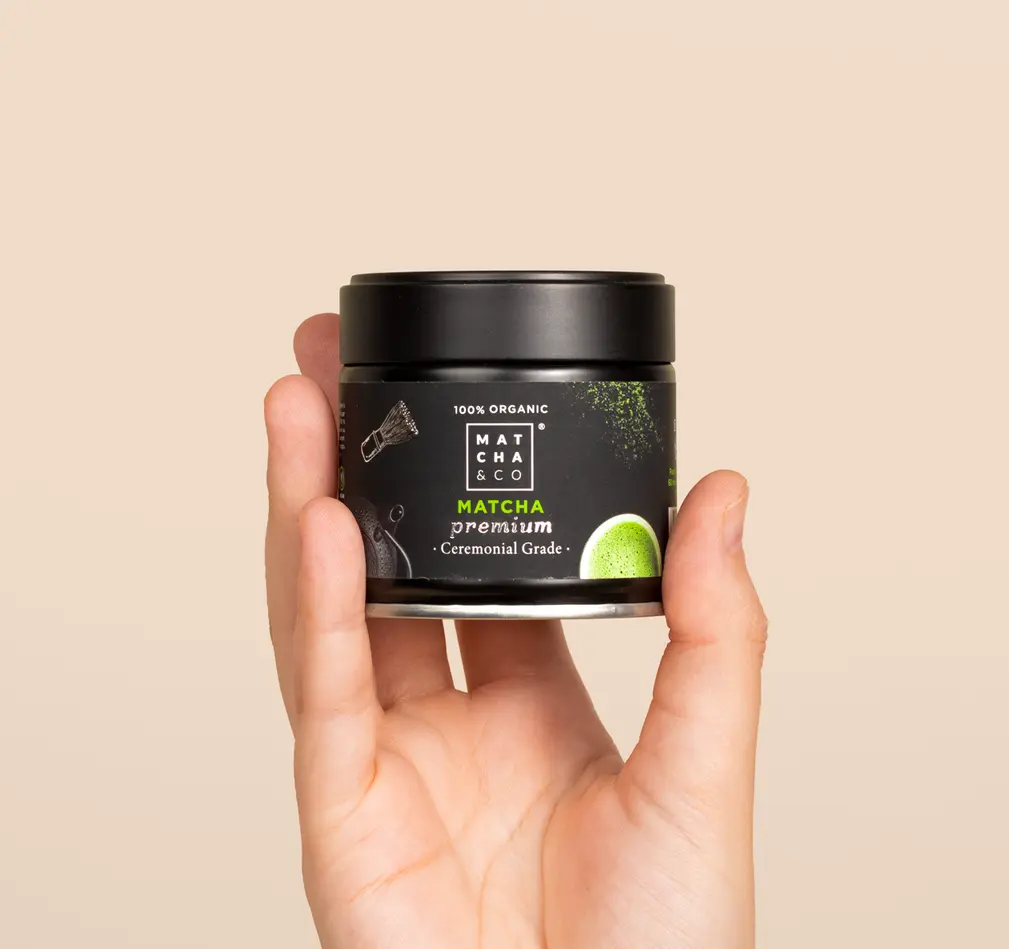
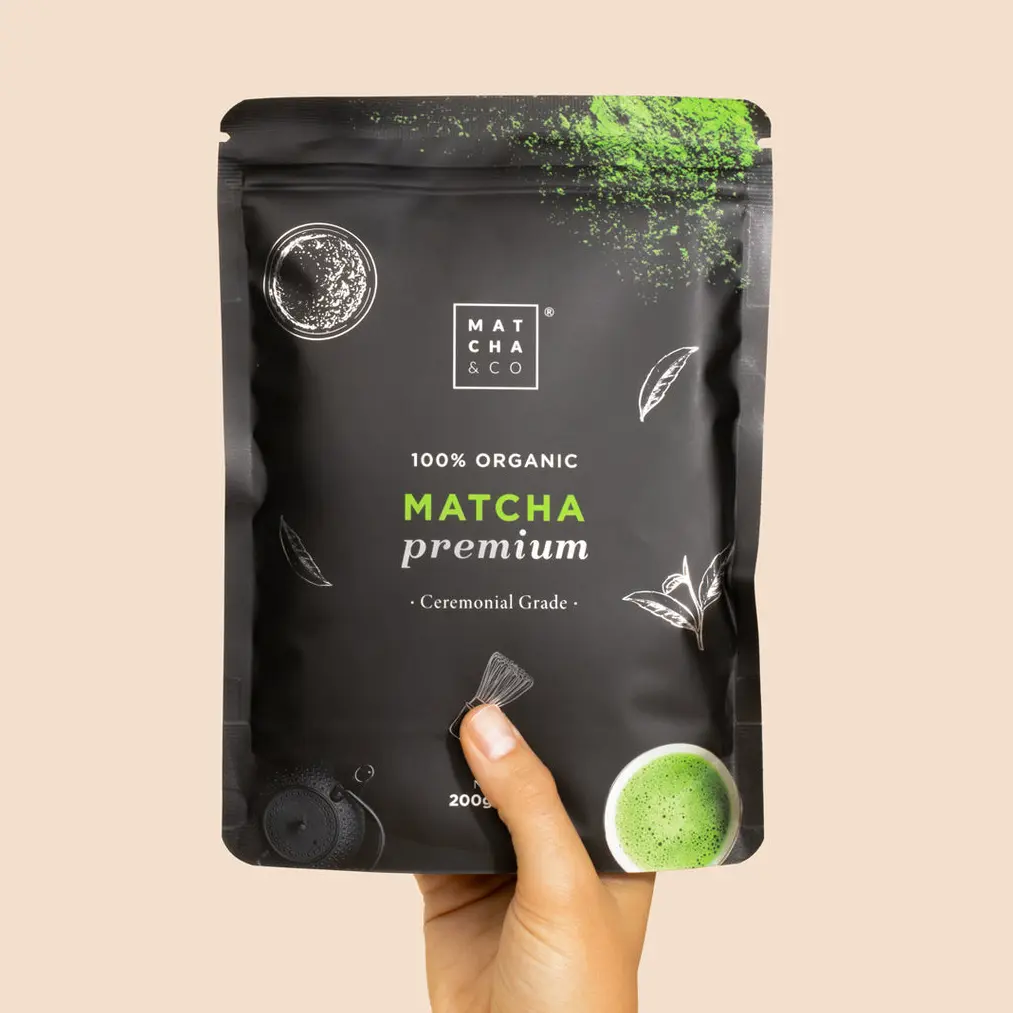
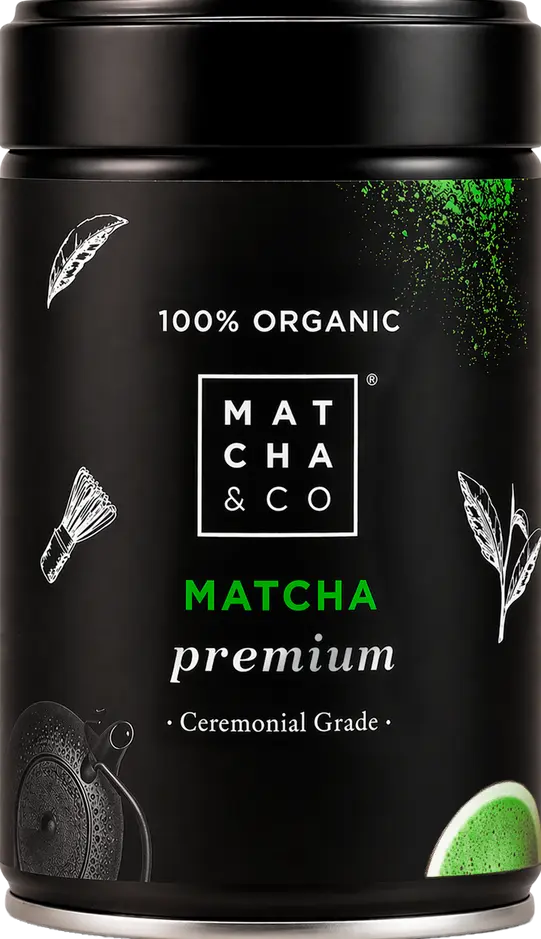
Matcha & CO ceremonial matcha is 100% organic Japanese green tea powder sourced from Kyoto plantations, with no dyes, preservatives, or sugar.
  • Subtotal

    {{ currencyFormat( pricing_summary.total_amount ) }}

Time limited!

For every order, a free sample offered!
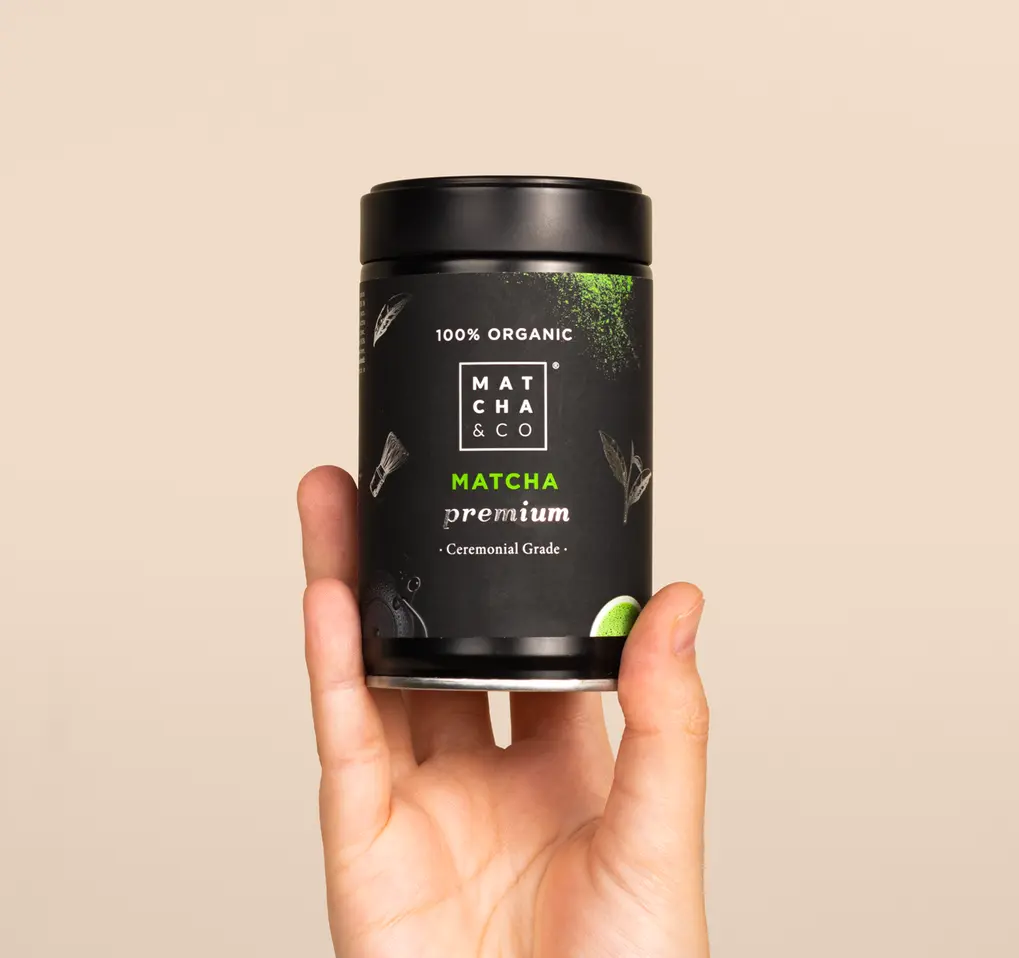
Organic Japanese ceremonial matcha sourced from Kyoto plantations

Matcha & CO Ceremonial Matcha is a 100% organic matcha from Japan, selected from plantations in Kyoto. The product is offered as ceremonial matcha and contains no dyes, preservatives, or sugar. Buyers can choose among 30-gram, 80-gram, and 200-gram formats.

What distinguishes this organic ceremonial matcha?

This product combines three specific attributes: an organic designation, ceremonial grade, and Japanese provenance. Its composition is limited to matcha, without the dyes, preservatives, or sugar named in the product details.

The description does not rely on a blend name or flavored profile. Other matcha flavors and varieties are offered as separate products, while this listing is for the Japanese ceremonial matcha itself.

  • Composition: 100% organic matcha
  • Grade: Ceremonial matcha
  • Provenance: Japan, with plantations in Kyoto
  • Excluded ingredients: No dyes, preservatives, or sugar

Where does Matcha & CO Ceremonial Matcha come from?

The matcha comes from Japan, and Kyoto is named as the plantation location. This gives buyers a more specific sourcing detail than a country-only origin statement.

Kyoto applies to the product across the listed quantity options. The 30-gram, 80-gram, and 200-gram selections are different amounts of the same Matcha & CO ceremonial matcha rather than separate origins or grades.

Which quantity formats are listed?

Three formats are available through the Best Matcha catalog: 30 grams, 80 grams, and 200 grams. Select the quantity that matches the amount required before continuing to the retailer.

Each listed option retains the same core product details: organic ceremonial matcha from Japan, selected from Kyoto plantations, with no dyes, preservatives, or sugar. The quantity is the stated difference among the three catalog variants.

Are other Matcha & CO varieties part of this listing?

Other flavors and matcha varieties are offered separately. This product page covers Matcha & CO Ceremonial Matcha and its three quantity formats.

For a direct comparison, use the product-wide facts rather than treating each quantity as a different type of matcha. The organic designation, ceremonial grade, Japanese origin, Kyoto sourcing, and composition apply to the main product.

Reviews

Reviews on Matcha & CO Premium Ceremonial Matcha

Find below the taste profile of this product based on reviews found on Matcha & CO’s website.
Learn more about how Best Matcha generate matcha taste profiles
This review has been generated by Best Matcha sensory profiling system, and represent the reviews aggregated below.
Color Vibrancy
7 review details
  1. On 2026-08-14, Andreea describes this as “bright green color”. I classify the explicitly bright green color as Vibrant.Andreea — 2026-08-14
    Translated from FrenchView originalcouleur vert vif
  2. For this source, I retain “a very bright green” (Laura, 2026-09-07). I map the very bright green description to Very vibrant color vibrancy.Laura — 2026-09-07
    Translated from FrenchView originalun vert très vif
  3. I base this individual assessment on “Bright color”, reported by Anna on 2026-09-15. I read the stated color brightness as Vibrant color vibrancy.Anna — 2026-09-15
    Translated from ItalianView originalColore brillante
  4. The wording “It has that intense green that I like” comes from Silvia’s 2026-09-24 review. I place the intense green at Vibrant color vibrancy.Silvia — 2026-09-24
    Translated from SpanishView originalTiene ese verde intenso que me gusta
  5. Vivid green is the color cue I retain at Vibrant in this morning-latte account, distinct from the supermarket comparison. “A vivid green” — Anônimo, 2026-10-09.Anônimo — 2026-10-09
    Translated from PortugueseView originalUm verde vivo
  6. From the review attributed to Eleonora (2026-10-09): “a lovely bright color”. I assign Vibrant color vibrancy for brightness, not merely the positive adjective.Eleonora — 2026-10-09
    Translated from ItalianView originalun bel colore brillante
  7. Writing on 2026-10-09, Anonyme reports “intense color”. I assess color vibrancy as Vibrant from the stated color intensity.Anonyme — 2026-10-09
    Translated from FrenchView originalcouleur intense
4.1(7 reviews)
Bitterness
12 review details
  1. Demi (2021-12-18) writes: “next to no bitter aftertaste” I treat the near-absence of bitter aftertaste as Minimal bitterness.Demi — 2021-12-18
  2. For this source, I retain “It is not bitter at all” (Anónimo, 2026-07-06). I identify the complete absence of bitterness as Minimal. The review also describes drinking this matcha with water.Anónimo — 2026-07-06
    Translated from SpanishView originalNo es nada amargo
  3. In Anónimo’s review dated 2026-08-28, “it does not have excessive bitterness” is the relevant wording. I assess bitterness as Mild; not excessive does not mean absent.Anónimo — 2026-08-28
    Translated from SpanishView originalno tiene un amargor excesivo
  4. The account by Siham, 2026-09-04, states “a little bitter”. I place the expressly slight bitterness at Mild, retaining the preparation uncertainty. The reviewer questions their own preparation technique.Siham — 2026-09-04
    Translated from FrenchView originalun peu amer
  5. Writing on 2026-09-17, Anonyme reports “pleasant although bitter”. I classify the acknowledged bitterness as Moderate, with no stronger intensity stated.Anonyme — 2026-09-17
    Translated from FrenchView originalagréable bien qu'amer
  6. I retain the statement “it is not too bitter” from Noemi (2026-09-25). I use Mild bitterness because the reviewer says not too bitter rather than not bitter.Noemi — 2026-09-25
    Translated from ItalianView originalnon è troppo amaro
  7. Aurora (2026-10-03) writes: “a very slight bitterness” I map the very slight but present bitterness to Mild.Aurora — 2026-10-03
    Translated from SpanishView originalun muy ligero amargor
  8. The French absolute denial of bitterness supports my Minimal reading, preserved in the English translation. “not bitter at all” — Sophie, 2026-10-07.Sophie — 2026-10-07
    Translated from FrenchView originalpas amer du tout
  9. According to Eleonora on 2026-10-09: “the bitterness of the matcha tea cannot be tasted”. I interpret imperceptible bitterness as Minimal.Eleonora — 2026-10-09
    Translated from ItalianView originall'amaro del tè matcha non si sente
  10. I base this individual assessment on “non-bitter tea”, reported by Anonyme on 2026-10-09. I use Minimal bitterness for the explicitly non-bitter tea.Anonyme — 2026-10-09
    Translated from FrenchView originalthé non amer
  11. This observation is sourced to Lara, 2026-10-13: “it is not bitter”. I classify bitterness as Minimal from its explicit absence. The review describes drinking it both plain and as a latte.Lara — 2026-10-13
    Translated from SpanishView originalno amarga
  12. The wording “not too bitter” comes from Anonyme’s 2026-10-14 review. I read not too bitter as Mild bitterness, not an absence of bitterness.Anonyme — 2026-10-14
    Translated from FrenchView originalpas trop amer
1.6(12 reviews)
Smoothness
10 review details
  1. From the review attributed to Mindy C (2023-07-10): “Clumps up a lot”. I classify the reported abundance of clumps as Gritty smoothness.Mindy C — 2023-07-10
  2. I base this individual assessment on “fine texture without lumps”, reported by Raquel C on 2018-08-15. I use Smooth for this explicitly fine, lump-free texture, without assuming silkiness.Raquel C — 2018-08-15
    Translated from FrenchView originaltexture fine et sans grumeaux
  3. Many unbreakable lumps in recent purchases support my Gritty classification despite approval of the flavor. “many lumps that are impossible to break up” — Felipe G, 2022-07-23.Felipe G — 2022-07-23
    Translated from SpanishView originalmuchos grumos imposibles de deshacer
  4. Writing on 2022-12-16, Silvia C reports “it dissolves perfectly in water without leaving lumps”. I select Smooth smoothness for dispersion in water without lumps, not exceptional silkiness.Silvia C — 2022-12-16
    Translated from SpanishView originalse deshace perfecto en agua sin dejar grumos
  5. This observation is sourced to Sarah J, 2023-12-28: “smooth texture”. I interpret the expressly smooth texture as Smooth smoothness.Sarah J — 2023-12-28
  6. I retain the statement “Velvety” from Cecile L (2024-01-25). I place the explicitly velvety texture at Silky smoothness.Cecile L — 2024-01-25
    Translated from FrenchView originalVelouté
  7. For this source, I retain “it dissolves perfectly, unlike others that leave a few lumps” (Miriam M, 2024-08-01). I read the lump-free dispersion as Smooth smoothness, not proof of silkiness.Miriam M — 2024-08-01
    Translated from SpanishView originalse deshace perfectamente no como otros que dejan algún grumo
  8. Water dispersion without lumps is explicit, giving my assessment a Smooth reading without inferring a silky mouthfeel. “easy to dissolve in water without forming lumps” — Anonyme, 2024-11-04.Anonyme — 2024-11-04
    Translated from FrenchView originalfacile à dissoudre dans l’eau sans faire de grumeaux
  9. On 2025-03-31, Audrey describes this as “forms lumps even after sifting”. I classify smoothness as Gritty because lumps remain despite sifting. The reviewer reports sifting.Audrey — 2025-03-31
    Translated from FrenchView originalfait des grumeaux même passer au tamis
  10. According to Anónimo on 2026-07-06: “it is silky and smooth”. I assign Silky smoothness to the explicit silky description. The reviewer finds this matcha suited to drinking with water.Anónimo — 2026-07-06
    Translated from SpanishView originales sedoso y suave
3.3(10 reviews)
Natural Sweetness
9 review details
  1. The wording “slightly sweet” comes from Cecile L’s 2024-01-25 review. I classify this slight sweetness as Subtle natural sweetness; no addition is stated.Cecile L — 2024-01-25
    Translated from FrenchView originallégèrement sucré
  2. On 2024-01-26, Noelia C describes this as “It has a sweet, mild and very pleasant taste, so it can be drunk perfectly well without sweetening”. I assess natural sweetness as Moderate, supported by the statement that no sweetening is needed.Noelia C — 2024-01-26
    Translated from SpanishView originalTiene sabor dulce, suave y muy agradable, de manera que se puede tomar perfectamente sin endulzar
  3. According to Sara R on 2024-09-05: “sweet on the palate”. I identify Moderate natural sweetness in this unqualified sweet-palate description.Sara R — 2024-09-05
    Translated from SpanishView originaldulce al paladar
  4. The wording “It has a natural sweetness” comes from Daljit K’s 2025-02-07 review. I assess the expressly natural sweetness as Moderate.Daljit K — 2025-02-07
  5. The account by Christine c, 2026-06-30, states “clean fresh sweet”. I read the unqualified sweet character as Moderate natural sweetness; no addition is described.Christine c — 2026-06-30
  6. Writing on 2026-08-04, Rafael reports “a touch of sweetness without adding sweetener”. I use Minimal natural sweetness for a mere touch of sweetness without sweetener.Rafael — 2026-08-04
    Translated from SpanishView originalun toque dulce sin echare edulcorante
  7. The wording “a slightly sweet taste” comes from MARIA D’s 2026-08-09 review. I assign Subtle natural sweetness to the lightly sweet premium matcha description.MARIA D — 2026-08-09
    Translated from SpanishView originalun ligero sabor dulce
  8. I retain the statement “a slight touch of sweetness” from Rebeka K (2026-08-11). I rate this small touch of sweetness Minimal, preserving its limited intensity.Rebeka K — 2026-08-11
    Translated from SpanishView originalun ligero toque dulce
  9. From the review attributed to Anonyme (2026-09-13): “slightly sweet”. I identify the slight sweet character as Subtle natural sweetness.Anonyme — 2026-09-13
    Translated from FrenchView originallégèrement sucré
2.2(9 reviews)
Frothability
12 review details
  1. According to Mairi C on 2023-06-23: “froths really easily”. I assign Very easy frothability to the strongly emphasized ease of foaming.Mairi C — 2023-06-23
  2. The wording “impossible to obtain foam” comes from Gabrielle G’s 2023-01-03 review. I rate frothability Very difficult because the reviewer reports failed attempts using appropriate tools. Despite attempts with a chasen and a small amount of liquid.Gabrielle G — 2023-01-03
    Translated from FrenchView originalimpossible d obtenir une mousse
  3. I retain the statement “It froths very well” from Nathalie A (2023-01-28). I interpret successful foaming as Easy frothability, not exceptional foam stability.Nathalie A — 2023-01-28
    Translated from FrenchView originalIl mousse très bien
  4. On 2019-01-23, Megan H describes this as “it frothes so easily”. I read this emphatic ease of frothing as Very easy.Megan H — 2019-01-23
  5. For this source, I retain “it produces little foam” (Anónimo, 2020-09-09). I use Difficult for frothability because the reviewer reports little foam.Anónimo — 2020-09-09
    Translated from SpanishView originalhace poca espuma
  6. NICOLE o (2024-02-27) writes: “I have trouble making it froth” I select Difficult frothability for the reported trouble producing foam.NICOLE o — 2024-02-27
    Translated from FrenchView originalJ’ai du mal à le faire mousser
  7. In Gourdin’s review dated 2024-03-08, “it does not froth at all. I use the traditional whisk” is the relevant wording. I assign Very difficult frothability to the complete lack of foam with a traditional whisk. The reviewer specifies a traditional whisk.Gourdin — 2024-03-08
    Translated from FrenchView originalça ne mousse pas du tout . j’utilise le fouet traditionnel
  8. The account by Laura C, 2024-06-30, states “froths well”. I classify the stated good foam formation as Easy frothability.Laura C — 2024-06-30
    Translated from FrenchView originalmousse bien
  9. I base this individual assessment on “light foam”, reported by Michelle S on 2025-01-06. I interpret the light foam as Difficult frothability, without inferring abundant foam.Michelle S — 2025-01-06
    Translated from FrenchView originalmousse légère
  10. Emma (2025-09-19) writes: “it froths well” I rate the reported good foaming as Easy frothability.Emma — 2025-09-19
    Translated from FrenchView originalil mousse bien
  11. From the review attributed to Gwendoline (2026-07-27): “froths very well”. I place the successful foaming at Easy, without inferring exceptionally stable foam.Gwendoline — 2026-07-27
    Translated from FrenchView originalmousse très bien
  12. This observation is sourced to Fabienne, 2026-08-08: “difficult to froth”. I interpret the explicit difficulty producing foam as Difficult frothability.Fabienne — 2026-08-08
    Translated from FrenchView originaldifficile à faire mousser
3.0(12 reviews)
Umami
8 review details
  1. Writing on 2020-02-12, Tania B reports “a delicious umami flavor in the mouth”. I place the stated umami at Moderate; deliciousness does not establish stronger intensity.Tania B — 2020-02-12
    Translated from FrenchView originalune délicieuse saveur umami en bouche
  2. This observation is sourced to Sandy D, 2022-05-03: “a clearly pronounced umami taste”. I identify the clearly pronounced umami as Pronounced.Sandy D — 2022-05-03
    Translated from FrenchView originalun gout umami bien prononcé
  3. In Noelia S’s review dated 2020-05-26, “The strong umami flavor” is the relevant wording. I assign the explicitly strong umami the level Pronounced.Noelia S — 2020-05-26
    Translated from SpanishView originalEl fuerte sabor umami
  4. The account by Pedro P, 2020-06-17, states “Lots of umami”. I place the abundant umami at Pronounced, rather than the maximum intensity.Pedro P — 2020-06-17
    Translated from SpanishView originalMucho umami
  5. According to Angelica Y on 2021-05-18: “The UMAMI flavor is unmistakable”. I recognize Moderate umami here; unmistakable presence does not quantify a stronger intensity.Angelica Y — 2021-05-18
    Translated from SpanishView originalEl sabor UMAMI es indiscutible
  6. From the review attributed to Jose L (2022-02-16): “intense umami flavor”. I map the explicitly intense umami to Intense.Jose L — 2022-02-16
    Translated from SpanishView originalsabor umami intenso
  7. Explicit umami flavor supports my Moderate reading in the translated French passage, without an intensity modifier. “an umami flavor” — Ekaterina N, 2025-02-07.Ekaterina N — 2025-02-07
    Translated from FrenchView originalune saveur umami
  8. I base this individual assessment on “the taste is very umami”, reported by Balbine on 2026-08-02. I assess the strongly emphasized umami as Pronounced.Balbine — 2026-08-02
    Translated from FrenchView originalle goût est très umami
3.8(8 reviews)

Frequently asked questions

Organic Japanese ceremonial matcha sourced from Kyoto plantations Here are some frequently asked questions and answers.

Is Matcha & CO Ceremonial Matcha organic?

Yes. Matcha & CO Ceremonial Matcha is identified as 100% organic matcha.

Where does this ceremonial matcha come from?

It comes from Japan and is selected from plantations in Kyoto.

What grade is Matcha & CO matcha?

It is offered as ceremonial matcha.

Is this product made only from matcha?

Yes. The product is 100% organic matcha and contains no dyes, preservatives, or sugar.

What quantity formats are available?

It is listed in 30-gram, 80-gram, and 200-gram formats.

Does this matcha contain dyes, preservatives, or sugar?

No. The product contains no dyes, preservatives, or sugar.

Does Matcha & CO offer other matcha varieties?

Yes. Other matcha flavors and varieties are offered as separate products.

Affiliate disclosure: Best Matcha earns a commission from purchases made through the affiliate links on this page, at no additional cost to you. This never influences our ratings, reviews or editorial decisions.