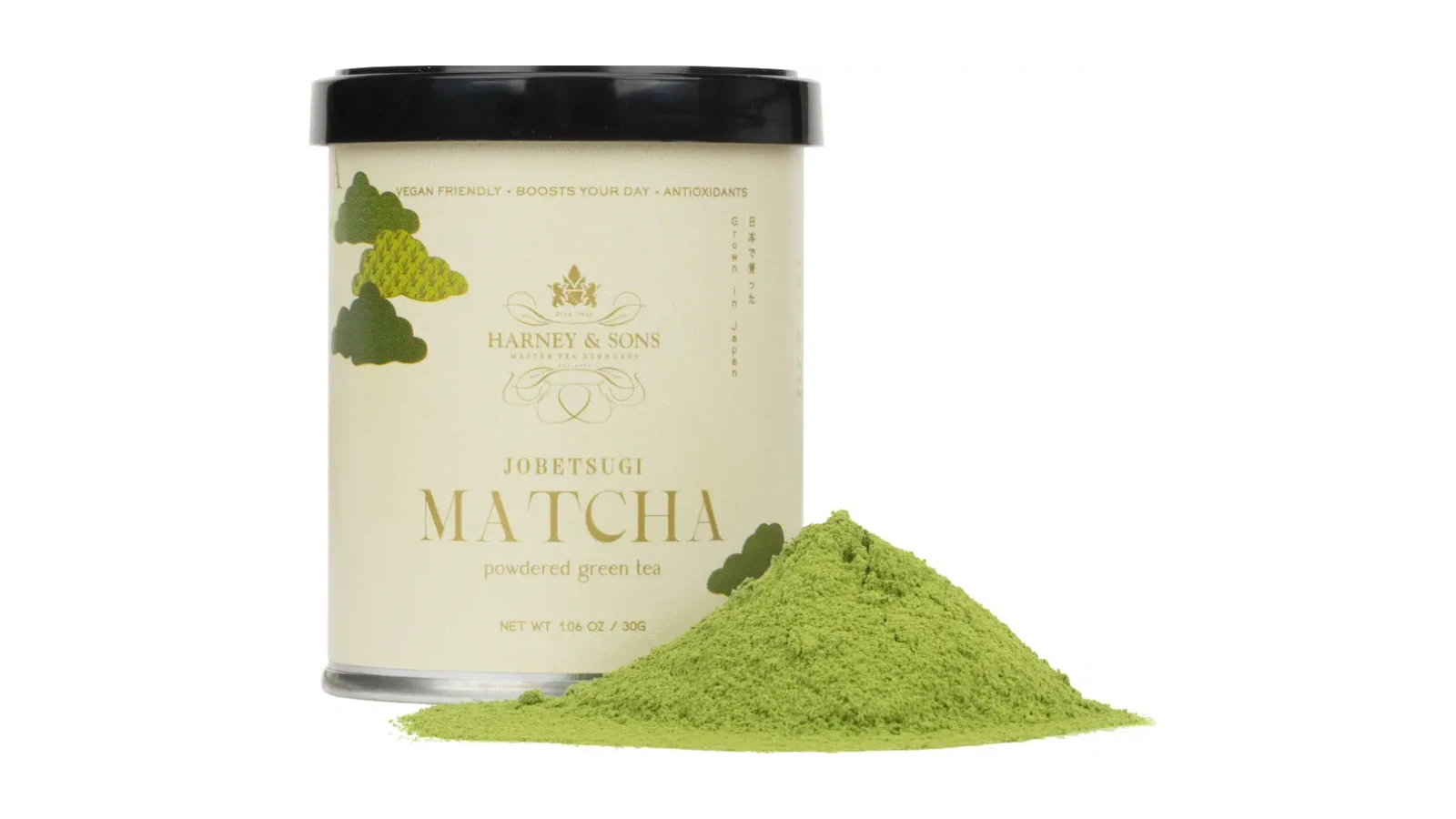
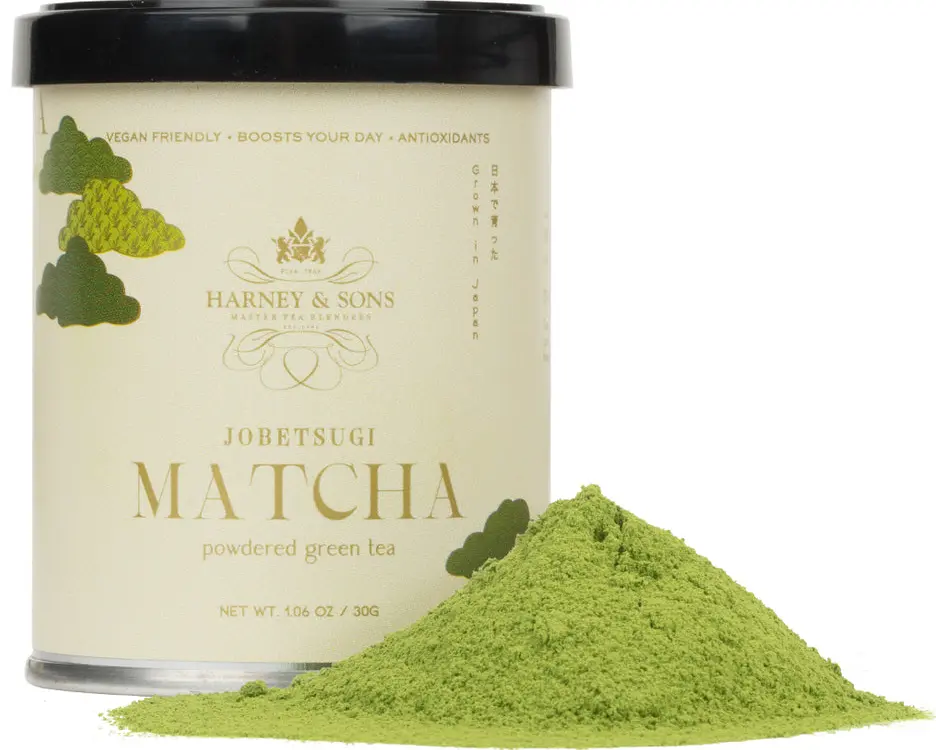
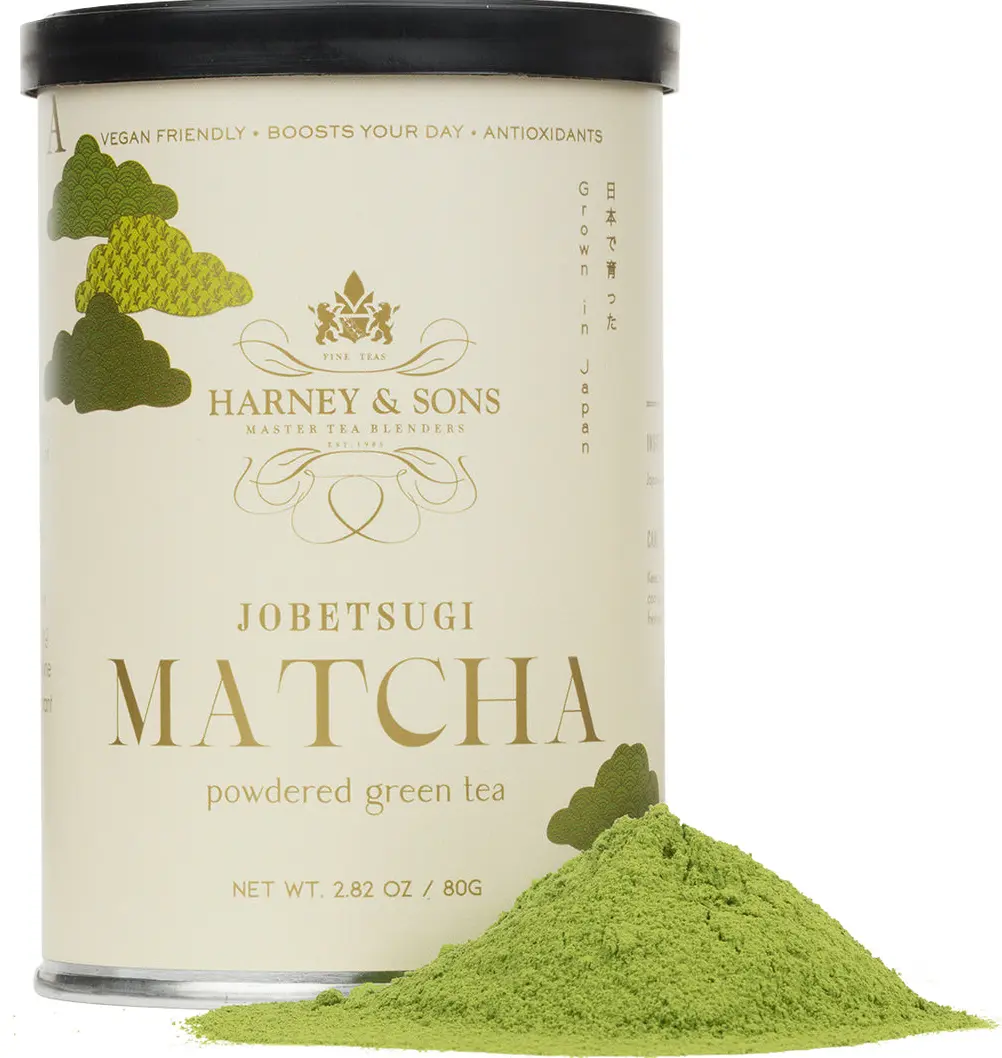
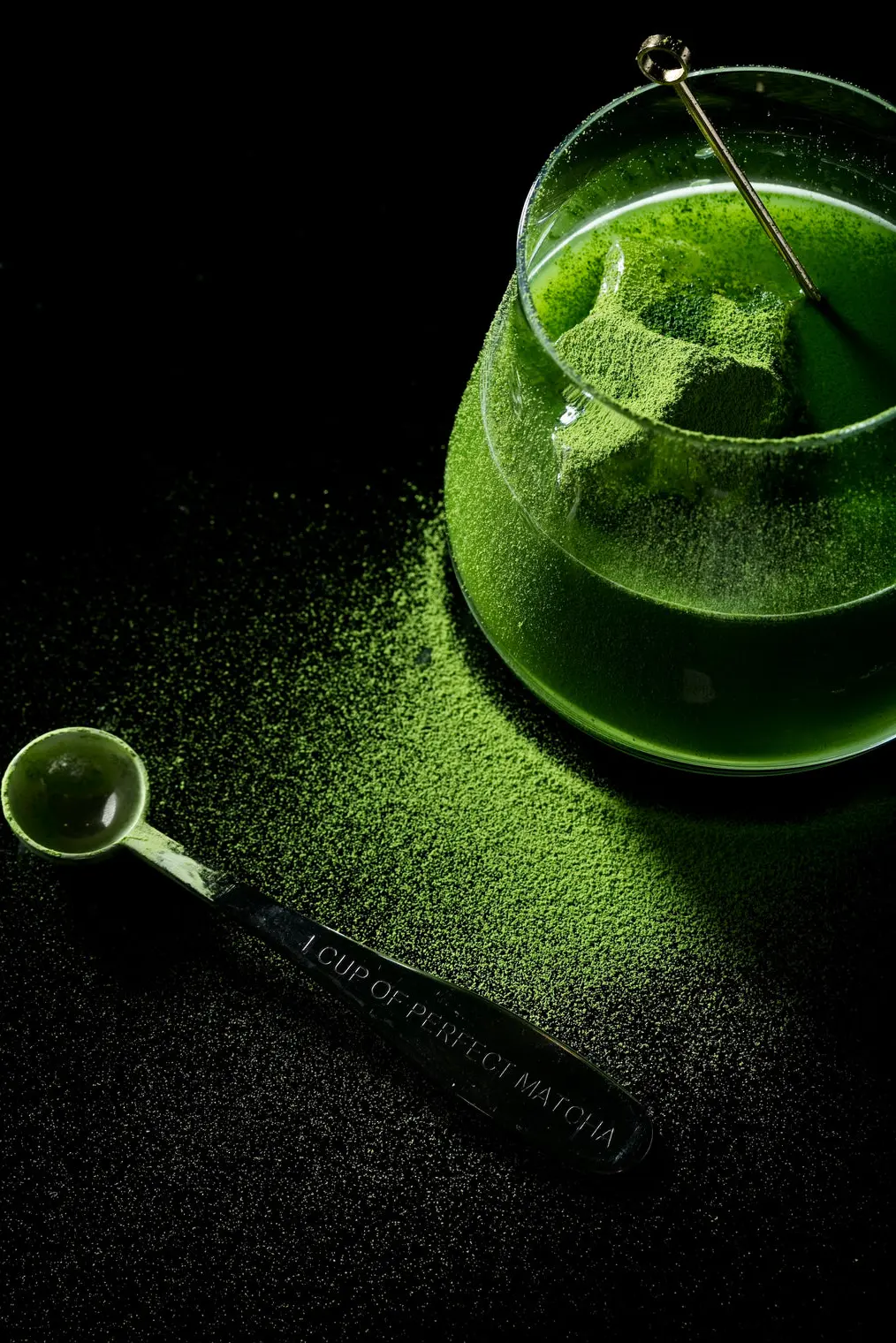


First-harvest Wazuka matcha for whisked thin tea
Harney & Sons Jobetsugi Ceremonial Matcha is a thin-grade Japanese matcha made for whisking into water. Grown under shade in Wazuka Valley, south of Uji, it combines savory umami with honeydew melon and garden-green notes. The fine, brilliant-green powder produces a thick green froth when prepared in a bowl.
What does Jobetsugi matcha taste like?
Jobetsugi has a savory profile centered on umami, honeydew melon, and garden greens. Its fuller taste and bright color come from whisking the powdered leaf directly into water rather than steeping and removing tea leaves. This matcha is intended for thin tea and should be served while warm and foamy.
How is this Wazuka matcha produced?
The tea is grown under shade in the gardens of Wazuka Valley, within Japan’s Uji tea region. Its leaves are picked during the first spring harvest, when the cup’s savory umami is at its peak. After harvesting, the leaves are air-dried into tencha, the flat raw leaf used to make matcha, and then slowly ground between stone mills. Grinding enough tencha for one small tin takes close to two hours.
- Origin: Wazuka Valley in the Uji region of Japan
- Harvest: First spring harvest
- Grade: Ceremonial thin grade
- Ingredient: Green tea
- Formats: Loose matcha in 30 g and 80 g tins
How should Jobetsugi Ceremonial Matcha be whisked?
Measure 2 grams, about one teaspoon, into a bowl or wide cup. Sifting the powder through a strainer can help prevent clumps. Add 120 ml (4 oz.) of water heated to 175°F, then whisk briskly until the tea is smooth and frothy. A bamboo whisk can produce the froth, but a small electric frother, lidded jar, or cocktail shaker also works. Matcha is whisked into water rather than steeped in a pot.
What should buyers know about caffeine and storage?
A standard 2-gram bowl contains about 80 milligrams of caffeine. Because matcha is consumed as the whole powdered leaf, it contains more caffeine than the same amount of steeped green tea. Keep the tin sealed in a cool place away from light, and refrigerate it after opening. The larger surface area of ground tea means its color and flavor fade faster after exposure to air. Buyers can choose between the listed 30 g and 80 g tins according to the amount required.
Ceremonial is a commercial matcha grade made from hand-picked young tea leaves, then stone-ground for its taste and vibrant color.
Japan is the birthplace of matcha, with shaded tencha cultivation centered in Kyoto, Kagoshima, Shizuoka, Aichi, Fukuoka, Mie, Nara, and Saitama.
Frequently asked questions
It is grown under shade in Wazuka Valley, south of Uji, Japan. Wazuka is part of the Uji tea region.
It has savory umami with honeydew melon and garden-green notes. When whisked, the fine powder produces a thick green froth.
Whisk 2 grams, about one teaspoon, with 120 ml (4 oz.) of water at 175°F. Sift the powder first if desired, then whisk briskly until smooth and frothy.
No special equipment is required. A bamboo whisk works well, but a small electric frother, lidded jar, or cocktail shaker can also mix the matcha.
A standard 2-gram bowl contains about 80 milligrams of caffeine. Matcha contains more caffeine than the same amount of steeped green tea because the whole powdered leaf is consumed.
Jobetsugi is offered as loose powdered green tea in 30 g and 80 g tins. Both formats contain the same ceremonial thin-grade matcha.
Keep the matcha sealed, cool, and away from light, then refrigerate it after opening. Ground tea fades faster after contact with air because it has more exposed surface area.
No. Jobetsugi is meant to be whisked directly into water and consumed as powdered whole leaf, rather than steeped and removed like loose-leaf tea.