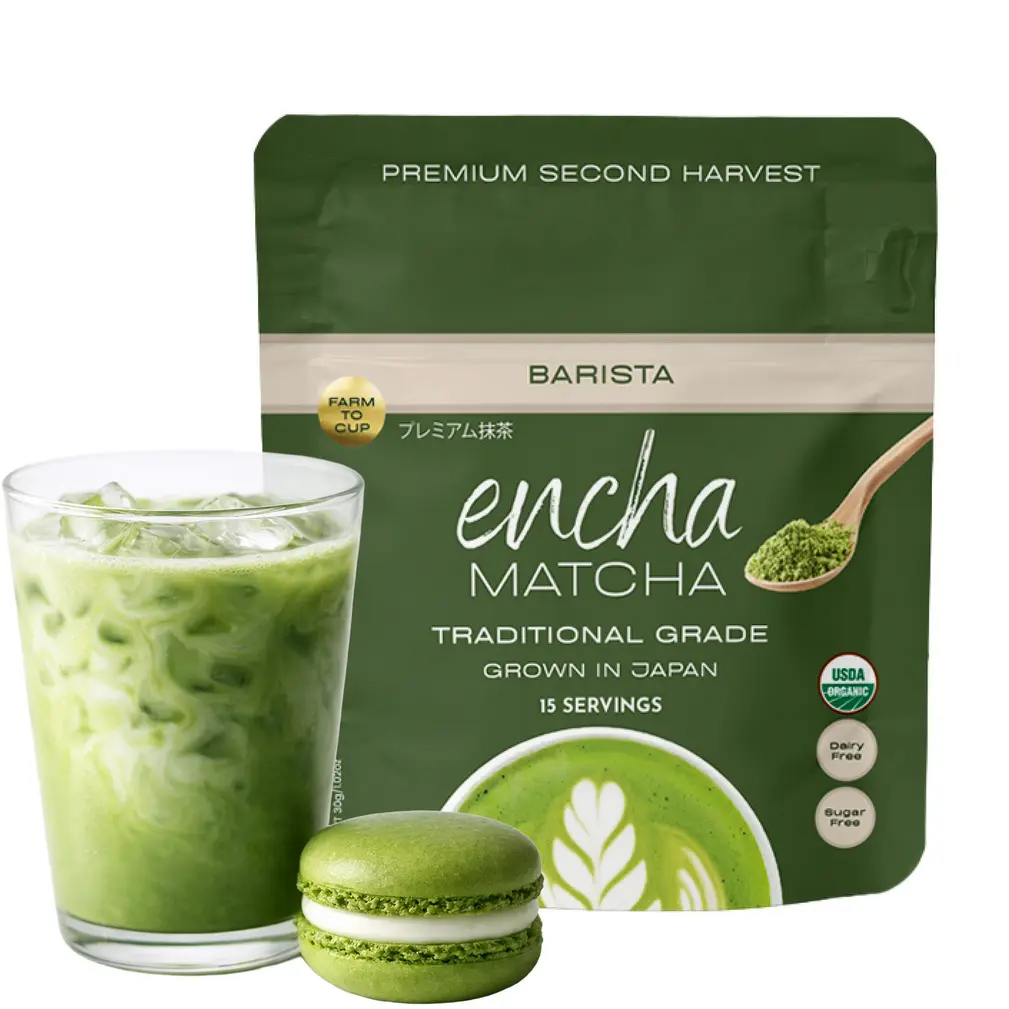
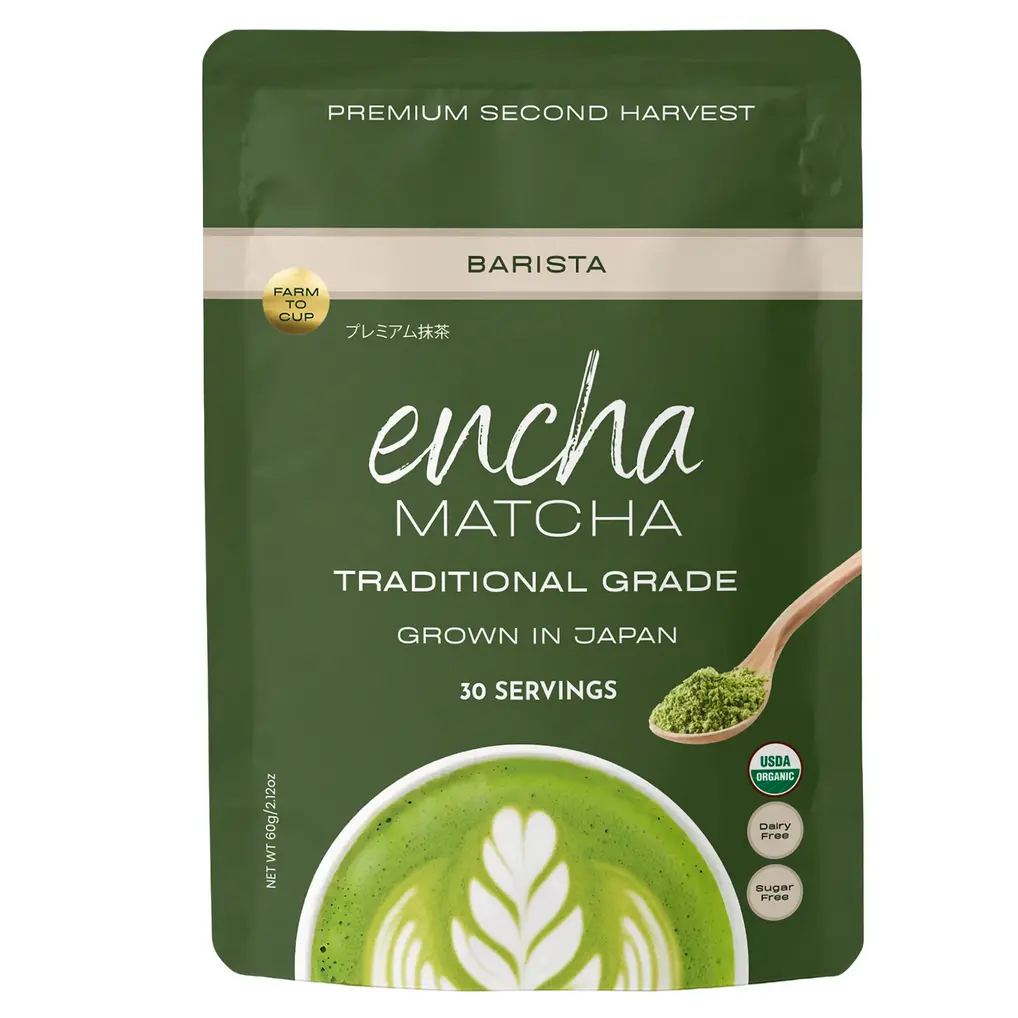
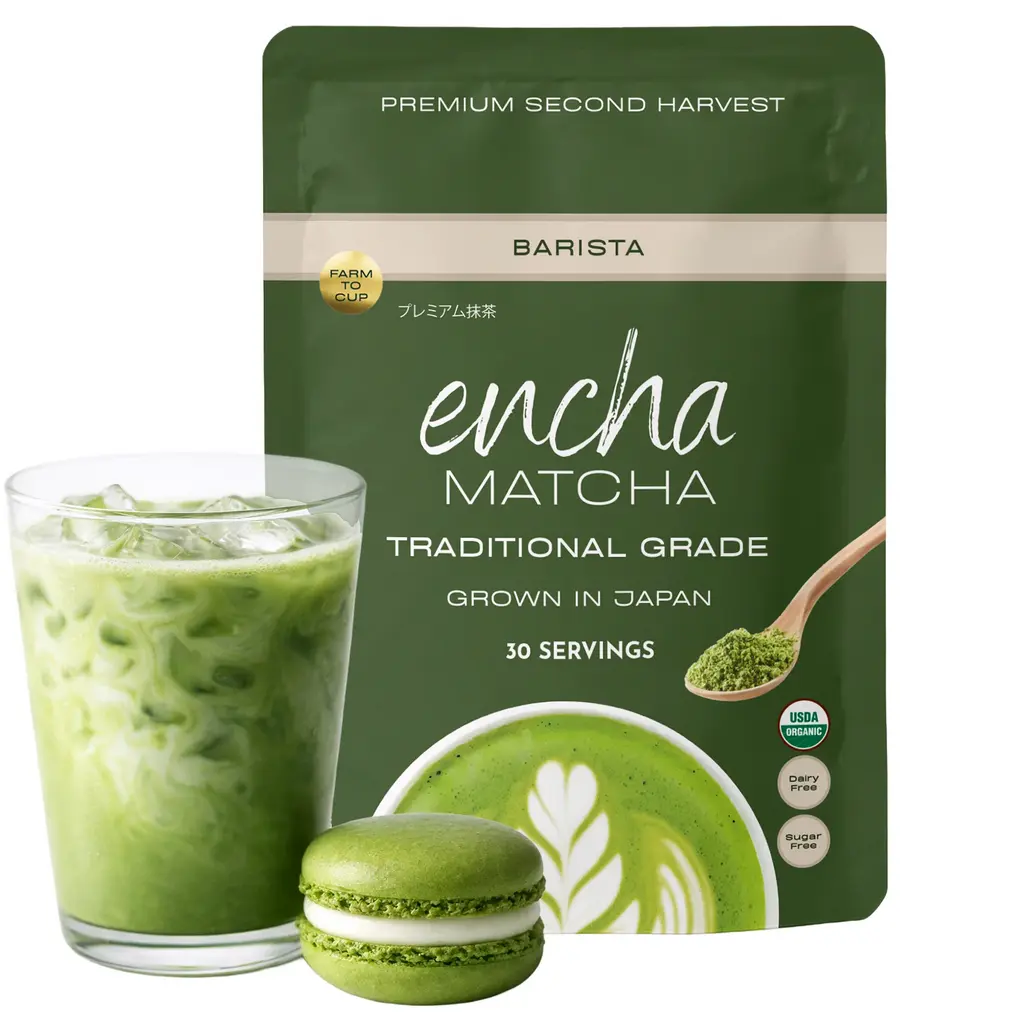
Encha Barista Grade Organic Matcha Powder is a second-harvest Japanese matcha made for lattes, smoothies, baking, and everyday recipes. It is hand-picked, stone-ground using traditional Japanese techniques, USDA Certified Organic, and third-party tested for purity. Nothing is added to the powder.
How does Encha Barista Grade matcha taste?
This matcha has a bolder profile drawn from later-harvest leaves. Nutty and toasted notes lead into chocolate and sweet grass, followed by mild bitterness. That profile is intended to retain its character when combined with milk or used in heated and frozen preparations.
The powder is designed to maintain its color and character through milk, heat, and the freezer. This makes it suited to recipes where more delicate matcha can become less distinct.
What can this second-harvest matcha be used for?
Encha positions this Barista Grade matcha for frequent recipe use and higher-volume preparation. Its stated uses include:
- Matcha lattes served hot or iced
- Smoothies and blended drinks
- Baking and other heated recipes
- Frozen preparations
- Daily matcha recipes
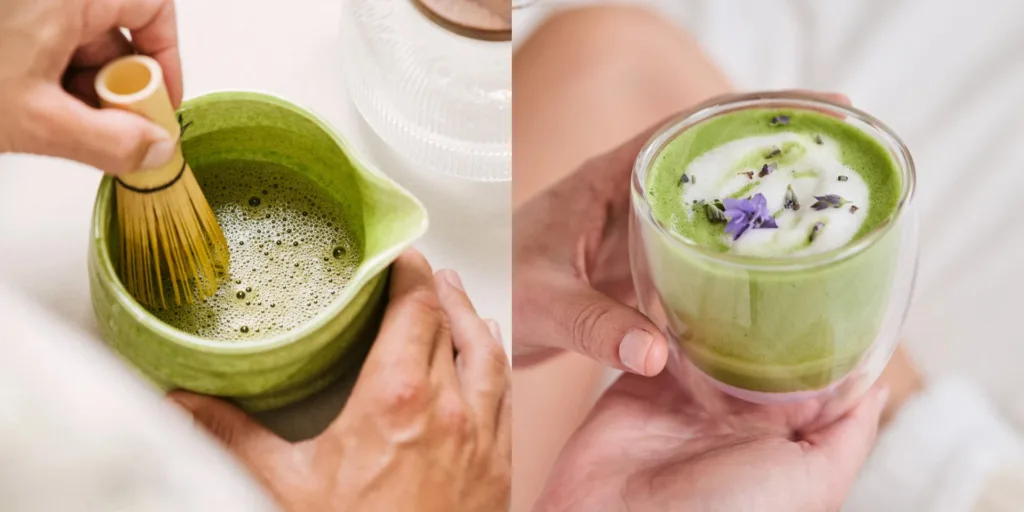
For a latte, the product imagery shows the powder whisked with water before milk is poured in. No water temperature or ingredient quantities are specified. The product is also described as beginner-friendly, which may suit buyers starting with milk-based matcha drinks or recipes.
Where is Encha Barista Grade matcha sourced and processed?
The tea is sourced in Japan through direct farm partnerships developed over twelve years. The second-harvest leaves are hand-picked and stone-ground using the same traditional techniques applied to Encha’s first-harvest grades.
The product carries USDA Certified Organic status and is third-party tested for purity. The powder contains nothing added, keeping the supplied flavor profile centered on the matcha itself.
Which package formats are listed?
Three formats are available through Best Matcha. The 30 g (1.06 oz) pouch has a stated yield of 15 cups, the 60 g (2.12 oz) pouch is listed for 30 cups, and the 500 g (17.64 oz) pouch is listed for 250 cups. These stated yields make it possible to compare formats according to expected use, from smaller quantities to higher-volume recipe preparation.