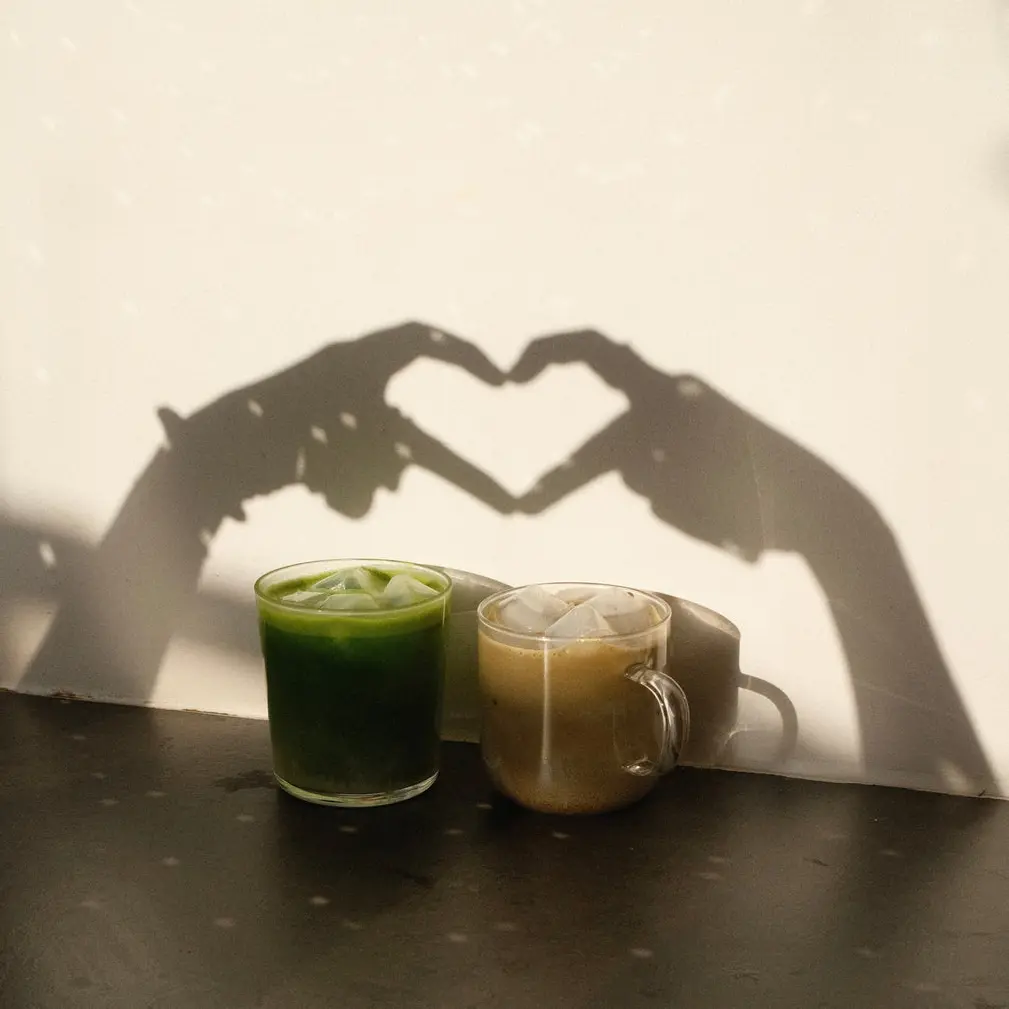

Choose hojicha if you want a toasty, nutty tea. Choose matcha if you want a grassy, savory drink with more body than a clear infusion. Both are Japanese green teas, but a whisked hojicha latte and a cup of steeped hojicha are two different drinks. If you’re switching to cut back on caffeine, ask which one you’re getting.
Hojicha vs matcha at a glance
| Tea | What to expect | How it’s prepared | Caffeine reference |
|---|---|---|---|
| Brewed hojicha | Toasty aroma, clear amber-brown cup | Steep leaves or stems, then strain | 20 mg per 100 g of the reference infusion[3] |
| Hojicha powder | Roasted flavor, more body than an infusion | Whisk the ground tea into liquid and drink it | Use a product-specific figure if available; the infusion value doesn’t apply |
| Matcha | Green, vegetal and savory | Whisk finely ground tencha into water and drink it | About 64 mg from 2 g at Japan’s reference value[4] |
What makes hojicha taste so different?
Hojicha gets its character from roasting. It can be made from green tea leaves, stems, or a blend. Matcha starts with shade-grown leaves that are steamed and dried without rolling to make tencha, then ground to a fine powder after the stems and leaf veins are removed. Hojicha powder borrows the convenience of a whisked drink, not the raw material that makes matcha taste like matcha.[1][5]
In hojicha, the roast is usually the first thing you smell. It can suggest toasted grain, nuts or cocoa. Those are aroma notes, not a promise of sweetness or evidence that nuts or chocolate were added. Even within one maker’s range, the finish can change: Ippodo describes its leaf-and-stem blend as sweetly aromatic and its stems-only hojicha as crisp and round. If you’re buying a latte mix rather than plain tea, the ingredient list tells you more about sweetness than a description like ‘caramel.’[2][5]
Matcha is more likely to give you a fresh green aroma and umami, the savory taste you might recognize in broth. It can also taste bitter or leave a dry, grippy finish. If you dislike the dry finish but enjoy the green aroma, you may still prefer a less astringent matcha to switching teas completely. Our guide to astringency vs bitterness in matcha explains how to tell the sensations apart.[1][5]
Does hojicha have less caffeine than matcha?
A small cup of brewed hojicha can contain less caffeine than a bowl made with 2 g of matcha. A large or strong brew may be closer than you expect, and a hojicha powder latte is a separate comparison. Neither tea is caffeine-free.
Brewed hojicha: count the tea that went into the cup
Japan’s food composition database lists 20 mg of caffeine per 100 g of prepared hojicha infusion. The reference method uses 15 g of tea, 650 mL of water at 90°C (194°F), and a 30-second steep. At that concentration, 150 g of prepared tea works out to about 30 mg; 240 g works out to about 48 mg. Those are calculations for the reference brew, not measurements of a café’s recipe. More leaf, a different water temperature, or a longer steep can change what ends up in the cup.[3][2]
Matcha and hojicha powder: count the grams
The same database lists 32 mg per gram of matcha powder. A 1 g serving works out to about 32 mg, and a 2 g serving to about 64 mg on that basis. Notice how the 1 g example is close to the 150 g brewed hojicha example. ‘A cup’ tells you less than the preparation and the dose. See our matcha caffeine guide for more on portion sizes.[4]
With powdered hojicha, you drink the ground tea rather than straining it out. The brewed value cannot tell you the caffeine per gram of powder. If a producer gives that figure, multiply it by the grams you use. If a café lists caffeine per serving, check which size the number refers to and whether the drink uses powder or brewed concentrate. Extra milk or melting ice can dilute the taste but won’t remove caffeine from the tea already in the glass.[5]
Which should you order or make?
For a clear tea with food, try loose-leaf hojicha
Start here if you want the roast without milk. Follow the packet instructions; Ippodo, for example, suggests a 30-second first brew for its hojicha. When the timer goes off, strain the whole pot so the tea left in it doesn’t keep steeping. For iced tea, chill the strained brew or follow the tea maker’s iced recipe so you can account for the melting ice.[2]
For a roasted latte, ask for powder or concentrate
Powder is the easiest choice if you already have a whisk and want the ground tea’s body. Sift it, whisk it with a small splash of warm water, then add milk to taste. Some sediment just means the particles have settled; give the glass a stir. If you already own loose hojicha, use it first. Ippodo’s Hojicha with Milk recipe steeps 15 g in 200 mL of boiling water for at least a minute, then adds milk to taste. That’s a stronger recipe than the composition-table infusion, so don’t borrow the table’s caffeine figure for it.[5][6]
For green tea flavor in milk, stick with matcha
If the part you enjoy is the green, savory finish, hojicha won’t reproduce it. Pick a powder from our guide to matcha for lattes and use the hot or iced matcha latte recipe as a starting point. To compare the two teas in milk, use the same milk and leave out the syrup on the first sip. Choose on taste, not on how dark the powder looks or how gentle the roast smells.
For a first purchase, match the label to the drink
Look for loose leaf or tea bags if you want something you can steep at work without a whisk. For a latte, look for a finely ground tea with hojicha or roasted green tea as the only ingredient if you want control over the sweetness. A product sold as an instant latte mix can already contain sugar or milk powder. At a café, ask whether the base comes pre-sweetened; ordering without syrup won’t change a mix that already contains sugar.
If you’re curious about hojicha but don’t know which format you’ll like, buy a small bag of loose tea. Make one cup plain, then make a stronger pot to try with milk. That lets you decide whether you like the roast before committing to a separate powder.
How we compared: We used Japanese government references for production and caffeine and tea-maker descriptions for flavor and preparation. We did not run a tasting or measure caffeine. The serving examples are calculations, not test results for commercial drinks.

Frequently asked questions
No. Matcha is made by milling tencha. Hojicha is roasted green tea that can be sold as loose leaves or stems, tea bags, or a fine powder. Whisking hojicha powder like matcha doesn’t change what tea it is.
No. Plain hojicha is made from the tea plant and contains caffeine. If you want a roasted drink without caffeine, try pure mugicha, an infusion of roasted barley, rather than a blend containing tea.
No. It depends on the amount and concentration of brewed tea or the weight and caffeine content of the powder. Without those details, you can’t reliably rank the two lattes by caffeine.
Yes. Steep loose hojicha more strongly than you would for drinking plain, strain it and add milk to taste. Use less milk if the first sip tastes too diluted.
Some hojicha can smell sweeter because of its roasted aroma, but that doesn’t mean it contains added sugar or will taste sweet to everyone. Compare plain teas first, or check the label if you’re buying a premixed latte powder.


