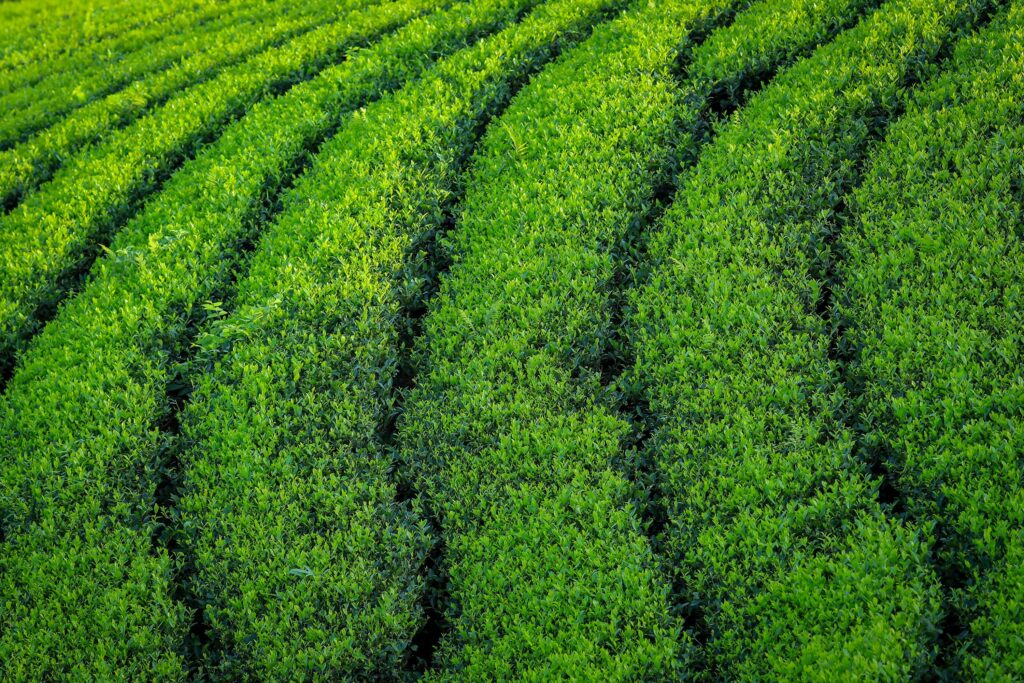
Chiran is a former town now within Minamikyushu City in Kagoshima Prefecture, Japan. In tea labeling, Chiran-cha has a wider modern meaning: it covers tea made in Minamikyushu’s Chiran, Ei and Kawanabe areas. The place name and the tea brand therefore need to be read at different geographical scales.
Why Chiran tea can come from Ei or Kawanabe
Minamikyushu City’s tea history explains that the three former towns merged in 2007 and their tea brands were unified as Chiran-cha in April 2017. An Ei-grown tea carrying the Chiran name is therefore not inherently contradictory. Buyers seeking the former Chiran town specifically should ask for a finer origin statement.
The municipal account also separates the histories of the three areas. For Chiran itself, it distinguishes an earlier cultivation legend from the start of full-scale cultivation in 1872. These are histories of regional tea growing, not evidence that today’s matcha production method was used throughout that period. The Kagoshima entry places this local story within the prefecture.
Deep-steamed tea and matcha follow different routes
The city’s introduction to Chiran tea describes covered cultivation and deep steaming. Its separate manufacturing guide then shows repeated rolling, drying, finishing and blending. This is the context in which to understand Chiran’s association with fukamushi, or deep steaming.
Matcha should not be described simply as the result of milling that rolled leaf tea. The Japan Matcha Association defines its precursor as leaves steamed and dried without rolling. That precursor is tencha. Regional accounts of deep-steamed green tea cannot establish the exact manufacturing or shading schedule for a separate matcha product.
There is direct evidence for Chiran matcha
JA Minamisatsuma’s Chiran Tea Center lists a Chiran matcha product and describes it as using leaves grown in Chiran, Minamikyushu. This is specific first-party evidence for a local matcha offering. It does not establish a universal cultivar, steaming treatment or tasting profile for everything sold under the Chiran name.
The municipal tea introduction discusses multiple cultivars and both blends and single-variety products. A cultivar statement is useful additional information, but “Chiran” alone does not supply one. Similarly, the city’s discussion of volcanic soils is regional agricultural context, not proof that a mineral or earthy note in a cup came from volcanic ash.
What to ask before buying
Imagine comparing an Ei-grown Chiran-cha loose-leaf tea with a tin labeled Chiran matcha. Both may have accurate origin statements, yet differ in growing area and manufacturing. Compare like with like instead of treating the shared brand as a recipe.
- Does Chiran mean the former town, or the wider Minamikyushu tea brand?
- Which grower, harvest and batch supplied the leaves?
- Is the product rolled leaf tea, powdered green tea or tencha-based matcha?
- For matcha, what does the producer document about shading, drying and milling?
Use the seller’s batch information and preparation guidance to assess the actual tea. A regional reputation can introduce a producer, but it cannot confirm organic certification, a fixed harvest date, a particular mouthfeel or an identical flavor across farms.