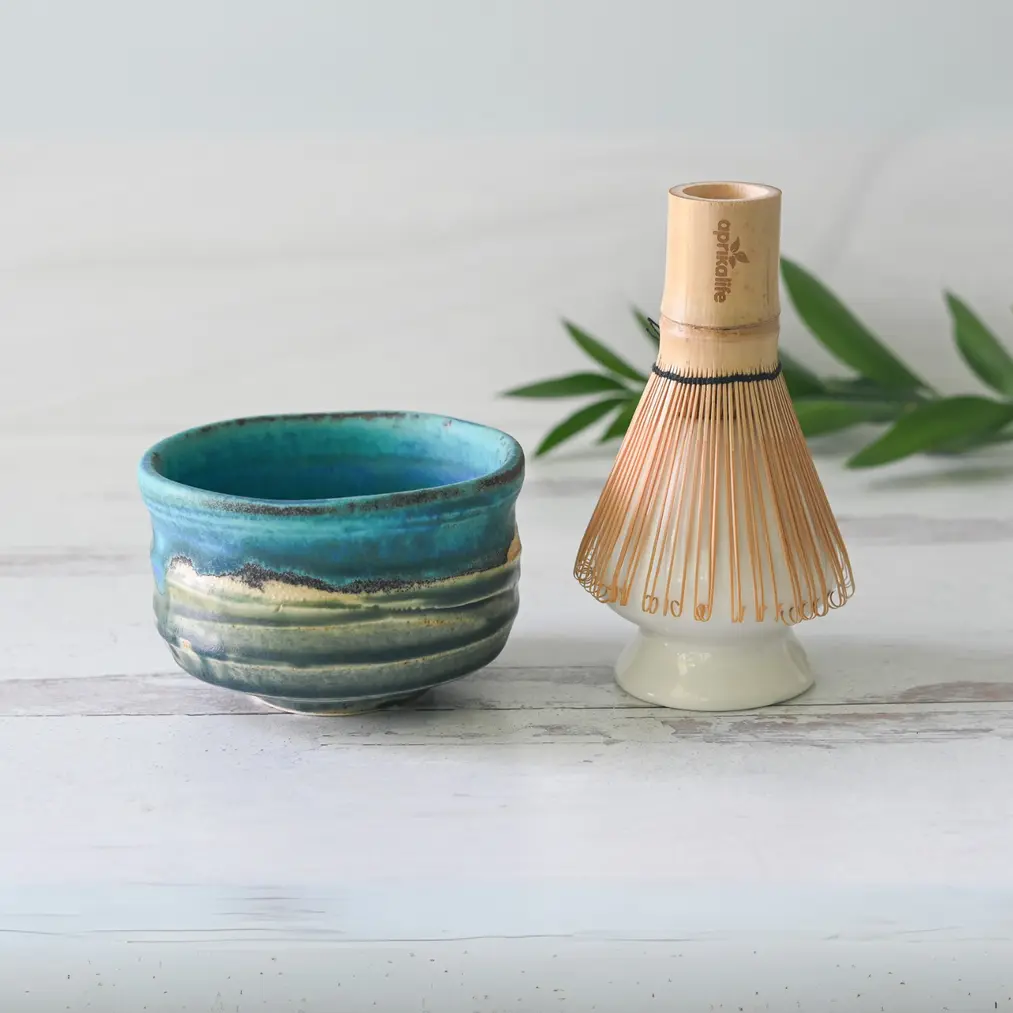
Blue and cream glazed matcha bowl beside a bamboo whisk resting upside down on a white ceramic whisk holder
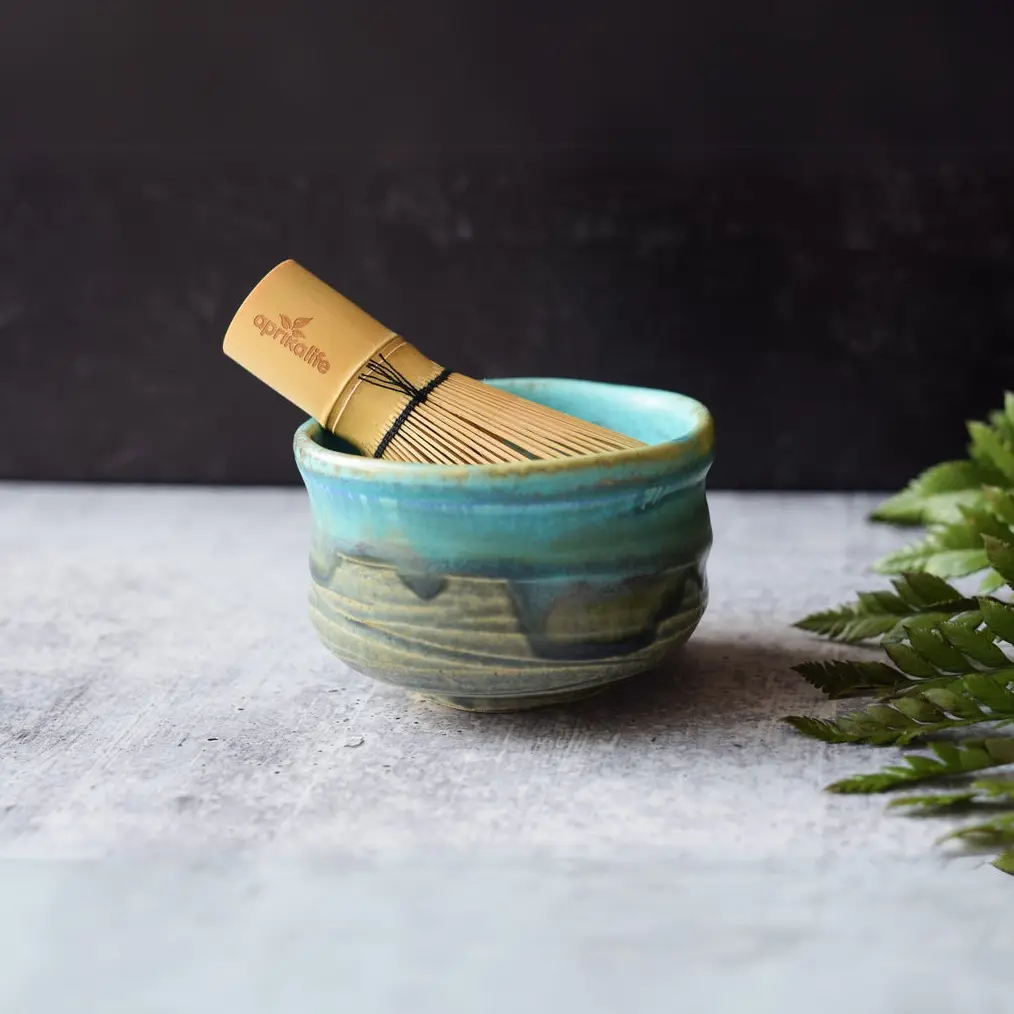
Turquoise and olive glazed Marusho matcha bowl with a bamboo whisk resting inside, on a grey surface beside green fern fronds
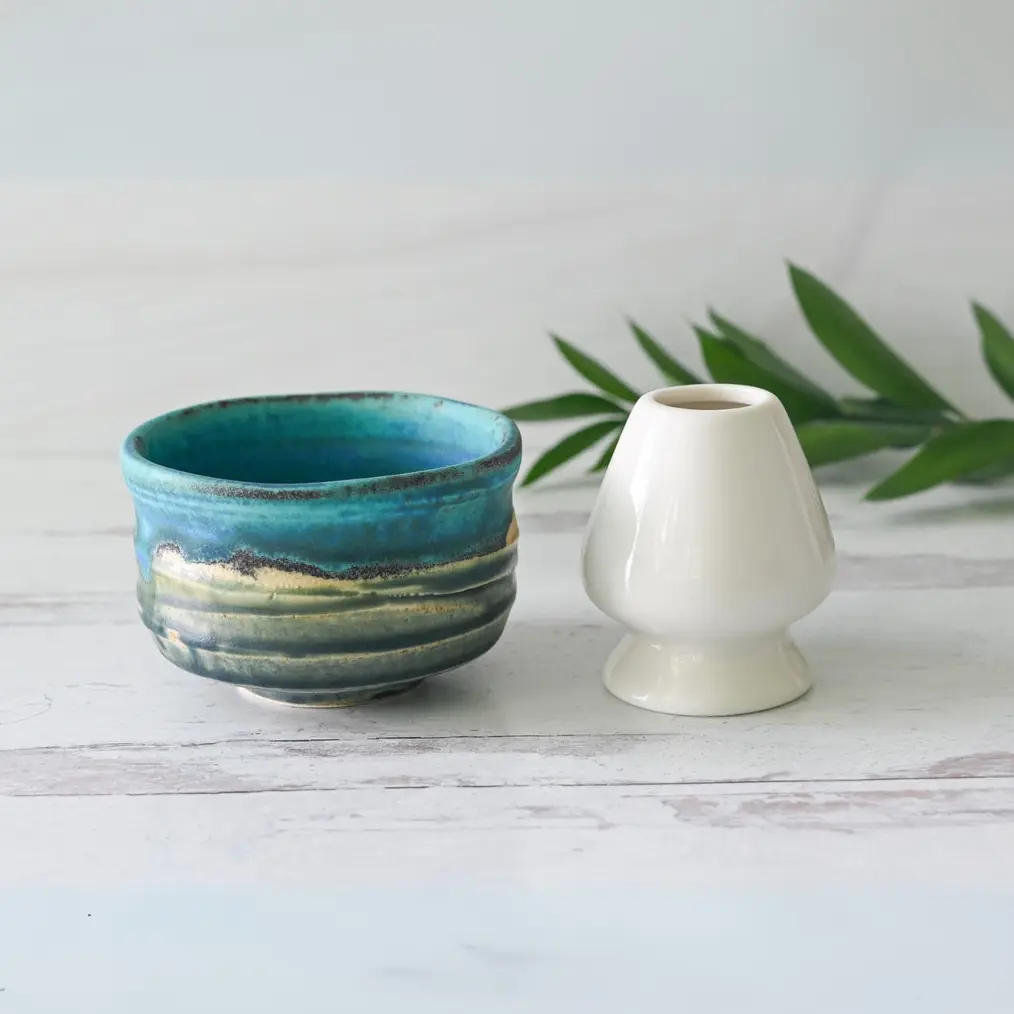
Blue and teal glazed matcha bowl next to a white ceramic whisk holder on a pale wooden surface
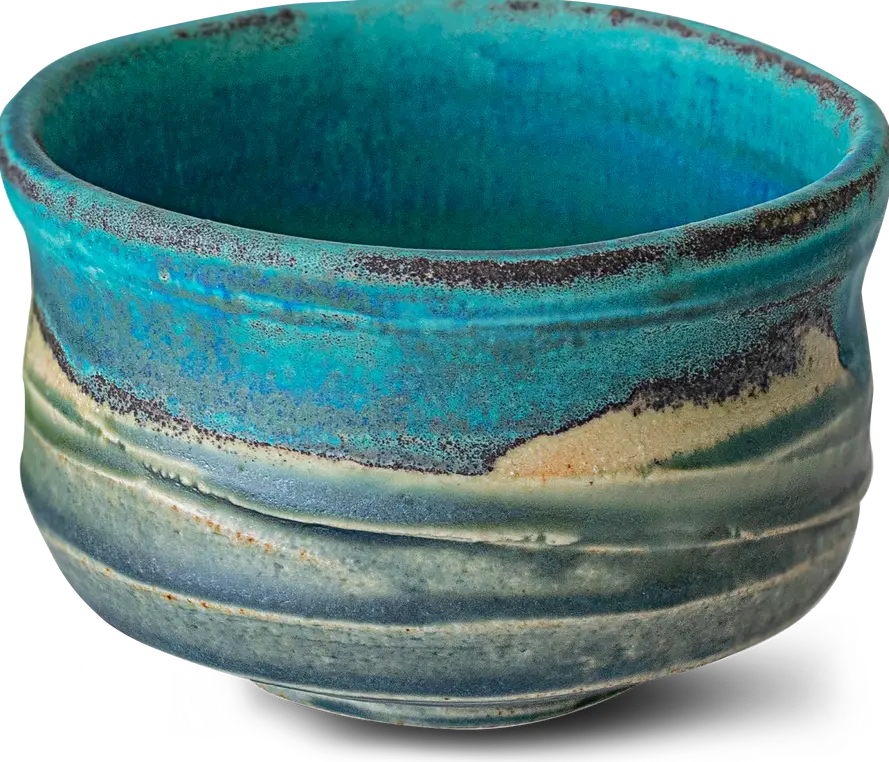
Ceramic matcha bowl with turquoise glaze fading to grey-blue and sand-colored bands near the base

Marusho Blue Matcha Bowl Bamboo Whisk and Whisk Holder Set

Marusho's blue matte-glazed matcha bowl pairs with a bamboo whisk and whisk holder, made in the Mino pottery tradition of Tono, Gifu Prefecture.
  • Subtotal

    {{ currencyFormat( pricing_summary.total_amount ) }}

Blue matte Mino ware matcha bowl with bamboo whisk and holder

The Marusho blue matcha bowl set brings together three pieces: a small matcha bowl in a blue matte glaze, a bamboo matcha whisk, and a whisk holder. The bowl measures 4 inches in diameter and 2.5 inches tall, a compact size for a matcha bowl, or chawan, the wide vessel matcha is whisked in.

What comes with this blue matte matcha bowl

  • Matcha bowl finished in a blue matte glaze, 4 inches in diameter and 2.5 inches tall
  • Bamboo matcha whisk for whisking matcha in the bowl
  • Whisk holder sized for the bamboo whisk

The bowl belongs to Marusho’s handmade Japanese bowls, so surface and glaze character follow the maker’s hand rather than a machine-identical finish.

Why Mino ware from Tono in Gifu Prefecture matters here

Bowl production in this tradition began 1400 years ago and still has a place in everyday life. It started as pottery made as art. The ceramics of the Azuchi Momoyama period, 1568 to 1598, known as Momoyamato, are reputed to be the most magnificent type of ceramic in Japanese history. In Tono, in Gifu Prefecture, artisans shaped pottery that came to stand for Japan itself.

Kiseto, Shino and Oribe: the styles behind this pottery

Mino ware, Minoyaki, covers leading Japanese pottery styles including Kiseto, Shino and Oribe. During the Momoyama period, when the culture of tea pottery flourished, Minoyaki kept being refined, and it has been valued as art since. Tradition and technique pass from one generation of artisans to the next, with the work aimed at smoother surfaces, higher quality and design that is better for practical use.

Who the Marusho matcha bowl set fits

This set suits anyone who wants the bowl, bamboo whisk and whisk holder gathered in one purchase rather than sourced separately, and who prefers a small bowl over a wide one. The blue matte glaze keeps the look quiet next to brighter glazes. Beyond the glaze color, the bowl dimensions and the Mino ware background, the set is described in plain terms, so expect the three pieces named above and nothing further. It stays listed on Best Matcha among matcha tools and handmade Japanese bowls.
Frequently asked questions

Blue matte Mino ware matcha bowl with bamboo whisk and holder Here are some frequently asked questions and answers.

What is included in the Marusho blue matcha bowl set?

The set includes a matcha bowl with a blue matte glaze, a bamboo matcha whisk, and a whisk holder.

How big is the matcha bowl?

The bowl measures 4 inches in diameter and 2.5 inches tall. It is described as a small matcha bowl.

What does the bowl look like?

It has a blue matte glaze. As a handmade Japanese bowl, its finish reflects the artisan's work rather than a uniform industrial surface.

Where does this style of pottery come from?

It comes from the Mino ware tradition, Minoyaki, made in Tono in Gifu Prefecture, Japan.

How old is the Mino ware tradition?

Bowl production in this tradition began 1400 years ago and remains part of everyday life. Tea pottery culture flourished in the Azuchi Momoyama period, 1568 to 1598, whose ceramics are known as Momoyamato.

Which pottery styles is Mino ware known for?

Mino ware includes leading Japanese pottery styles such as Kiseto, Shino and Oribe, developed by artisans in Tono, Gifu Prefecture.

Is this bowl meant for display or for use?

Minoyaki began as pottery made as art and is still valued as art, while artisans work toward smoother, higher-quality pieces with design that is better for practical use.