Samidori (さみどり) is a Uji tea cultivar associated with tencha, the leaf material used to make matcha. Kyoto Prefecture identifies it as a selection from Uji native stock, formerly called Koyama 69, and names Koyama Masajirou as its developer. It is not the similarly named Saemidori.
What the Kyoto record says about its history
The prefecture’s cultivar guide records Samidori’s development year, labelled 育成年, as Showa 29, or 1954. That is the date and description used here. The page does not establish a separate 1939 selection date, and its wording should not be silently converted into either a registration date or the first year of cultivation.
Selection from native stock also differs from a documented deliberate cross between two named parents. The Kyoto record identifies Samidori through its Uji source population and former selection number. Those identifiers are more useful for establishing the cultivar than an unsourced translation of its name or a story about registration status.
Growth habit and harvesting
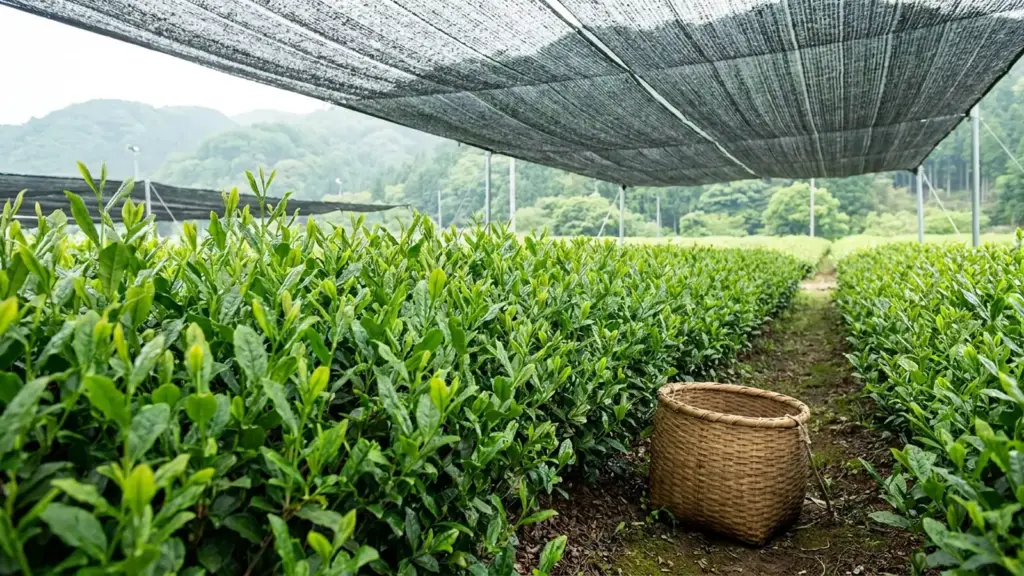
Kyoto describes Samidori as strongly upright and easy to hand-pick. Its young shoots are pale green, glossy and fresh-looking; the guide places harvest timing in the midseason group with a relatively broad suitable picking window. These are agricultural traits, not a recipe for the finished bowl.
The guide lists Samidori alongside Asahi and Ujihikari as important tencha cultivars grown under intensive hand-picking management in Kyoto. This explains the cultivar’s association with hand-picked Uji tea. It does not prove that every product bearing the name was hand-picked, nor that the name alone identifies one farm or one harvest.
Why it is used for tencha
The prefecture rates Samidori highly for tencha, particularly its clear color and aroma and flavor. Tencha follows a different processing route from rolled sencha: the leaf is dried without rolling before preparation for milling. The cultivar supplies the plant material; cultivation and processing determine how that material becomes the product in the tin.
General descriptions such as sweet or umami-rich can help communicate a producer’s intended style, but chocolate notes, zero bitterness or a fixed amino-acid content require evidence about the particular tea. They are not guaranteed by the cultivar entry. Compare a seller’s tasting description with the lot and preparation being described.
Samidori is not Saemidori
The names refer to different cultivars. For Samidori, the Japanese spelling さみどり and Kyoto’s former name Koyama 69 are useful checks against a transcription error. Do not import another cultivar’s parentage, registration date or harvest schedule because the English names look similar.
Reading a single-cultivar label
Look for an explicit single-cultivar statement, producer and growing origin. A Samidori component in a blend is not the same claim as a tea made entirely from Samidori. Harvest method and intended use should be stated separately. The cultivar provides a meaningful starting point for comparison, while the actual tea remains the basis for evaluating taste.