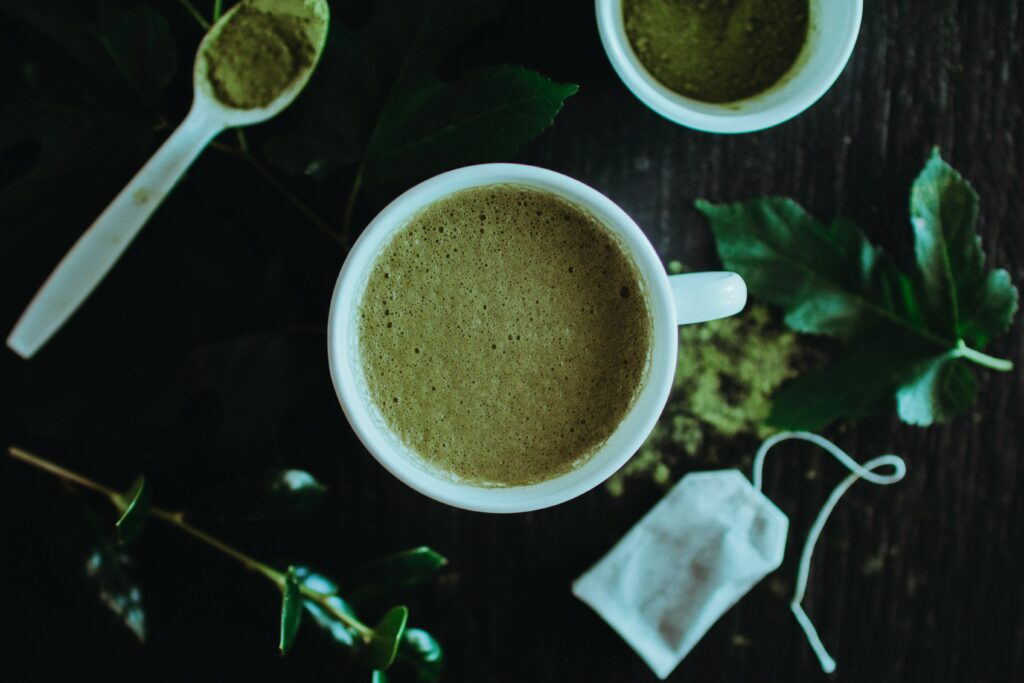
What Latte Grade Matcha means
Latte Grade Matcha is a seller’s description for matcha recommended for milk-based drinks. It is useful as an intended-use label, but it is not a shared technical specification placing every product between ceremonial and culinary matcha. Different brands can apply those names to different selections. The words alone do not establish harvest season, particle size, color, price, or nutritional content.
A documented supplier example
Encha’s selection guide explicitly says that grade naming is subjective to each brand. It describes its own latte-grade powder as made from first-harvest leaves, with a stronger taste in water that suits pairing with milk. Its product page lists organic matcha green tea powder as the ingredient. These are statements about Encha’s product, not a definition that all latte-grade matcha must satisfy.
This example also shows why the label cannot reliably mean later-harvest tea. A first-harvest latte product exists, while another seller may choose a different harvest or blend. If season matters to your purchase, read the actual harvest disclosure. Do not infer it from the grade name or assume that one season automatically makes a tea appropriate for every recipe.
Pure powder versus latte mix
Matcha recommended for lattes need not contain milk, sugar, or flavoring. Encha’s documented example is a plain tea powder to which the customer adds liquid. A prepared latte mix, by contrast, may include sweetener, dairy ingredients, plant-based creamer, or other flavorings. Read the ingredient list before comparing package prices or deciding how much to use.
The underlying tea identity also matters. MAFF describes matcha as powder made by grinding tencha: covered-grown leaves steamed and dried without rolling, then refined. A green drink mix is not necessarily pure matcha simply because its label emphasizes latte use. Product identity and ingredient disclosure answer a different question from the seller’s taste recommendation.
Comparing performance in milk
Use the same amount of powder, the same milk, and a consistent preparation method when comparing products. Taste the unsweetened drink before adding syrup or sugar, then assess whether the tea remains noticeable in the recipe you actually enjoy. This is a practical comparison method, not a claim that latte-grade powders universally have stronger flavor or finer texture than culinary products.
Milk choice, powder dose, sweetness, and mixing all affect the result. A powder marketed for whisking with water can still make a latte you prefer; using it with milk is not inherently wasteful. Likewise, a product marketed for cooking may suit a drink. The relevant question is how a particular tea performs at an acceptable cost, not where its label appears in an assumed grade hierarchy.
Mixing without promising dissolution
Matcha is finely ground leaf material, not a soluble instant-tea extract. Whisking disperses the particles; the label does not promise complete dissolution or an absence of settling. Break up clumps and mix thoroughly. MAFF’s Uji tea latte recipe illustrates one approach: sieve the tea and mix it with a little hot water before combining it with milk.
For an iced drink, preparation technique still matters. A smooth concentrate can be combined with cold milk and ice, with the final ratio adjusted to taste. Follow the seller’s guidance where available. There is no evidence in the grade name itself for a fixed particle size, universally faster mixing, or better foam than another commercial category.
What to check before buying
Start with ingredients, stated leaf origin, harvest information if supplied, package size, storage instructions, and recommended use. Check certification independently if organic production matters to you; certification is a separate claim, not part of the definition of latte grade. Compare the amount of actual tea used per drink when weighing value, particularly when one product is sweetened and another is pure powder.
The most useful latte label explains the intended beverage and gives enough product detail to test that recommendation. Treat broad claims about superior nutrition, guaranteed smoothness, or universal first-harvest sourcing as claims needing their own evidence. Latte Grade Matcha describes a use-oriented purchasing category, not a promise that one powder will suit all drinkers.