
Icha tea is a Toronto matcha brand offering ceremonial-grade powder sourced exclusively from first-flush ichibancha leaves. Its matcha comes from four terroir-driven regions—Uji, Nishio, Kagoshima, and Shizuoka—and is traditionally stone-ground to preserve vibrant colour and umami.
Plants are shaded weeks before harvest using the Tana system to boost chlorophyll and amino acids; only the youngest hand-picked leaves are processed. The brand maintains direct partnerships with producers in Uji and Nishio, and its farms avoid pesticides and synthetic fertilisers.
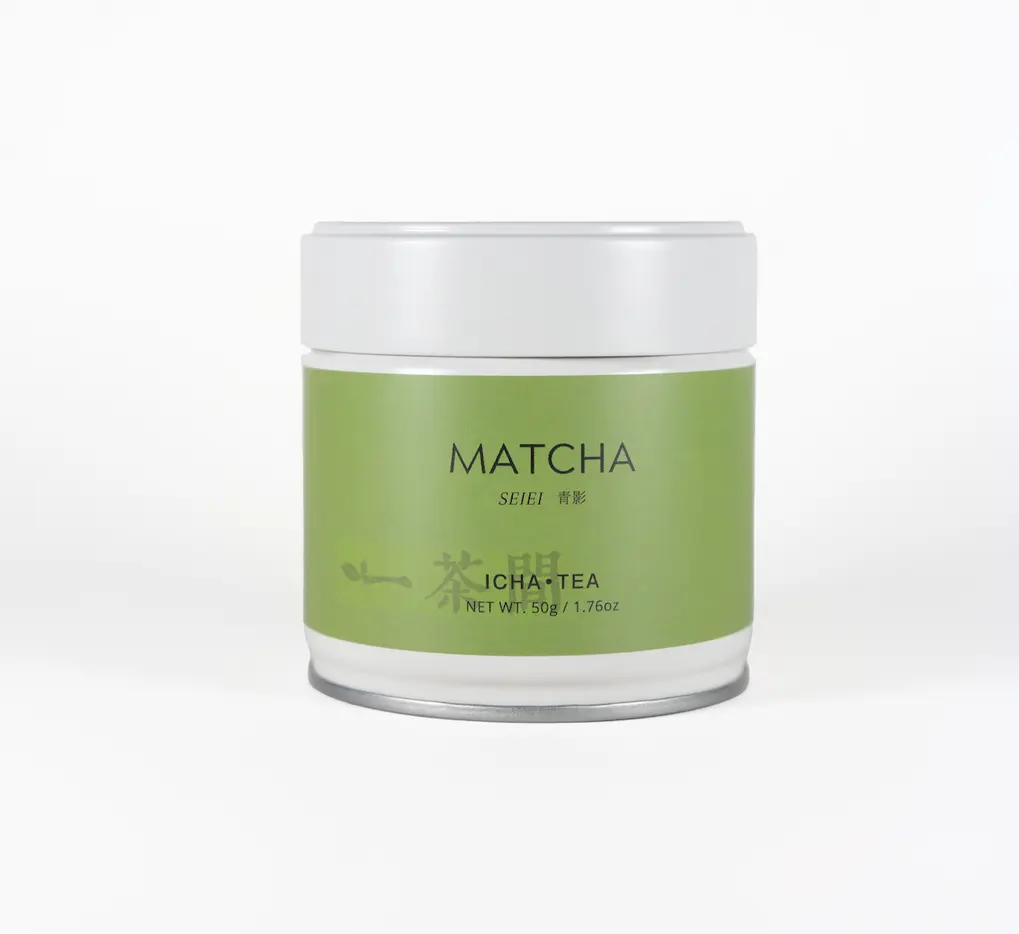
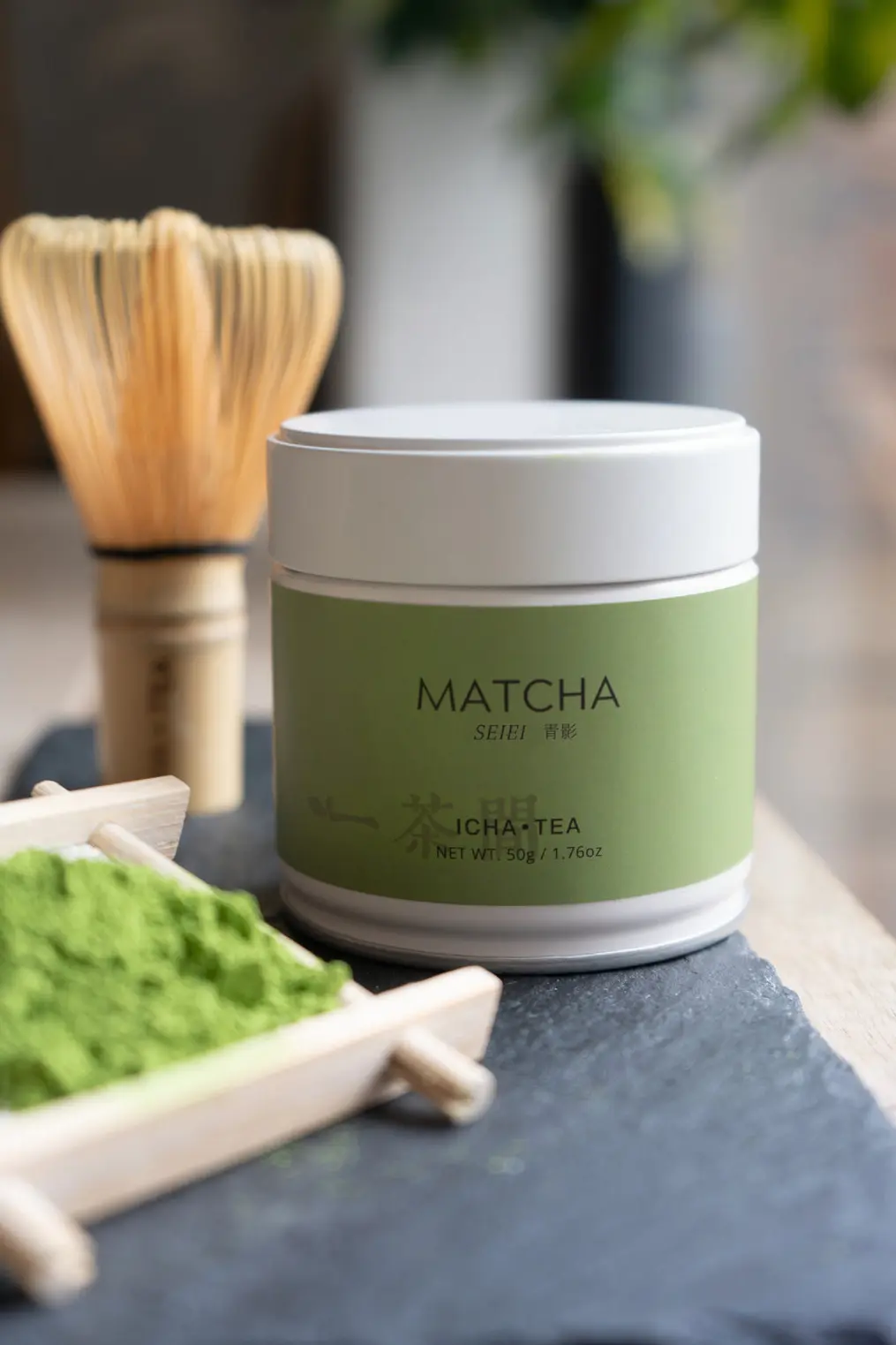
Matcha Seiei (青影, “Green Shadow”) is a ceremonial-grade matcha from the Kakegawa region of Shizuoka, Japan, sold in a 50g tin. It is made from the Yabukita cultivar, shade-grown and stone-milled to a silky powder with a vibrant green color. The flavor opens with fresh grassy sweetness and subtle oceanic notes, then settles into a creamy, full-bodied mouthfeel with a long finish.
What does Kakegawa-grown Yabukita matcha taste like?
The aroma leads with fresh grass and sea breeze, carrying light floral hints. On the palate, Seiei is creamy and smooth, rich in umami, with a velvety weight that builds rather than turning sharp. The finish is where this matcha separates itself: a strong returning sweetness, described in tea terms as hui gan, rises back through the palate along with a lingering, uplifting fragrance. That combination of pronounced creaminess and intense returning sweetness is the defining character of Seiei.
Is Seiei better for usucha or a matcha latte?
Seiei prepares well as usucha, the standard thin-tea preparation, and its clarity and depth come through cleanly when whisked with water alone. It is arguably even more compelling in milk. The depth and creaminess of the Yabukita cultivar hold up against dairy instead of disappearing behind it, producing a balanced, indulgent matcha latte. Buyers who drink matcha primarily as a latte but do not want a powder that tastes thin or flat on its own will find this a practical single-tin choice for both styles.
Shizuoka sourcing and cultivar details worth knowing
Shizuoka is one of Japan’s major tea-producing prefectures, and Kakegawa sits among its misty hill country. Yabukita is the most widely planted cultivar in Japanese tea, valued for its balance and consistency, and here it is grown under shade before being stone-milled. Stone milling is the slow, traditional method for reducing tencha into fine matcha powder, and it is one reason the texture reads as silky rather than gritty when whisked.
- Origin: Kakegawa, Shizuoka, Japan
- Cultivar: Yabukita
- Grade: ceremonial
- Processing: shade-grown, stone-milled
- Format: 50g tin
- Best uses: usucha and matcha latte
Who should choose Matcha Seiei?
This suits drinkers who want a matcha with body and sweetness rather than a bracing, austere profile. If you gravitate toward creamy textures, marine and grassy aromatics, and a sweet aftertaste that keeps developing after the sip, Seiei fits. Drinkers who prefer a sharper, more astringent bowl may find it too round. The 50g tin is a reasonable quantity for regular drinking without committing to a large volume, since matcha is best used steadily once opened.
Availability and current pricing are listed by the retailer. Check the product page before ordering to confirm the 50g tin is in stock.
Yabukita is Japan's dominant tea cultivar, selected in Shizuoka in the early 1900s and prized for its balanced sweetness and umami.
It comes from Shizuoka, Japan, specifically the misty hills of the Kakegawa region.
Yabukita. The depth and creaminess associated with this cultivar carry through into the cup, and are especially noticeable in milk-based preparations.
Seiei translates as "Green Shadow".
The leaf is shade-grown, then stone-milled into a silky powder with a green color.
The aroma opens on fresh grass and sea breeze with light floral hints. The palate is creamy and smooth, rich in umami, with a velvety, full-bodied mouthfeel. The finish brings a strong returning sweetness (hui gan) and a lingering fragrance that rises back through the palate.
It works well as usucha, or thin tea, whisked in the standard way.
Yes. It is described as shining in a matcha latte, where the Yabukita depth and creaminess give a balanced, indulgent cup.
A 50 g tin.