

Frequently asked questions
Matcha contains notably more EGCG than regular green tea because you’re consuming the entire leaf in powdered form, not just steeping it. Traditional matcha consumption (2-4g daily) delivers approximately 100-200mg of EGCG depending on quality and preparation. Regular green tea, where you’re just drinking the infusion, provides considerably less since most of the leaf’s compounds stay in the discarded leaves.
The whole-leaf consumption makes a real difference. You’re getting the full spectrum of catechins and other beneficial compounds that would otherwise remain in the tea bag or loose leaves you’d throw away.
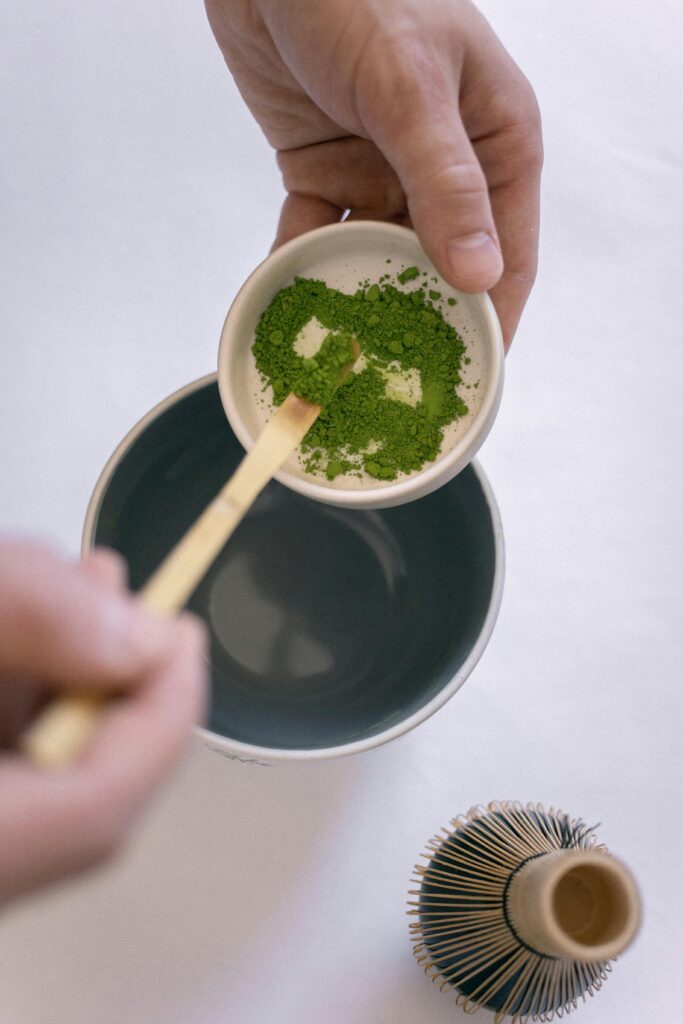
Traditional matcha consumption of 2-4g daily appears to be the sweet spot. That’s roughly 1-2 teaspoons of matcha powder, which provides around 100-200mg of EGCG with a long history of safe use.
Here’s the thing: research hasn’t established optimal doses for specific health outcomes, and more isn’t necessarily better. High doses can actually cause problems, so sticking with traditional amounts makes sense. This moderate intake contributes to your antioxidant intake as part of a healthy diet and may support cardiovascular health through multiple mechanisms.
EGCG faces significant bioavailability challenges. Research shows relatively poor absorption—often less than 5% of the consumed dose—with rapid metabolism and elimination. Plus, there’s high variability between individuals.
That said, some research suggests consuming matcha as whole powder might improve bioavailability compared to isolated EGCG supplements, possibly due to other compounds facilitating absorption. Vitamin C appears to improve EGCG stability and absorption, while dairy products may reduce it. Presence of food matters too, particularly proteins which can bind EGCG. Your individual gut microbiome composition also plays a role.
Yes, you can overdo it. While matcha EGCG consumed in traditional amounts appears safe for most people, high doses raise concerns. Case reports link excessive green tea extract consumption to liver problems, though these typically involve concentrated supplements rather than traditional tea consumption.
Empty stomach consumption may increase both absorption and risk of side effects. Individual variation in metabolism affects tolerance, and there are potential interactions with certain medications. The low bioavailability means massive doses used in laboratory studies don’t reflect achievable human levels through normal consumption—and that’s probably a good thing.
Consuming matcha as whole powder in traditional preparation likely optimizes benefits. Some tips: prepare with warm water (not boiling), which preserves delicate compounds. Vitamin C appears to improve EGCG stability and absorption, so pairing your matcha with citrus or vitamin C-rich foods might help.
Avoid dairy products with your matcha if you’re focused on EGCG absorption—they may reduce it. The traditional preparation and consumption patterns developed over centuries likely optimize benefits while minimizing risks, suggesting wisdom in moderation rather than maximization.
Traditional matcha consumption appears safe for most people, but there are exceptions. Factors affecting safety include empty stomach consumption, individual variation in metabolism, and potential interactions with certain medications.
If you’re pregnant, breastfeeding, have liver conditions, or take medications that might interact with green tea compounds, you’ll want to consult a healthcare professional before making matcha a regular habit. Also, stick with traditional amounts rather than mega-dosing. EGCG isn’t a miracle compound and won’t overcome poor lifestyle choices—focus on matcha as a source of beneficial compounds within a balanced diet rather than a therapeutic intervention.

