

A café matcha latte runs about six dollars and takes the barista three minutes. You can make the same drink at home for under a dollar, in those same three minutes, with better matcha than most shops use. The formula: 2 g matcha, 2 oz hot water, 6 to 8 oz milk. Sift, whisk into a paste, add milk. That’s the whole method.
The two mistakes that ruin it, clumps and bitterness, both have single-point fixes. This guide covers both versions (hot and iced) with the exact steps that eliminate those problems.
If you’re still deciding which powder to buy, the guide to the best matcha sorts it out, but any decent latte-grade tin will get you started this morning.
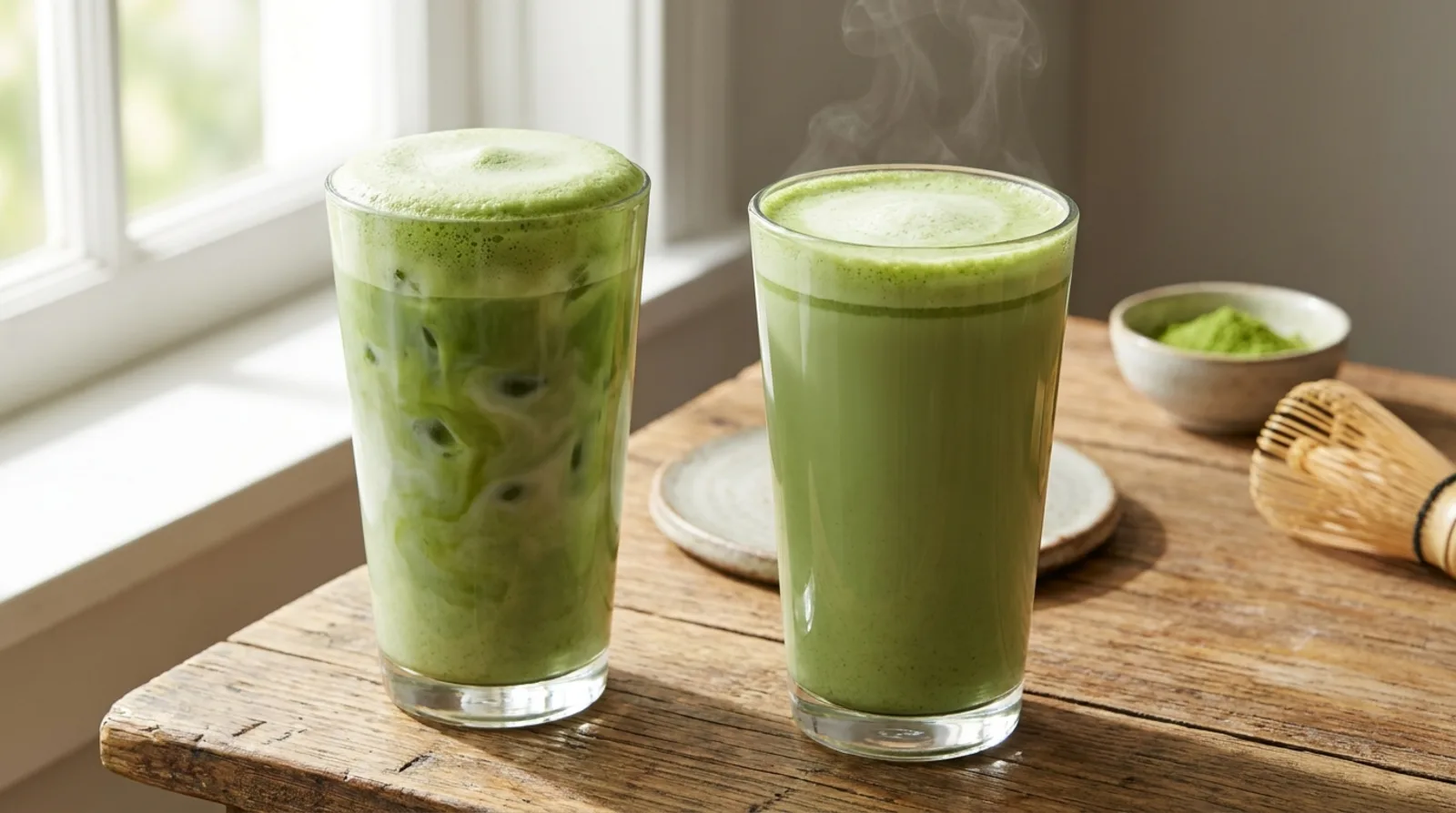
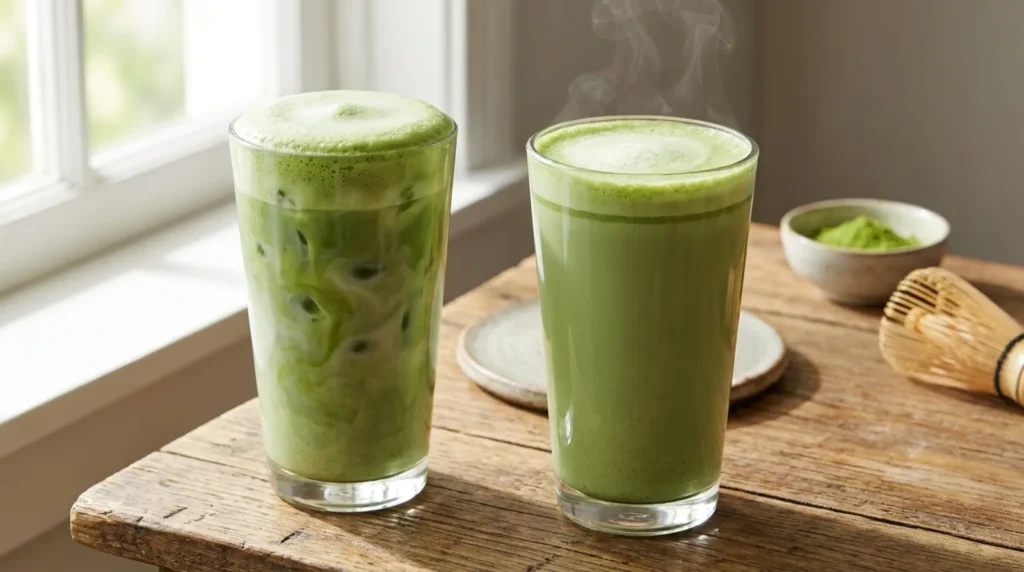
Same recipe, two ways: iced over cold milk (left) and hot with steamed milk (right).
Ingredients
You need very little, and you probably have most of it.
- 1 to 2 tsp (about 2 g) matcha powder. Latte or culinary grade works here. You don’t need pricey ceremonial powder for a milk drink. A bolder culinary grade actually holds its flavor better against the milk. See the picks for the best matcha for lattes if you want a tin built for this job.
- Hot water at 175°F (80°C). Not boiling. This matters more than anything else on the list.
- 6 to 8 oz milk. Dairy or a plant milk. Oat, almond, and soy all work; oat froths the best and tastes naturally a touch sweet.
- Optional sweetener. Honey, maple syrup, simple syrup, or a drop of vanilla.
- Ice, for the iced version.
Equipment You’ll Need
Nothing here is exotic, but a couple of pieces make a real difference.
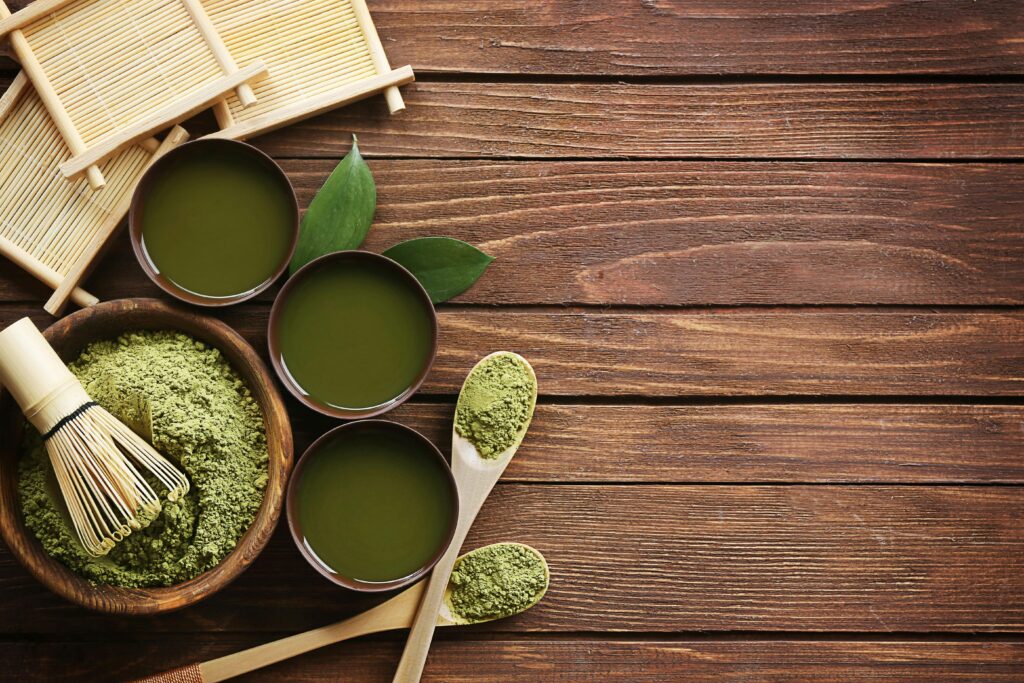
- A chasen (bamboo whisk). The gold standard for froth and the most authentic way to do it. The full matcha whisk guide explains the prong counts and care.
- An electric or handheld milk frother. The fast, modern alternative when you don’t want to fuss with bamboo.
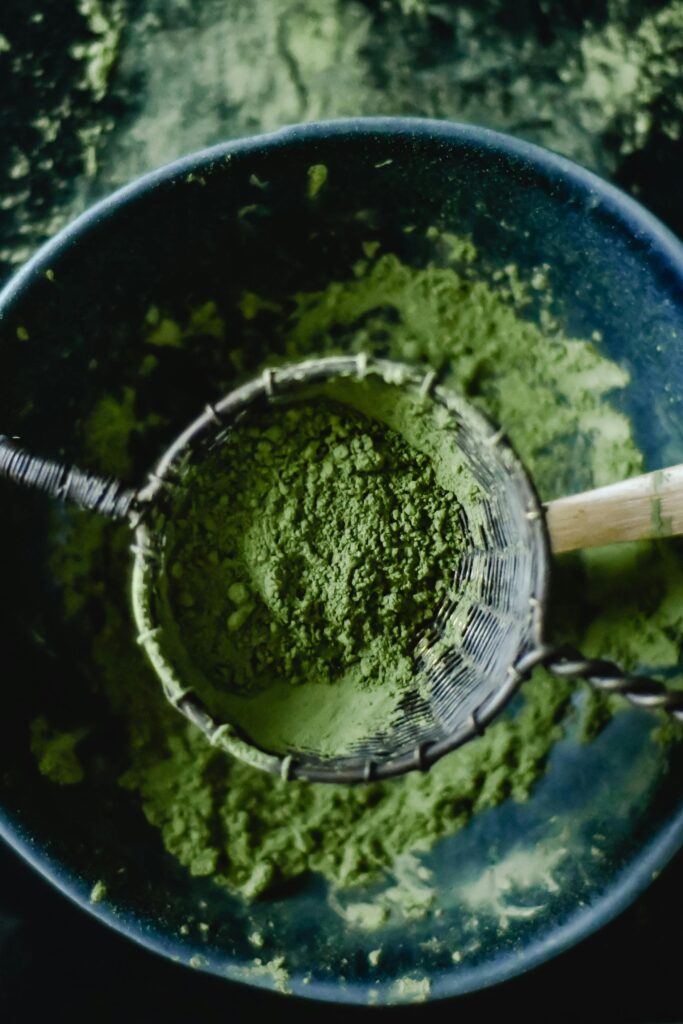
- A fine-mesh sifter (furui). Small, cheap, and the single best clump-prevention tool you can own.
- A small bowl or wide measuring cup, plus an optional thermometer or a variable-temperature kettle if you want to nail the water temp without guessing.
Chasen vs. Frother
A chasen gives you better froth and traditional texture. A handheld frother is faster and easier to clean. Making matcha every morning and want it quick? Reach for the frother. Care about the dense, velvety foam and the ritual? The bamboo whisk is worth learning. You can combine both: whisk the matcha paste with the chasen, then froth the milk separately. Using the chasen on weekends and the frother on weekdays works well, and both approaches give a good cup.
The Matcha Latte Ratio
Get the ratio right and the rest is easy. Make a small, concentrated shot of matcha first, then build the milk around it.
| Cup size | Matcha | Hot water | Milk |
|---|---|---|---|
| Standard latte | 2 g (1 tsp) | 2 oz | 6–8 oz |
| Strong cup | 3 g (1.5 tsp) | 2 oz | 6 oz |
| Large / 16 oz | 4 g (2 tsp) | 3 oz | 10–12 oz |
The reason you add a little hot water before any milk is mechanical. Matcha is a powder, not a soluble like instant coffee, so it needs to be whisked into a smooth paste first. That small pour of water loosens it and lets the whisk break every clump while the mixture is still concentrated. Add milk to dry powder and you’ll fight lumps the whole way down. Want a bolder cup? Nudge the matcha up by half a teaspoon. Stir in sweetener at the paste stage so it blends evenly.
How to Make a HOT Matcha Latte (Step by Step)
- Sift 1 to 2 tsp of matcha into your bowl or cup. This breaks up the powder before water ever touches it, the main defense against clumps.
- Heat your water to 175°F (80°C). Boiling water scorches the leaf, pulling out bitter, astringent notes and a flat, burnt taste. No thermometer? Boil the kettle and let it sit for two minutes, or splash in a little cool water.
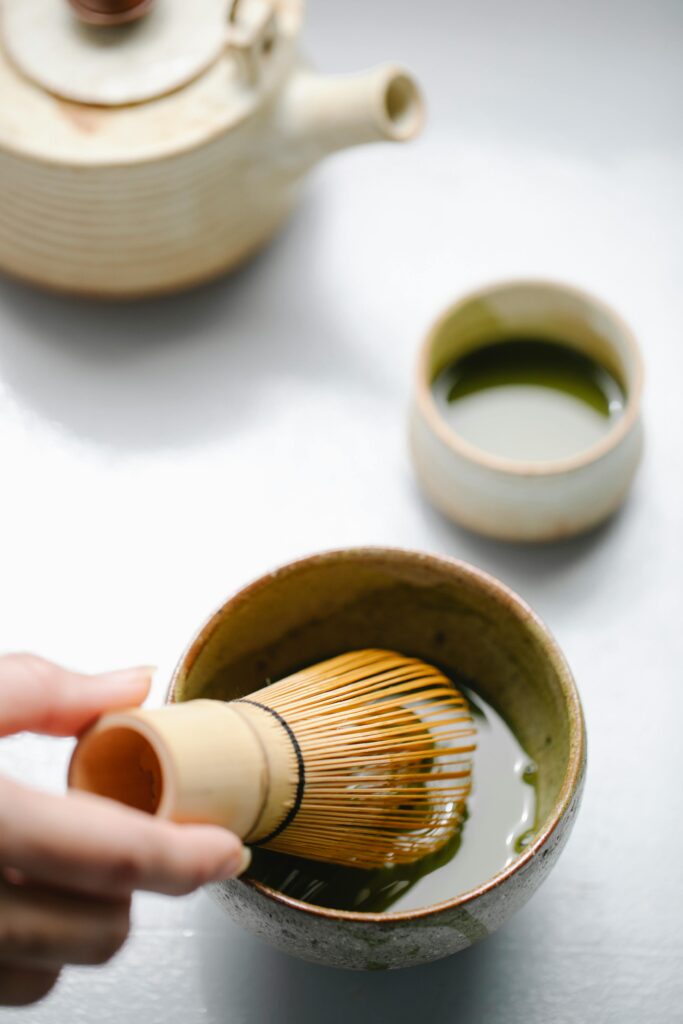
- Add 2 oz of hot water and whisk. Use a quick W or up-and-down zig-zag motion, not circles. Circles just stir; the back-and-forth drives air in and builds froth. Keep it up for 15 to 20 seconds until you have a smooth, bright-green paste with a layer of fine foam.
- Heat your milk to about 150°F and froth it if you want a foamy top. A frother, steam wand, or a jar you shake all work.
- Combine. Pour the milk over the matcha, or pour the matcha into the milk if you’re chasing latte art.
- Sweeten to taste and stir.
Whisk Shape Makes the Froth
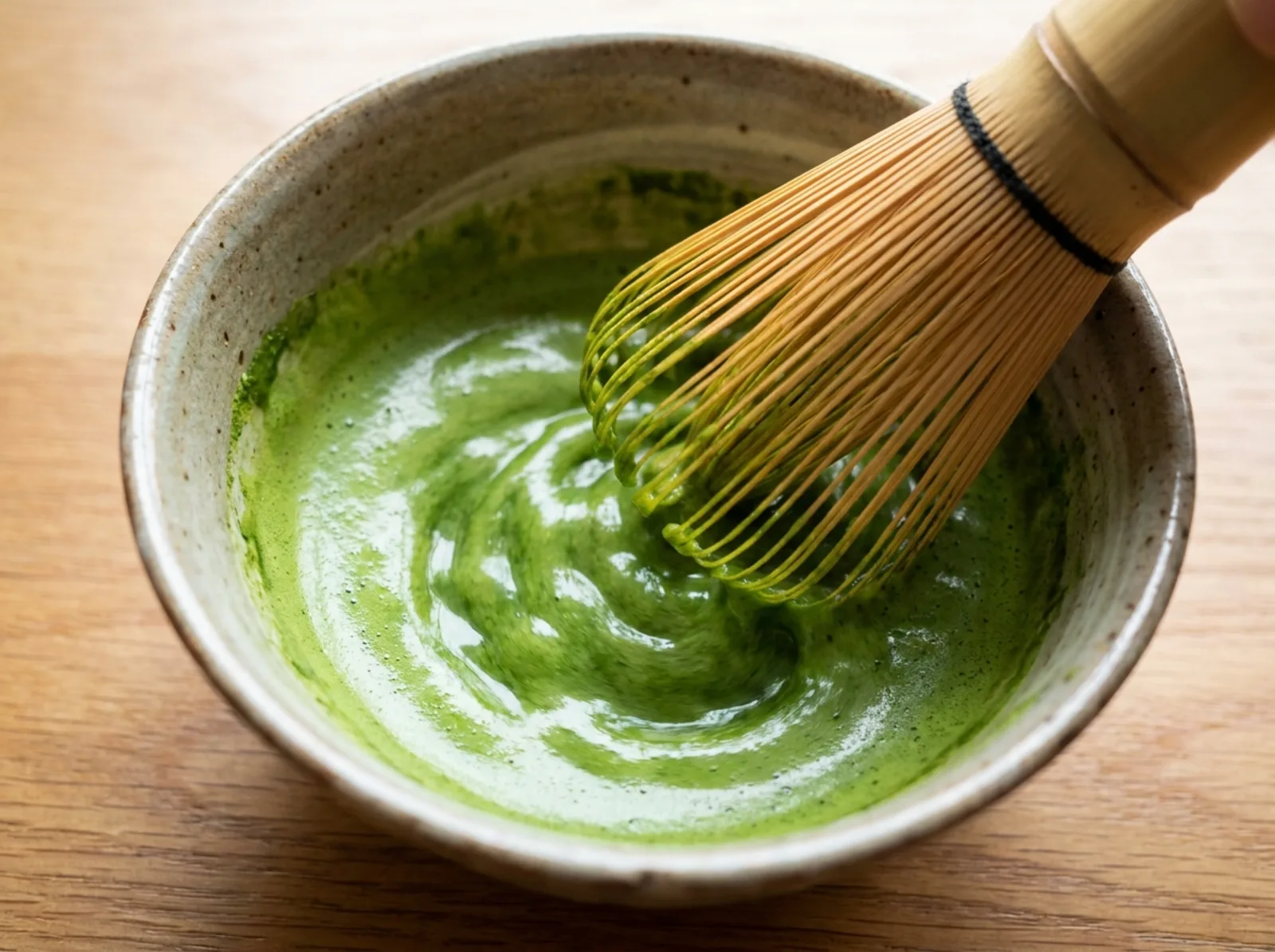
Whisk the matcha into a smooth paste with hot water first; the milk goes in only after the clumps are gone.
The motion is the whole game. Hold the whisk loosely, keep it near the surface, and move from the wrist in fast straight strokes. A slow circular stir, no matter how long you do it, gives you a thin, bubbly liquid instead of dense foam.
How to Make an ICED Matcha Latte (Step by Step)
- Sift your matcha into a small cup or bowl.
- Whisk it with 2 oz of warm (not hot) water first. Even for an iced drink. This is the step people skip, and it’s why iced matcha comes out gritty. Whisk in the same zig-zag motion until smooth.
- Fill a tall glass with ice.
- Pour in 6 to 8 oz of cold milk.
- Pour the matcha shot slowly over the top. It floats and settles into that layered green-on-white look that photographs well.
- Stir before drinking. For sweetening, use simple syrup — it dissolves in cold liquid where granulated sugar won’t.
Why You Still Need Warm Water
Cold water won’t disperse matcha. The powder is so fine that without enough warmth to wet and spread the particles, they stay suspended and you taste them as grit on the back of your tongue. A quick whisk with warm water sorts that before the ice ever touches it.
Sweetener Options
Most good matcha doesn’t need much, but a little rounds off the edge. Honey is classic and dissolves well in the hot version. Maple syrup adds warm depth that pairs well with oat milk. Agave is mild and neutral. Simple syrup is the right call for iced drinks since it’s already liquid. A few drops of vanilla soften and round the flavor. For a richer, dessert-style cup, a spoonful of sweetened condensed milk makes the “dirty matcha” style some cafés sell. Start with a teaspoon, taste, and adjust, since matcha’s bitterness varies a lot by grade.
Troubleshooting Clumps and Bitterness
- Clumpy. You skipped the sift, whisked too gently, or used water that was too cold. Fix it: sift first and use a brisk W-motion whisk on the paste.
- Bitter. Almost always the water was too hot, the powder quantity was too high, or the matcha is low-grade or stale. Drop to 175°F, use a little less powder, and consider upgrading. The best matcha for lattes page has options at every price point, and fresh, latte-grade powder is forgiving.
- Grainy or gritty iced latte. You mixed powder straight into cold liquid. Always make the warm-water paste first.
- No froth. You used a wire kitchen whisk or stirred in circles. Switch to a chasen and the up-and-down motion; the matcha whisk guide covers the technique in detail.
Variations
A few worth trying once you have the base down. Vanilla matcha latte: half a teaspoon of vanilla extract or syrup. Lavender matcha: a small splash of lavender syrup, easy to overdo. Strawberry matcha latte: muddled fresh strawberries or strawberry puree stirred into the milk for a pink-and-green layered cup. Dirty matcha: drop a shot of espresso on top. Matcha protein latte: blend in a scoop of vanilla protein powder. Pumpkin spice matcha: a spoon of pumpkin puree and a dash of warm spice, better in October than it sounds.
Recipe Card
Hot Matcha Latte Prep time: 5 minutes · Servings: 1
Ingredients
- 2 g (1 tsp) matcha powder
- 2 oz hot water (175°F)
- 6–8 oz milk of choice
- Sweetener to taste (optional)
Instructions
- Sift matcha into a cup.
- Add 2 oz water at 175°F and whisk in a W-motion until frothy.
- Heat and froth the milk.
- Pour milk over the matcha and sweeten to taste.
Iced note: use warm water to whisk the paste, then pour over a glass of ice and cold milk.
Estimated nutrition per serving (whole milk, unsweetened, per USDA data): ~110 kcal, 6 g protein, 6 g fat, 9 g carbs.
Sift, keep the water off the boil, whisk in straight strokes, build the milk around a smooth paste. Once hot and iced lattes are dialed in, the powder becomes the main variable — which is where it gets interesting.