
“Ceremonial grade matcha” is not a certified or legally defined term. Any brand can print it on any tin. What separates the genuinely good from the marketing noise is first-harvest leaf, a named Japanese growing region, shade cultivation, and stone-milling: four facts a real producer states plainly. The brands below are the names that recur across leading 2026 matcha roundups, ranked by category using verifiable sourcing facts. Each pick is paired with a no-fluff checklist so you can judge quality yourself. For the wider field, see the best matcha buyer’s guide.
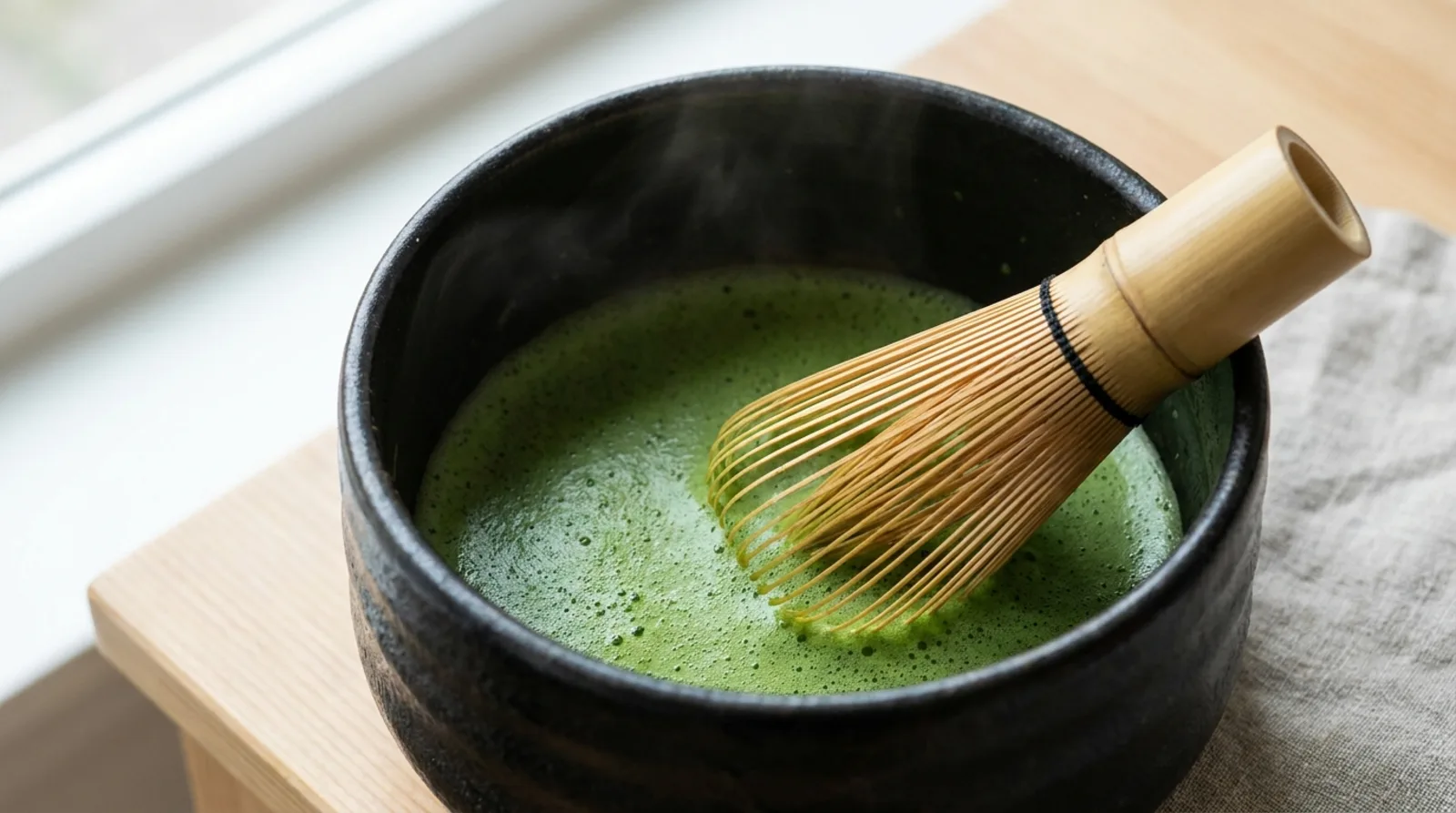
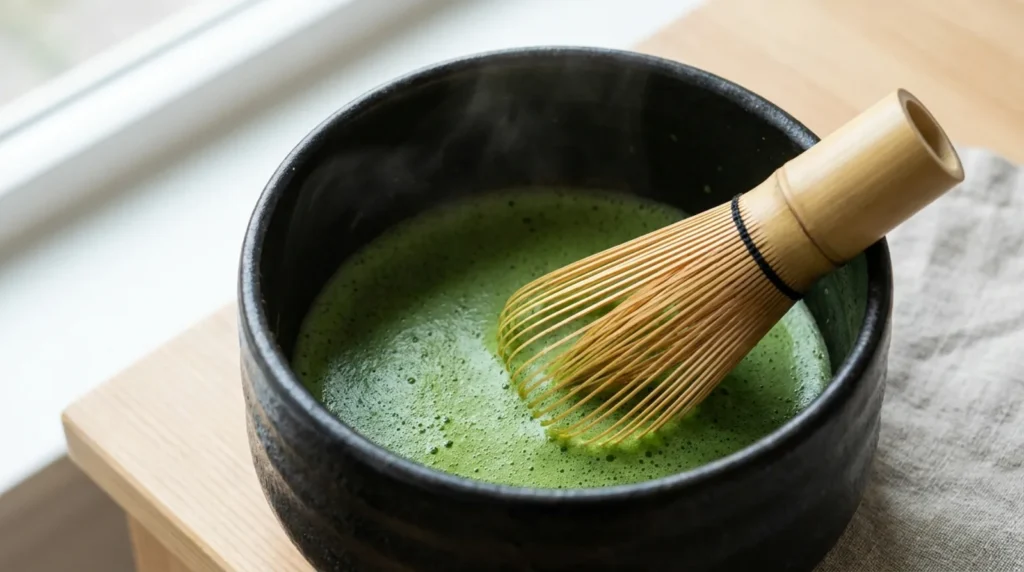
Properly whisked first-harvest leaf froths to a vivid jade foam, the freshness signal no label can fake.
Want to compare every option yourself? Browse our matcha marketplace — 119+ Japanese brands you can filter by grade, origin, and certification.
How I Selected These
My brand selection reflects expert consensus. These are the producers that recur across leading 2026 “best matcha” roundups from publications including Fortune, Tasting Table, Minimalist Baker, Food Republic, Chowhound, matcha.com, and Love & Lemons. When the same names surface repeatedly across independent expert sources, that consensus is a stronger signal than any single review.
I did not run my own taste test; picks are ordered by verifiable sourcing facts and how consistently a brand appears across these independent reviews. Where this guide describes a powder’s character — its color, texture, or flavor — it is summarizing the documented grade, harvest, and origin that shape it, not reporting a cup anyone brewed for this guide.
Within each “best for” category, the ranking is justified by verifiable sourcing facts rather than a taste test: a named growing region (Uji, Nishio, Yame, or Kagoshima), the harvest (first versus second), shade-growing, stone-milling, organic certification (USDA or JAS), and price tier. These are the documented attributes a serious producer publishes plainly, and they are what I weigh.
What Do I Weigh?
Several facts move a pick up or down. A named single-origin region beats a vague “product of Japan.” First-harvest (ichibancha) outranks later harvests. Stone-milling, a stated shade-growing period, and organic certification each add confidence. Price tier sets expectations: genuinely ceremonial leaf is not cheap. Where a brand is transparent about all of these, it earns a place; where documentation is thin, that limitation is noted honestly.
The Best Ceremonial Grade Matcha at a Glance
- Best Overall Ceremonial: Ippodo. First-harvest Uji leaf from a Kyoto house founded in 1717. Named as an overall favorite by Love & Lemons and a ceremonial pick by Tasting Table.
- Best for Beginners: Jade Leaf Ceremonial. First-harvest Japanese matcha at an entry price; a beginner pick per Food Republic and Chowhound, and Best Overall per Fortune.
- Best Traditional Uji: Marukyu Koyamaen. Traditional, koicha-graded Uji producer, named the traditional Uji pick by matcha.com.
- Best Organic: Encha First Harvest. Certified-organic first-harvest Uji leaf; a strong dual-certified alternative to Fortune’s organic pick, Pique Sun Goddess (Fortune).
- Best for Everyday Drinking: Naoki. First-harvest Kagoshima/Uji blend built for daily use; a ceremonial pick per Tasting Table and a beginner pick per Food Republic.
- Best Widely Available: Matcha.com (Matcha Kari). Reliable stock and easy reordering; named Best Overall by matcha.com.
Comparison Table
| Pick | Brand | Origin | Harvest | Size | Best for | Source |
|---|---|---|---|---|---|---|
| Best Overall Ceremonial | Ippodo | Uji, Kyoto | First | 40g | Overall quality | Love & Lemons, Tasting Table |
| Best for Beginners | Jade Leaf Ceremonial | Japan | First | 30g | First-time buyers | Fortune, Food Republic, Chowhound |
| Best Traditional Uji | Marukyu Koyamaen | Uji, Kyoto | First | 20–40g | Purists | matcha.com |
| Best Organic | Encha First Harvest | Uji (organic) | First | 30g | Organic | Fortune (Pique alt.) |
| Best Everyday | Naoki | Kagoshima/Uji blend | First | 30g | Daily drinking | Tasting Table, Food Republic |
| Best Available | Matcha.com (Matcha Kari) | Japan | First | 30g | Easy online buying | matcha.com |
Prices shift with the yen and harvest season, so value is described in relative terms rather than fixed figures.
Best Ceremonial Grade Matcha, by Category
Best Overall Ceremonial: Ippodo
Ippodo has operated in Kyoto since 1717, and that provenance is why it recurs near the top of expert roundups. Love & Lemons names Ippodo Ummon its overall favorite, and Tasting Table lists Ippodo (Sayaka) among its ceremonial-grade picks. The leaf is sourced from Uji, the historic heart of Japanese matcha, and the tin states its first-harvest status plainly. Uji’s growing tradition is built around the shade-grown, stone-milled chain that defines ceremonial-quality leaf, which is why a classic Uji blend from an established Kyoto house makes a natural benchmark.
Origin (Uji, Kyoto) and first-harvest status are stated on the tin. Midrange price, sold as balanced everyday usucha rather than a dedicated koicha tin. A sensible pick for anyone who wants documented Kyoto provenance without the premium of a single-estate koicha. Ippodo regularly tops the roundup of best matcha brands.
Best for Beginners: Jade Leaf Ceremonial
Jade Leaf is the mainstream name that recurs most across roundups: Fortune rates it Best Overall, while Food Republic and Chowhound both list it among their top beginner picks. It earns that spot on documented basics: first-harvest Japanese leaf at an entry price point, widely stocked at major retailers. Its sourcing is stated broadly as Japan rather than a single estate, which is the honest trade-off at this tier. For the most affordable sourced options, note that Fortune’s dedicated value pick is Sencha Naturals and Love & Lemons’ is Navitas.
Region is stated broadly as Japan rather than a single estate, which is this powder’s honest limitation. Low cost per gram and easy to find. The right starting point if you want real first-harvest ceremonial matcha without committing to a premium single-origin tin before you’ve formed a preference.
Best Traditional Uji: Marukyu Koyamaen
This is what “ceremonial” is supposed to mean at the top of the scale. matcha.com names Marukyu Koyamaen its Best Traditional Uji pick. It is a revered Uji producer whose matcha is made for the tea ceremony, including blends graded dense enough to be prepared as koicha. The leaf is first-harvest Uji, stone-milled in the traditional way, and the house publishes its grading clearly, which is why purists and roundups alike single it out.
Premium pricing, and the top tins sell out reliably. A documented single-region Uji producer with traditional stone-milling at the high end of the scale.
Best Organic: Encha First Harvest
Encha sources certified-organic, first-harvest leaf from Uji and publishes more about its farming than most ceremonial brands bother with. The organic certification removes questions about agrichemicals, and the single-region Uji sourcing plus first-harvest status are both documented. Fortune names Pique Sun Goddess its Best Organic pick; Encha stands as a strong dual-certified (USDA and JAS) alternative and appears in beginner roundups from Food Republic as well as Minimalist Baker‘s scored taste test.
Priced above conventional value tins, which is expected for certified-organic single-region sourcing. If organic is your priority, also check the dedicated organic matcha roundup before deciding.
Best for Everyday Drinking: Naoki
Naoki blends Kagoshima and Uji leaf into a first-harvest product positioned for daily use. Tasting Table includes Naoki among its ceremonial-grade picks, and Food Republic lists it as a beginner-friendly brand. The named regions and harvest are stated, and the blend format is built to be approachable and consistent for everyday preparation rather than reserved for special occasions.
A blend rather than single-origin, which sets it below the dedicated koicha tins on ceremonial intensity. Well-priced for the volume a daily drinker goes through, with named-region sourcing kept transparent.
Best Widely Available: Matcha.com
Matcha.com’s defining strength is availability: reliable stock, fast shipping, and easy reordering when you run low. Its house line, Matcha Kari, is named Best Overall by matcha.com. The leaf is first-harvest Japanese matcha sold as a mid-premium house blend, so its draw is consistency and convenience rather than the single-estate provenance specialty importers document.
House-blend sourcing rather than a named single estate. The right pick for anyone who wants first-harvest ceremonial matcha shipped reliably without hunting regional retailers.
What Does “Ceremonial Grade” Actually Mean?
“Ceremonial grade” has no legal definition and no certifying body. No Japanese tea authority issues it. No government regulates it. A $9 tin and a $40 tin can both carry the stamp, and often do. The phrase is pure marketing. Judge the substance instead. For a full breakdown of how the labels compare, read the matcha grades guide.
What Is Real Ceremonial Matcha?
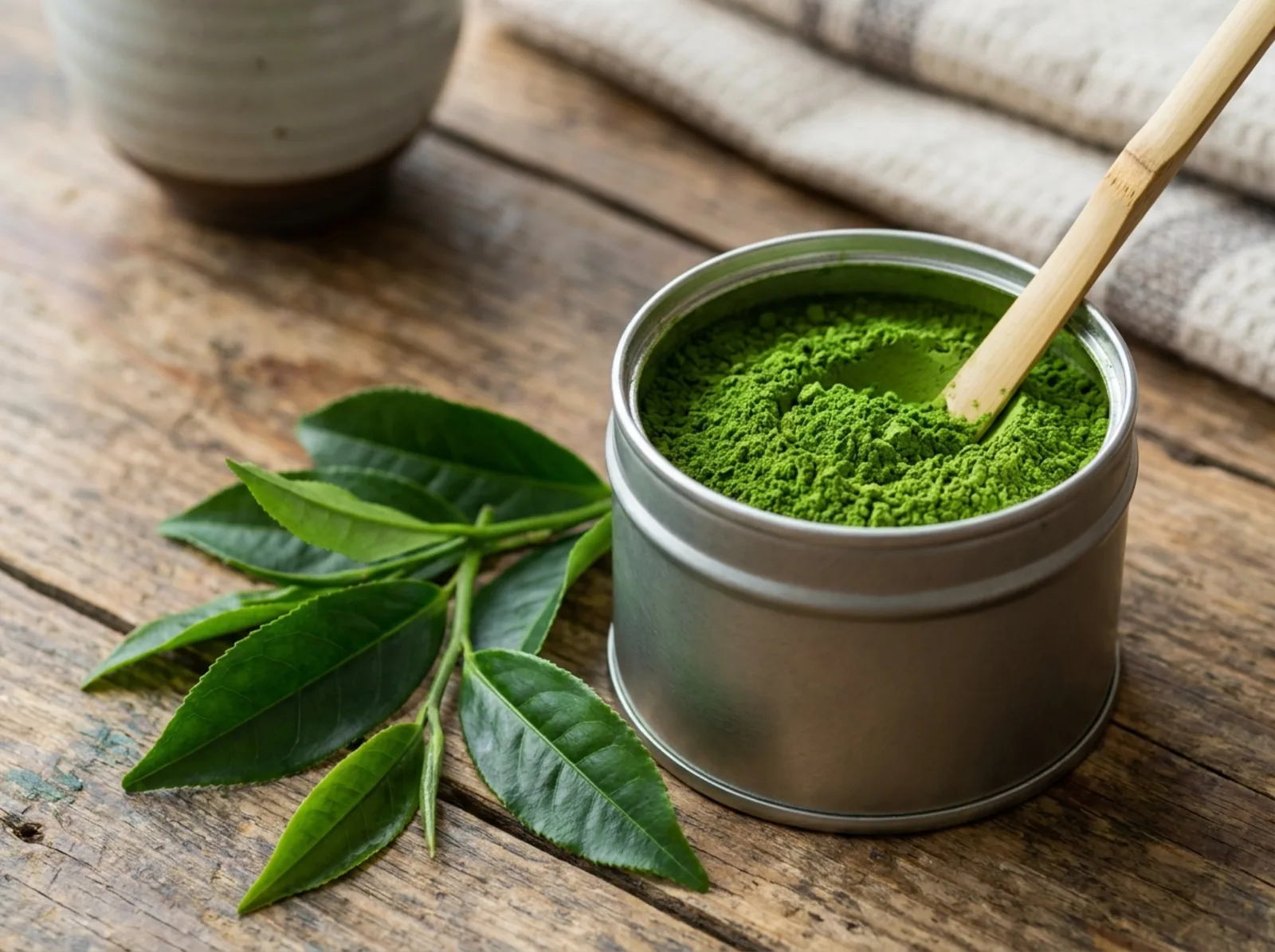
Tender first-harvest, shade-grown leaves and the fine, bright-green powder they become after destemming and stone-milling.
Genuinely ceremonial-quality matcha starts with ichibancha — the first spring harvest of the youngest, most tender leaves. Those leaves are shade-grown for three to four weeks before picking, which concentrates chlorophyll and L-theanine (the amino acid responsible for umami sweetness). After steaming, the leaves are destemmed and deveined into tencha, then stone-milled slowly to a fine powder, typically 5–10 microns. That full chain (first harvest, shade-grown, destemmed, stone-milled) is what the label is supposed to imply but never guarantees.
How Do You Verify Ceremonial Grade Instead of Trusting the Label?
A real producer publishes four things: a named growing region (Uji in Kyoto, Kagoshima, or Nishio, not a vague “product of Japan”), a stated harvest season, a shade-growing period, and whether the matcha is single-origin or a blend. If a tin won’t tell you where and when its leaf was grown, treat the ceremonial claim as decoration.
Then trust your eyes and palate. Vivid jade green means fresh, chlorophyll-rich leaf. Umami-sweet with no bitterness means first-harvest done right.
Quick Buyer’s Guide
Color and Texture
Vivid jade green is the clearest freshness signal matcha can give you. Dull, yellowish, or brownish-green powder points to lower grade, later harvest, or oxidation. Texture should feel silky and fine — run it between your fingers if you can. Gritty means coarser milling.
Taste
Umami-sweet and creamy, with a savory, brothy depth and no harsh bite. Bitterness is the clearest sign you’ve bought down a grade or opened a tin that’s been sitting too long.
Origin and Harvest
A named Japanese region beats a generic “product of Japan.” First-harvest trumps silence every time. Single-origin Uji or Kagoshima leaf is a reliable shortcut to quality.
Price
Real ceremonial matcha runs roughly $1–$3+ per gram. Well under a dollar a gram is a red flag. You are almost certainly getting later-harvest or culinary-grade leaf in a ceremonial-branded tin.
How to Drink It
Whisk with hot water only, as usucha or koicha. Pouring delicate, expensive ceremonial leaf into a sweetened latte wastes the nuance you paid for. Save your culinary or latte-grade powder for that.
How to Prepare Ceremonial Matcha
Sift about 2g (one slightly heaped chashaku scoop) into a warmed bowl to break up clumps. Add roughly 60ml of water at 70–80°C. Boiling scorches the leaf and pulls bitterness out fast. Whisk in a “W” or “M” motion with a bamboo chasen for 15–20 seconds until fine, even froth covers the surface. A proper chasen and a sifter make a real difference. Drink promptly before the foam settles.
Pick Your Tin
For an all-rounder with clean Kyoto provenance, Ippodo is the one to beat. Jade Leaf Ceremonial is the smartest entry point for first-time buyers. Either way: the label alone tells you nothing. Verify first-harvest leaf, a named region, and stone-milling, then taste it. Ready to compare the whole field? Start with the best matcha buyer’s guide.
The Matcha Buyer’s Guide Hub: Choose the Right Matcha Without the Guesswork

Frequently asked questions
“Ceremonial grade” is not legally defined or certified, so the phrase alone does not prove quality. Evaluate the powder through disclosed sourcing and production details instead: a named Japanese growing region, first-harvest leaves, shade cultivation, and stone-milling. A producer that states these facts plainly provides more useful information than the ceremonial wording on a tin.
The guide selects Ippodo as its best overall ceremonial matcha. Its documented attributes include first-harvest leaf from Uji and provenance from a Kyoto house founded in 1717. Love & Lemons named Ippodo Ummon an overall favorite, while Tasting Table included Ippodo Sayaka among its ceremonial-grade selections. The guide presents it as a benchmark with documented Kyoto sourcing.
Check whether the producer identifies a specific growing region, harvest season, shade-growing period, and whether the powder is single-origin or blended. A vague “product of Japan” statement provides less sourcing detail than naming Uji, Kagoshima, or Nishio. The guide also recommends looking for vivid jade color and an umami-sweet character without bitterness when assessing the powder itself.
Sift about 2 grams into a warmed bowl to remove clumps, then add roughly 60 milliliters of water at 70–80°C. Use a bamboo chasen to whisk in a W or M motion for 15–20 seconds, stopping when fine, even froth covers the surface. Avoid boiling water, and drink the matcha promptly before its foam settles.
The guide used recurring recommendations across several independent matcha roundups as its initial selection signal. It did not conduct an original taste test. Within each category, picks were ordered using documented sourcing details, including growing region, harvest, shade cultivation, stone-milling, organic certification, and price tier. Descriptions of character summarize documented grade, harvest, and origin rather than a cup brewed for the guide.


