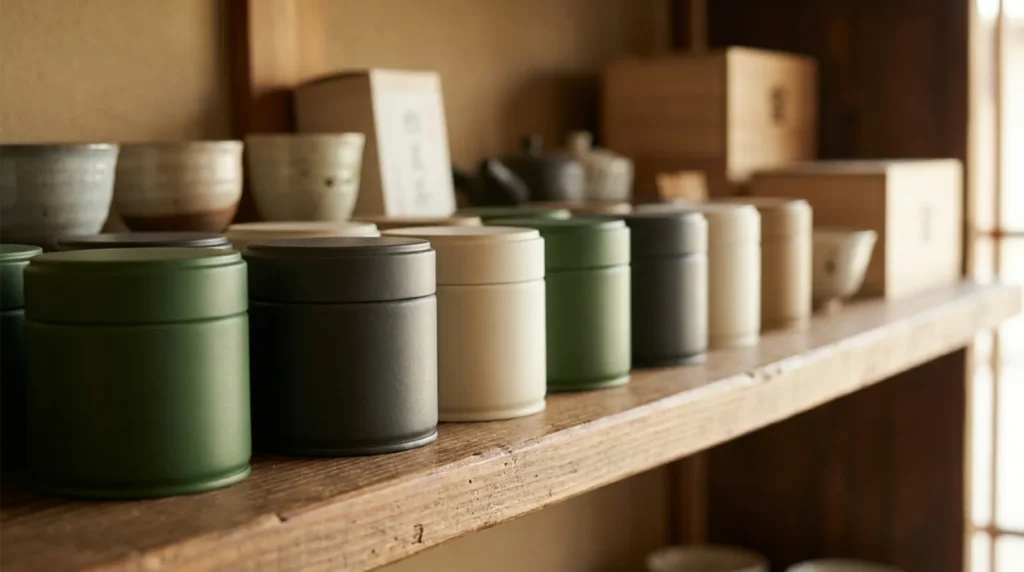
Buy direct from Japanese producers (Ippodo, Marukyu Koyamaen, or Hibiki-an) or from established importers like Naoki and Sazen Tea. Those five cover the full quality range from everyday culinary to competition-winning ceremonial, and all name their producers and growing regions.
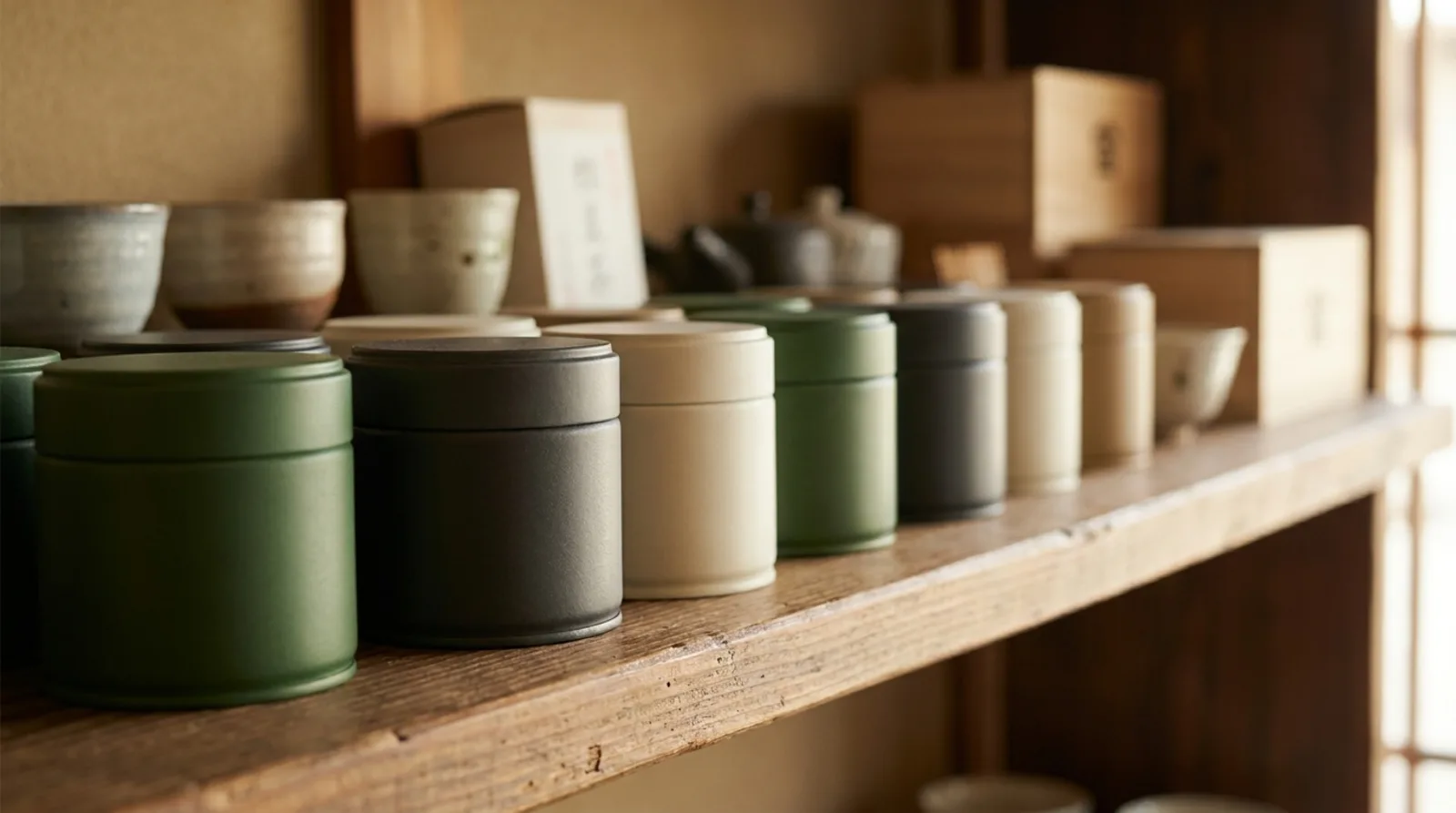
Authentic Japanese matcha tins from several Uji producers, each printed with a named origin and harvest date.
Real matcha is easy to buy badly. There is a lot of dull green powder out there wearing the word “ceremonial” on a pretty tin, and most of it never saw a shade cloth in Japan. The shops worth your money aren’t hard to find once you know the signals: a vetted retailer list, a 30-second pre-purchase checklist, and a short guide to spotting fakes. Start with the overview of the best matcha if you want the broader picture first.
Want to compare every option yourself? Browse our matcha marketplace — 119+ Japanese brands you can filter by grade, origin, and certification.
What Should You Look For Before You Buy?
Run this checklist before you click order. Four signals, thirty seconds, and most bad matcha gets filtered out.
- Japan origin is stated. Look for a named region: Uji (Kyoto), Nishio, or Kagoshima. “Japanese-style” is not Japan.
- There’s a harvest date on the tin. Matcha fades fast once milled. A recent harvest means it’ll still taste alive when it arrives.
- The producer is transparent. A named farm or region beats a vague label every time. Hiding the source usually means there’s a reason.
- Shade-grown and stone-milled are mentioned. These two words are the backbone of authentic matcha. If a seller can’t be bothered to say them, move on.
For the full reasoning behind these cues, the guide to high quality matcha breaks down what separates the real thing from filler. The matcha grades explainer sorts ceremonial from culinary so you don’t overpay for the wrong tier.
Where to Buy Matcha: Trusted Retailers
These are the sources I compiled after researching published sourcing information — a mix of Japanese producers selling direct and reputable importers. Prices and grade tiers vary, so read the notes carefully.
| Retailer | Origin | Standout | Best for |
|---|---|---|---|
| Ippodo Tea | Kyoto (Uji) | Est. 1717; one of Kyoto’s longest-running tea shops | Drink-it-straight ceremonial from a centuries-old Kyoto shop |
| Marukyu Koyamaen | Uji | First prize at Japan’s National Tea Competition 22 times | Connoisseurs who want the top of the ceremonial range |
| Naoki Matcha | Kagoshima, Uji + more | Multi-region sourcing with plain-language grade labels | Quality without the ceremonial-tier price tag |
| MatchaJP | Multiple regions (Uji, Yame, Kagoshima…) | Multi-brand catalog including Marukyu Koyamaen lots | Trying several producers; gifts |
| DoMatcha | Uji + Kagoshima | Developed with a 16th-generation tea master; Canadian warehouse | Accessibility when you need a solid tin in North America |
| Sazen Tea | Multiple Japanese producers | Ships worldwide from Japan; lets you compare brands in one order | Side-by-side comparisons without bouncing between ten sites |
| Hibiki-an | Uji (direct) | Ships worldwide direct from Uji | Direct-from-Uji freshness |
| Matcha.com | Japan (farm-direct) | Newcomer-friendly; extensive brewing and grade guides | Beginners; one-stop shopping |
The roundup of the best matcha brands puts these head-to-head with scores and picks.
Ippodo Tea
Founded in Kyoto in 1717, Ippodo has been selling tea near the Imperial Palace for over three centuries. Their matcha lineup is sorted by strength, from light, first-timer-friendly tins up to rich, umami-heavy offerings like Ummon-no-mukashi. They ship internationally. One caveat: their site navigation assumes some familiarity with Japanese tea terminology, so it rewards the patient buyer.
Marukyu Koyamaen
An Uji producer whose tea estate dates back to around 1704, and whose company page lists first prize at Japan’s National Tea Competition twenty-two times — that competition record is what people mean when they call this matcha “competition grade.” You can buy direct or through stockists. The price reflects the craftsmanship, so don’t expect a bargain.
Naoki Matcha
Sourcing spans four Japanese growing regions — Uji, Yame, and two corners of Kagoshima — with grade labeling that tells you precisely what you’re getting rather than slapping “ceremonial” on everything. Good entry point if you’re moving up from supermarket-grade powder for the first time.
MatchaJP
A Fukuoka-based storefront shipping worldwide from Japan, carrying multiple producers — Marukyu Koyamaen, Hoshinoen, and Hekisuien among them — across five growing regions. The catalog leans toward variety, which makes it useful if you’re building out a comparison or putting together a gift assortment.
DoMatcha
Sources from Kagoshima and Uji and develops its teas with Kazunori Handa, a 16th-generation tea master, with stock shipping through a Canadian warehouse. If you’re in North America and need a tin without hunting, DoMatcha is the path of least resistance.
Sazen Tea
A Japan-based retailer carrying many of the top producers under one roof — Marukyu Koyamaen and Kanbayashi Shunsho among them — and shipping worldwide. The strength is breadth: you can order three different regional styles in one transaction rather than splitting across multiple storefronts.
Hibiki-an
Based in Uji, shipping worldwide direct from Kyoto — “genuine Japanese tea shipped worldwide from Uji” is their own line. Buying from them feels close to buying at the source because you essentially are. Freshness is the main argument here.
Matcha.com
A large catalog that describes its teas as farm-direct from Japanese growers, with both ceremonial and culinary lines and a substantial learn section that walks newcomers through grade decisions and preparation.
Online vs In-Store: Where to Buy Matcha
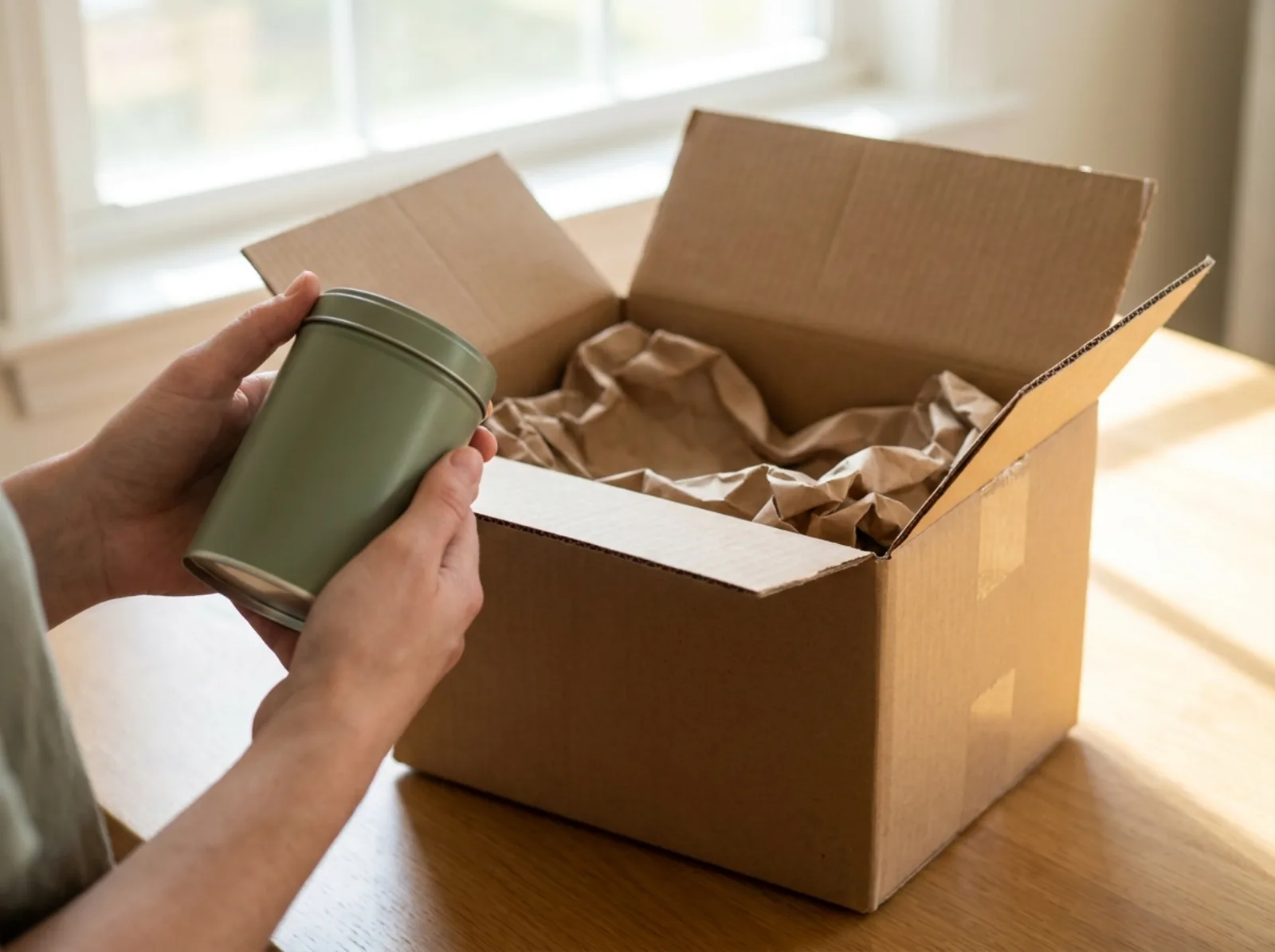
A direct order from Japan: a sealed tin with a recent harvest date, fresh out of the shipping box.
Online (usually the better option)
Buying direct from Japanese producers or trusted importers gets you the freshest stock, printed harvest dates, and the widest authentic selection. You can check the grade, verify the region, and confirm a recent harvest before anything leaves the warehouse. The trade-off is shipping time and cost — a few days and a few dollars.
In-store
One real advantage: you can inspect the packaging before paying. Japanese grocers, dedicated tea shops, and specialty cafés are worth checking. Supermarkets rarely carry true ceremonial matcha. Don’t expect to find it on a chain-store shelf.
Either way, buy a small tin first. Taste it, decide if you like that producer, then reorder fresh. Stockpiling a kilo is how good matcha goes stale.
How to Spot Fake or Low-Quality Matcha
Bad matcha announces itself if you’re paying attention.
Red flags before you buy:
- No stated origin, or vague terms like “matcha blend” and “Japanese-style” on the front
- No harvest date on the package
- “Ceremonial” grade at a suspiciously low price (ceremonial costs money to grow)
- Clear packaging that lets light in (matcha degrades fast in light)
- A dull olive or yellowish color shown in product photos
Red flags when it arrives:
- Olive or yellow powder instead of vivid emerald green
- Coarse texture rather than baby-powder fineness
- A flat, hay-like smell instead of fresh and faintly sweet
Watch especially for non-Japanese matcha marketed as premium Japanese tea. Label gymnastics can get creative.
What Is the Transparency Shortcut?
A producer who names the farm, the region, the harvest date, and confirms shade-grown and stone-milled processing is a producer with nothing to hide. That openness is the single most reliable authenticity signal. Skip generic marketplace listings with no producer information. If the page can’t tell you who grew the tea or where, the answer isn’t worth your money.
Before You Order
Buy from transparent Japanese producers or trusted importers. Check origin and harvest date. Judge the powder by color and smell when it arrives. Fakes don’t survive that process. When you’re ready to commit to one tin, the head-to-head picks in the best matcha brands guide will settle it. Then whisk something good.
The Matcha Buyer’s Guide Hub: Choose the Right Matcha Without the Guesswork