Matcha caffeine by the numbers: roughly 20–45 mg per gram of powder, or 40–135 mg per cup. That’s usually less than coffee, but the effect runs noticeably calmer (a steady alertness rather than a spike) because of L-theanine, an amino acid that modulates how caffeine absorbs. The exact amount shifts with grade, harvest, and how heavy your hand is with the scoop. Everything you need to know is below.
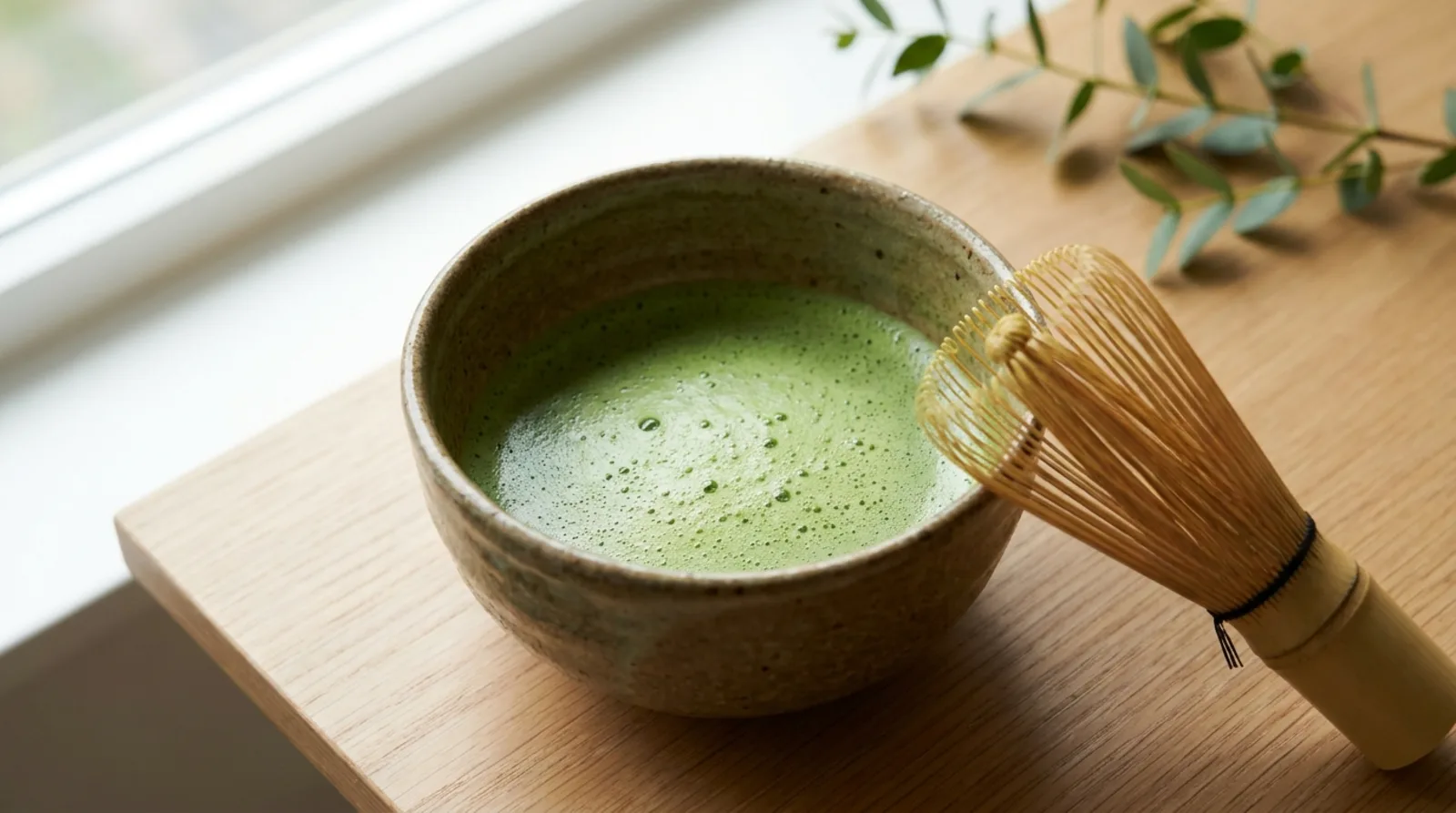
A freshly whisked bowl of matcha in morning light — a gentler, steadier source of caffeine.
This article is for general information only and is not medical advice. Matcha contains caffeine — if you are pregnant, caffeine-sensitive, or taking medication, check with your doctor before changing your intake.
Want to compare every option yourself? Browse our matcha marketplace — 119+ Japanese brands you can filter by grade, origin, and certification.
How much caffeine is in matcha?
Matcha has about 20–45 mg of caffeine per gram, so a typical 2–4 g serving lands around 40–135 mg per cup. The per-gram figure matters here. Matcha is whole powdered leaf whisked directly into water, not steeped and strained like a tea bag. You drink the entire leaf. That means you take in more caffeine gram for gram than a cup of regular green tea.
Here’s the math by serving size.
| Amount of matcha | Approx. caffeine |
|---|---|
| 1 g (per gram) | ~20–45 mg |
| 2 g (light serving / ½ tsp) | ~40–90 mg |
| 3 g (standard bowl) | ~60–135 mg |
| 4 g (strong / usucha–koicha) | ~80–180 mg |
Most people land somewhere in the middle. A standard cup typically clocks in around 60–70 mg, consistent with published lab analyses of matcha (which report 18.9–44.4 mg of caffeine per gram). Ceremonial-grade powder tends toward the higher end of that range. And since grade and harvest both feed into the final number, choosing the best matcha for your cup genuinely affects how much caffeine ends up in it. More on that below.
Matcha caffeine vs coffee (mg comparison)
A cup of matcha (~40–135 mg) generally has less caffeine than a cup of brewed coffee (~95–165 mg). But the lift is a different animal. Coffee hits fast and hard. Matcha eases in.
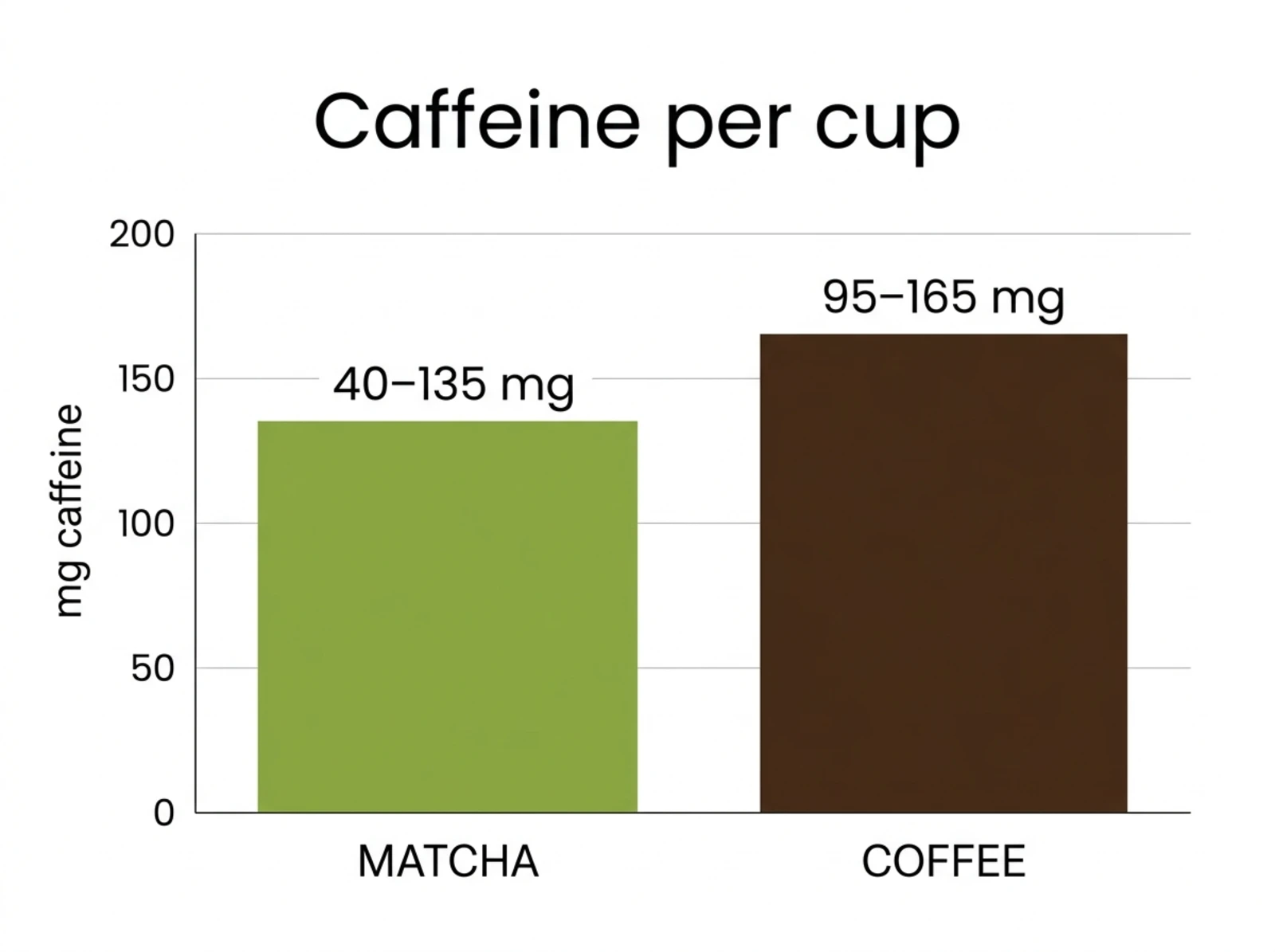
Per-cup caffeine ranges: matcha typically trails brewed coffee, though a strong bowl can overlap.
| Drink | Typical serving | Approx. caffeine |
|---|---|---|
| Matcha | 1 cup (2–4 g) | ~40–135 mg |
| Brewed coffee | 8 oz / 240 ml | ~95–165 mg |
| Espresso | 1 shot (~30 ml) | ~63 mg |
| Green tea (steeped) | 8 oz | ~30–50 mg |
Notice the overlap. A strong 4 g ceremonial bowl rivals a weak cup of drip coffee. The “matcha has way less caffeine” claim isn’t always accurate. It depends entirely on how much powder you use. A half-teaspoon latte sits well below a standard coffee. A thick koicha bowl, at 4 g or more, narrows that gap fast. The full breakdown is in the guide to matcha vs coffee.
Why matcha caffeine feels different: the L-theanine effect
The difference is biochemical, not imagined. L-theanine, an amino acid concentrated in shade-grown tea leaves, slows caffeine absorption and promotes alpha-wave brain activity, the state associated with relaxed focus. Caffeine alone spikes cortisol and adrenaline quickly. L-theanine softens that curve.
The two caffeine sources are often described as feeling different despite equal doses: a 70 mg dose of matcha caffeine is commonly reported to feel unlike a 70 mg espresso. Matcha tends to sit more evenly in the body, where espresso hits louder — an effect commonly attributed to L-theanine.
In plain terms: caffeine alone spikes, then drops. Pair it with L-theanine and the onset is gentler, the plateau lasts longer, the comedown is softer. You get sustained focus instead of a jolt and a slump. Less jitter, less crash.
Because matcha is whole ground leaf rather than steeped and strained, you take in more L-theanine than you would from brewed green tea. Shade-growing before harvest raises L-theanine levels. Then you drink all of it. That’s the mechanism.
Does matcha give jitters?
Less likely than coffee at the same caffeine dose. But this isn’t a free pass. Stack two or three bowls before noon and you can absolutely feel wired. L-theanine helps. It doesn’t erase the caffeine.
Why matcha caffeine varies (grade, harvest, amount)
The caffeine in matcha isn’t fixed. It shifts with grade, harvest timing, and serving size, which is why you see conflicting numbers across sources, and most of them are roughly right.
Grade
Ceremonial grade comes from first-harvest, young, shade-grown leaves — the highest caffeine and L-theanine concentration in the plant’s cycle. Culinary grade draws from later harvests and blends. Neither is “more caffeinated” as an absolute rule, but young first-harvest leaf consistently reads higher in published lab analyses.
Harvest and shade-growing
Shading the plants for three to four weeks before harvest drives up both caffeine and L-theanine as the plant compensates for reduced photosynthesis. First-flush spring leaves, picked April through early May in Uji, are the richest. Later harvests mellow on both counts.
How much you use
This is the single biggest variable. A half-teaspoon latte versus a full ceremonial bowl can differ two to three times in caffeine. Weigh your powder before blaming the grade — a kitchen scale accurate to 0.1 g solves most of the mystery. The amount in the bowl explains nearly all the conflicting mg numbers online.
How much matcha caffeine is safe per day?
Most healthy adults can safely consume up to 400 mg of caffeine daily, per FDA guidance: roughly 3–6 cups of matcha depending on serving size. For most people, 1–2 cups is a comfortable daily range that delivers the lift without crowding the ceiling.
A few practical caveats. Pregnancy and caffeine sensitivity lower that threshold; check with a clinician if either applies. Watch the clock too: caffeine has a half-life of about five hours in an average adult, so a mid-afternoon bowl can erode sleep quality even if you don’t feel wired. If matcha fits into a broader wellness routine, the energy and metabolism angle ties into the guide on matcha for weight loss.