

Coffee delivers more caffeine, faster. Matcha delivers less, but the lift is calmer and lasts longer because of an amino acid called L-theanine. That’s the whole comparison in two sentences. Everything below is just the honest detail behind it.
Which one to reach for depends on the day. Neither one wins outright. The table lays the trade-offs side by side; the verdict at the bottom tells you which to reach for, and when.
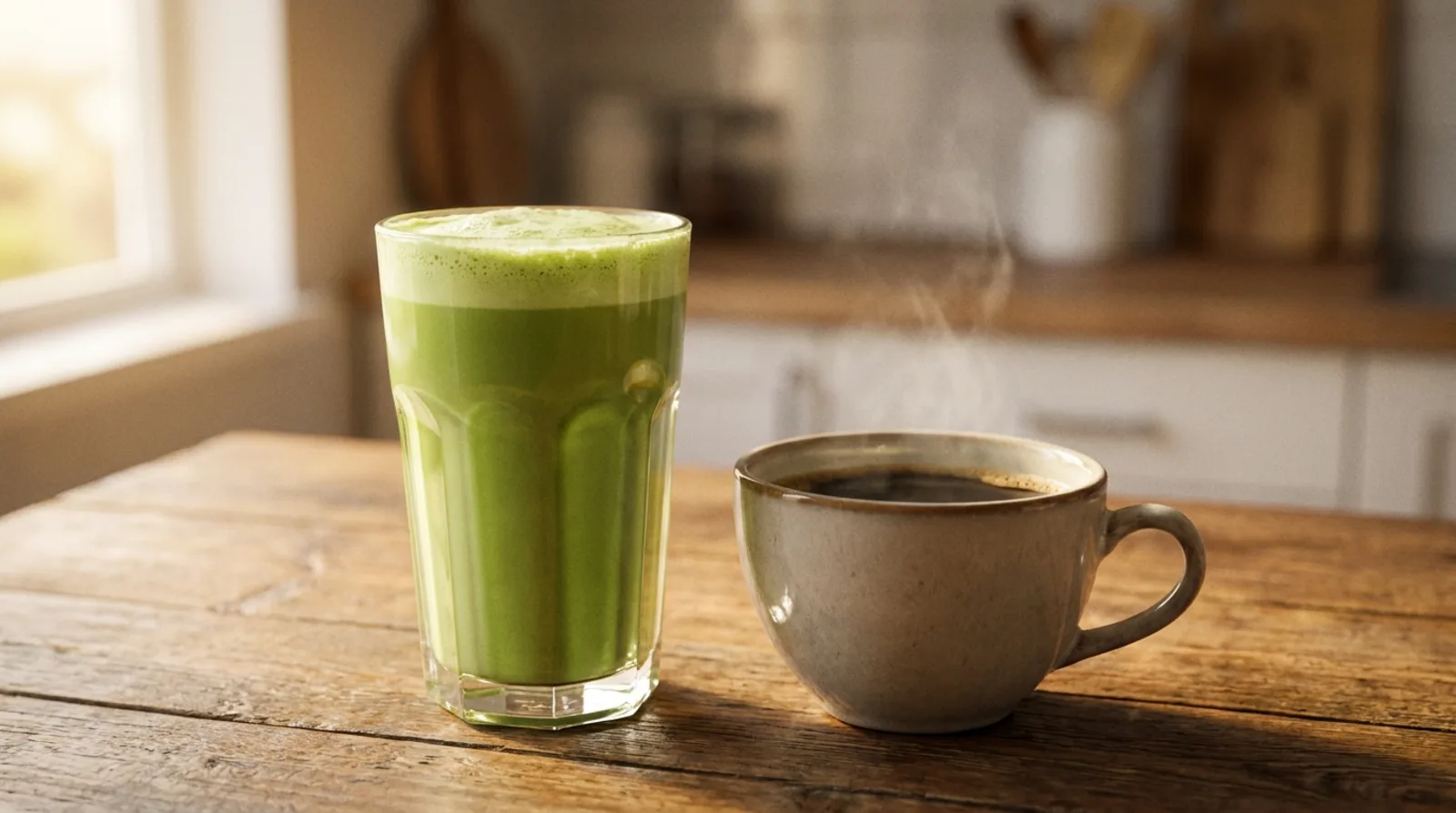
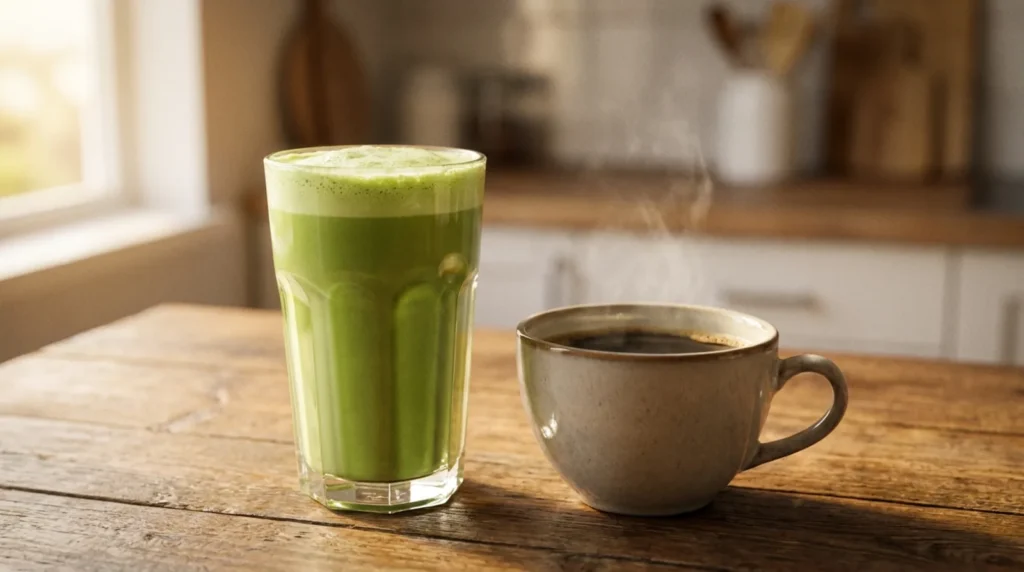
A glass of frothy matcha and a cup of black coffee, side by side.
Matcha vs Coffee at a Glance
Coffee is a strong, fast, cheap caffeine hit. Matcha is gentler, steadier, and pricier, with a calming compound coffee doesn’t have.
| Factor | Matcha (1 cup) | Coffee (8 oz) |
|---|---|---|
| Caffeine | ~38–88 mg | ~70–140 mg |
| Energy curve | Slow rise, sustained | Fast spike |
| Duration | ~6–8 hours | ~2–3 hours |
| Crash | Minimal / rare | Possible within 2–3 h |
| L-theanine | Yes (promotes calm focus) | No |
| Antioxidants | High (catechins, incl. EGCG) | Moderate (chlorogenic acids) |
| Taste | Grassy, umami, slightly sweet | Bitter, roasted |
| Caffeine consistency | More variable | More consistent |
| Cost per cup | Higher | Lower |
The rest of this walks through each row, one at a time.
Caffeine: Coffee Hits Harder
Coffee generally contains more caffeine (roughly 70 to 140 mg per 8 oz versus matcha’s 38 to 88 mg per cup) and its caffeine content is more consistent (matcha’s own range traces to published values of 18.9 to 44.4 mg of caffeine per gram of powder). If your goal is maximum caffeine per cup, coffee wins, and it isn’t close.
Why matcha’s caffeine varies
Matcha’s caffeine range is wide, and that’s not a flaw. You’re drinking the whole leaf suspended in water, so the dose depends on how much powder you scoop, how thoroughly you whisk it, and the grade. A heaped scoop of shade-grown ceremonial powder hits noticeably harder than a light scoop of culinary grade. Same tin, different morning, different number.
Why coffee is more consistent
Coffee is easier to dose. A standard brew lands in a predictable band, and adding a second shot or an extra scoop of grounds scales it up reliably. The caffeine extraction during brewing is repeatable in a way that whisking leaf powder into a bowl simply isn’t. For the matcha vs coffee caffeine question, coffee is the higher and steadier number.
Energy Curve: Different Shapes, Different Jobs
Coffee kicks in fast and can fade within a couple of hours, sometimes with a dip afterward. Matcha’s release is more gradual: a calmer arc that holds through most of a workday, roughly six to eight hours, an effect linked to L-theanine’s interplay with caffeine (composition and effects review). The shape of the curve matters as much as the peak.
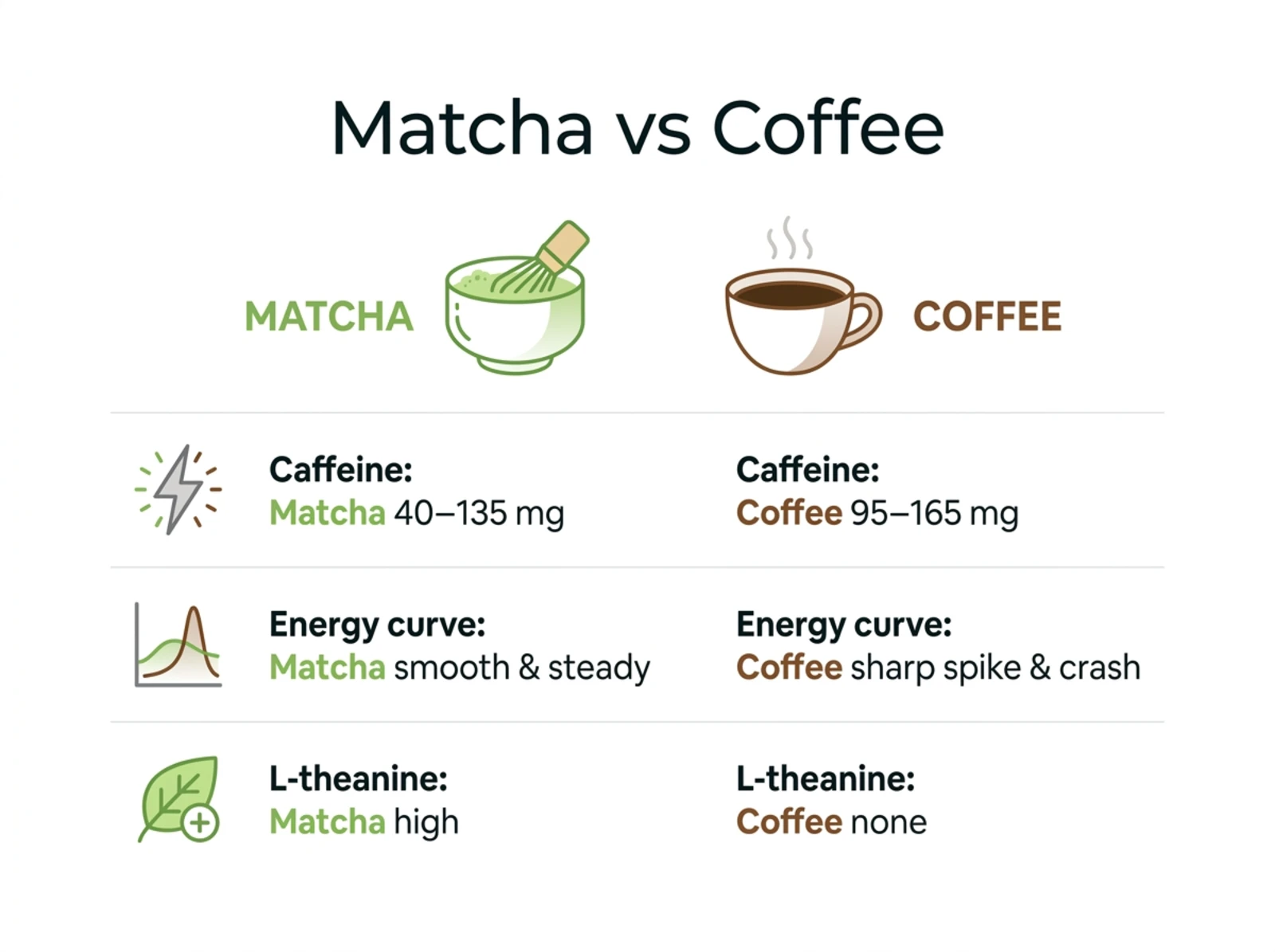
How the two drinks differ on caffeine, energy curve, and L-theanine.
The role of L-theanine
Matcha contains L-theanine, an amino acid absent in coffee. It buffers the stimulant edge of caffeine, softening the jittery, wired quality a strong espresso can produce. You still get alert. You just get there without the chest-flutter. The calm energy matcha drinkers describe isn’t marketing; it’s theanine and caffeine working in tandem rather than caffeine going in alone.
The coffee crash
The crash is the back half of a steep spike. Caffeine peaks, drops, and the dip can leave you foggy or irritable, often somewhere around two hours after your cup. Not everyone feels it. Those who drink on an empty stomach, or who hit a large strong cup first thing, tend to notice it most.
One honest caveat: part of why matcha’s comedown feels easier is simply that it carries less caffeine. Lower dose, gentler slope. L-theanine is doing real work, but the smaller load is part of it too.
Focus & Mental Performance
The caffeine-plus-L-theanine pairing is associated with steadier focus and fewer jitters, while coffee delivers a stronger, faster alertness burst. Controlled studies on L-theanine taken with caffeine have reported improvements in attention and reduced mind-wandering compared with caffeine alone (systematic review of caffeine and L-theanine).
The two drinks are good at different jobs. For an acute wake-up, say a 7 a.m. deadline, a long drive, or a foggy winter morning, coffee’s bigger punch wins. For sustained concentration across a three-hour writing block, the kind where a mid-session crash costs you an hour of recovery, matcha tends to hold more evenly. Many people settle into a split like this: matcha for deep work, coffee for the commute and errands. No single drink beats both across the board.
Antioxidants & Health Profile
Matcha is rich in catechins, notably EGCG. Coffee provides chlorogenic acids. Both are antioxidant-rich; they just offer different compounds (matcha is described as the best condensed source of EGCG catechins). Neither is a health silver bullet.
Because matcha is the whole ground leaf, a cup delivers a concentrated catechin dose that a brewed tea can’t match. Coffee’s chlorogenic acids are well studied and carry their own benefits. For the deeper picture on what matcha does in the body, see the guide to matcha health benefits. If you’re interested in EGCG and metabolism specifically, the guide to matcha for weight loss maps where the evidence is strong and where it’s been oversold. Short version: both drinks are solid antioxidant sources, and matcha’s catechin profile is the main reason people choose green tea over other options.
Taste, Preparation & Cost
Coffee is bitter, roasted, and usually cheaper. Matcha is grassy, umami, and slightly sweet, costs more per cup, and requires a short whisking ritual. These practical factors decide more daily-habit questions than any caffeine number does.
Prep effort
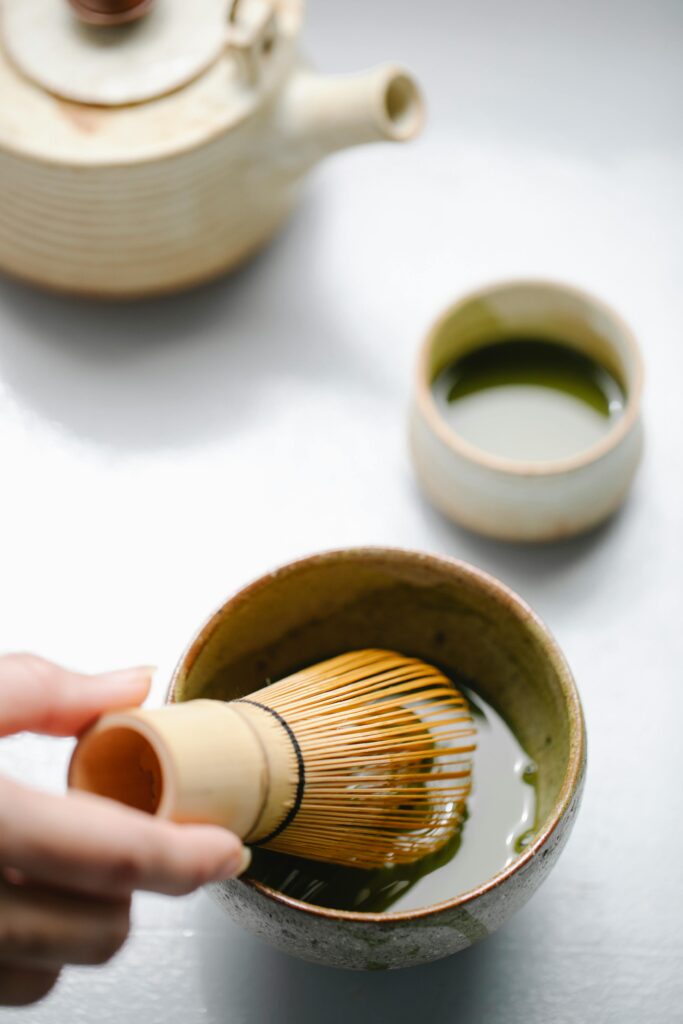
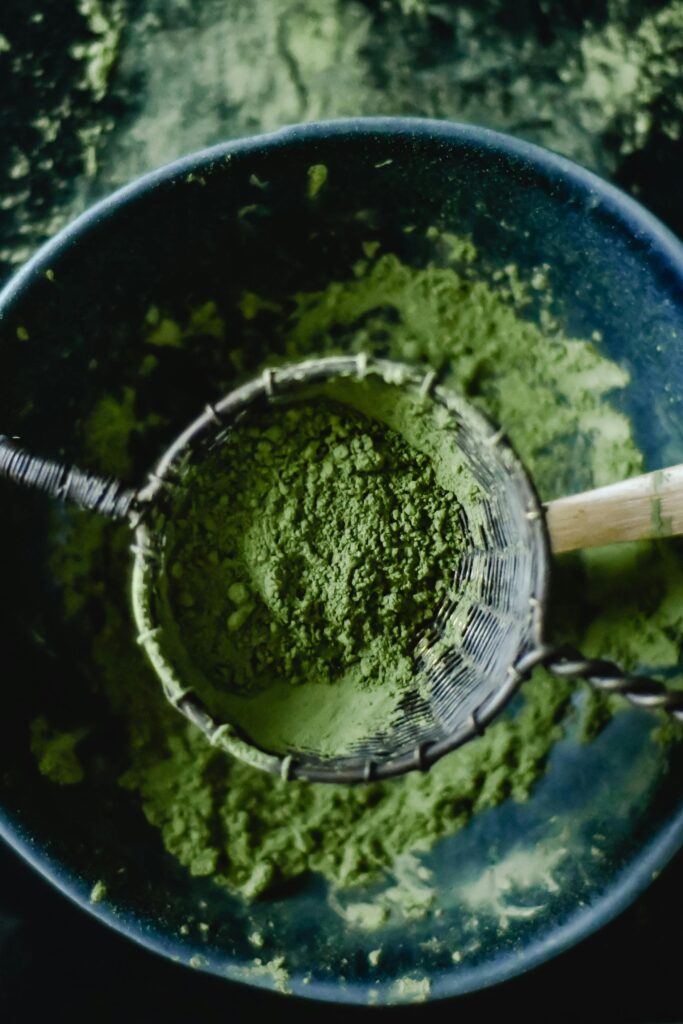
Coffee is built for speed. Machine, pod, or pour-over — options that need seconds of active effort. Matcha is a small ritual: sift the powder to break up clumps, add water around 175°F, and whisk in a quick zigzag with a bamboo chasen until it froths. Two minutes, once you’ve got the motion. A lot of people find that pause worthwhile. It is more hands-on than hitting a button, though.
Cost reality check
Good matcha costs more per cup than good coffee. You’re paying for shade-grown, stone-ground leaf, and quality tins aren’t cheap. Coffee scales down in price more easily. Budget is the deciding factor for many people, and coffee wins here too.
The Verdict, By Use Case
Choose coffee when you need caffeine fast and cheap. Choose matcha when you want a steadier, gentler lift that holds through the afternoon.
- Fast morning wake-up: Coffee. More caffeine, quicker onset, when you need to come online now.
- All-day, even focus: Matcha. The theanine-buffered curve keeps you level for hours without a valley.
- Afternoon cup (sleep-friendly): Matcha. Less caffeine and a gentler fade are kinder to your evening.
- Caffeine-sensitive / jitter-prone: Matcha. Lower dose plus L-theanine means less of the wired edge.
- Maximum caffeine / lowest cost: Coffee. Higher milligrams per cup, lower price.
- Pre-workout: Coffee for a bigger hit; matcha if you prefer steadier endurance without a spike you’ll pay for later.
If you’re ready to try the switch, skip the cheap culinary tin — it tastes like spinach water and will put you off permanently. Start with the best matcha for everyday drinking and give your palate a fair shot.