
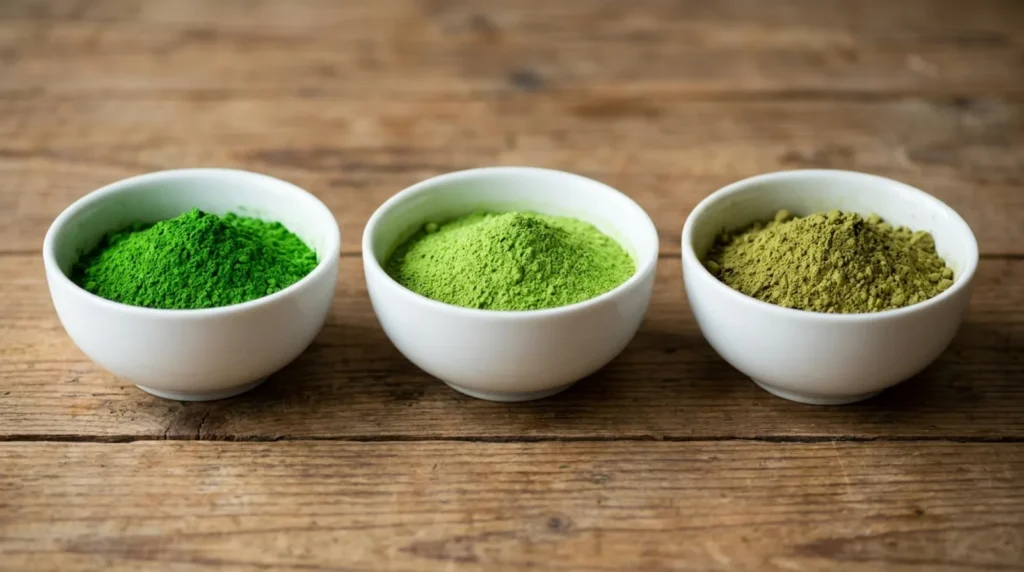

Matcha grades (ceremonial, latte, and culinary) describe intended use and harvest timing, not an officially certified quality tier. No regulatory body in Japan or the US stamps these labels. Choose your grade by what goes in the cup: water only calls for ceremonial, milk calls for latte grade, and a recipe calls for culinary.
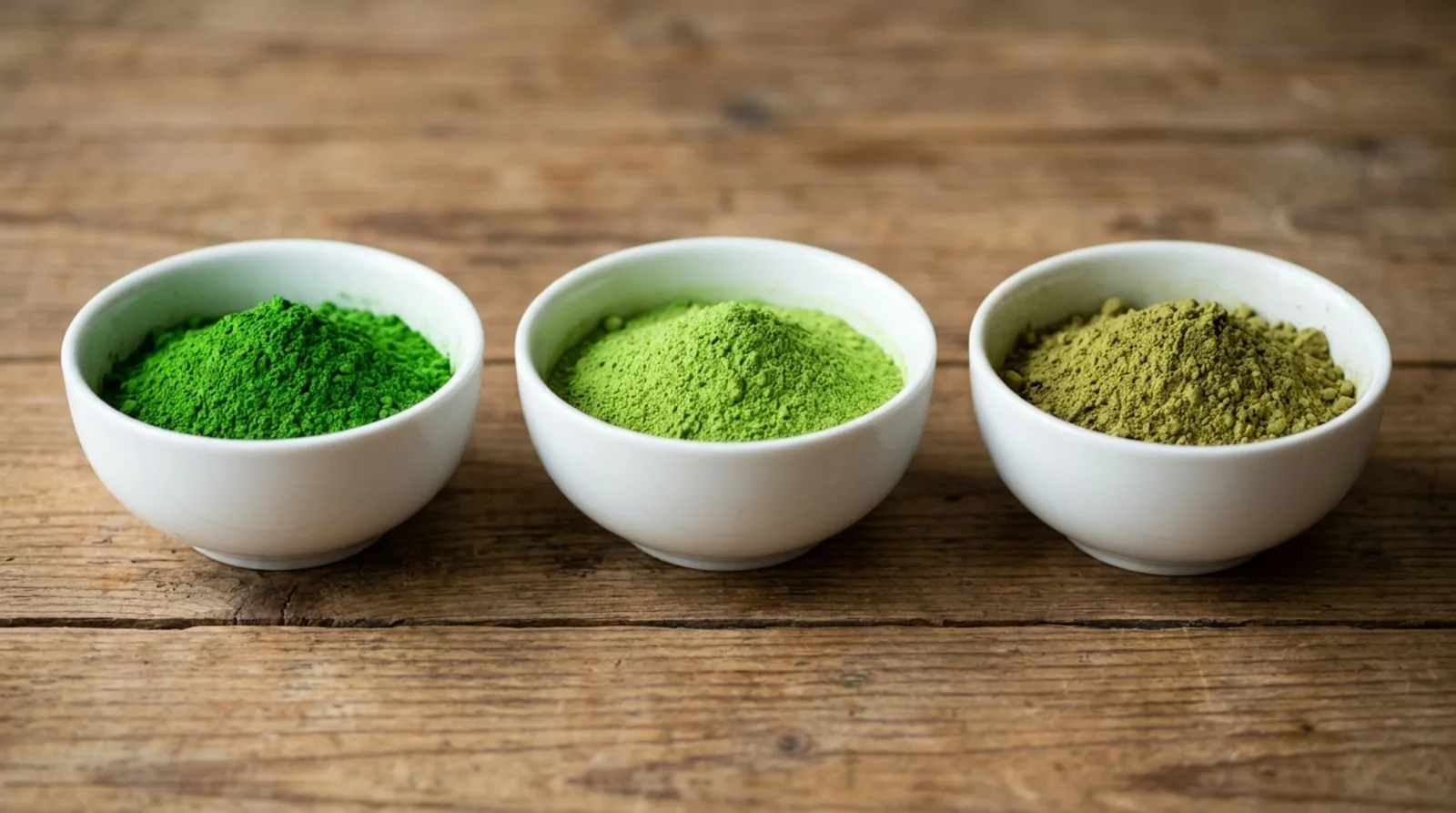
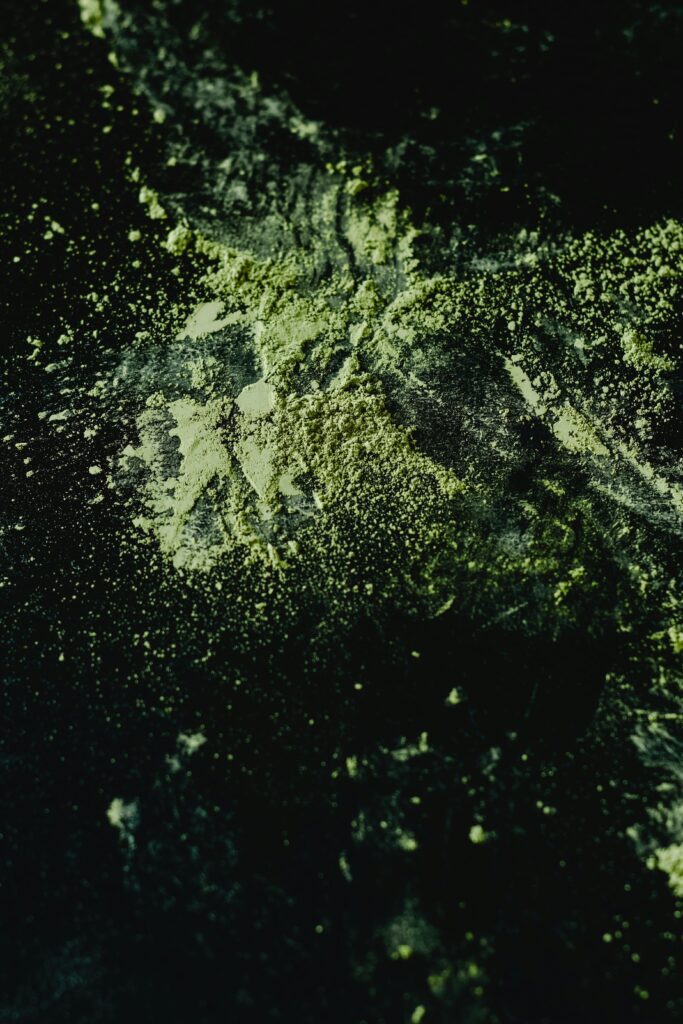
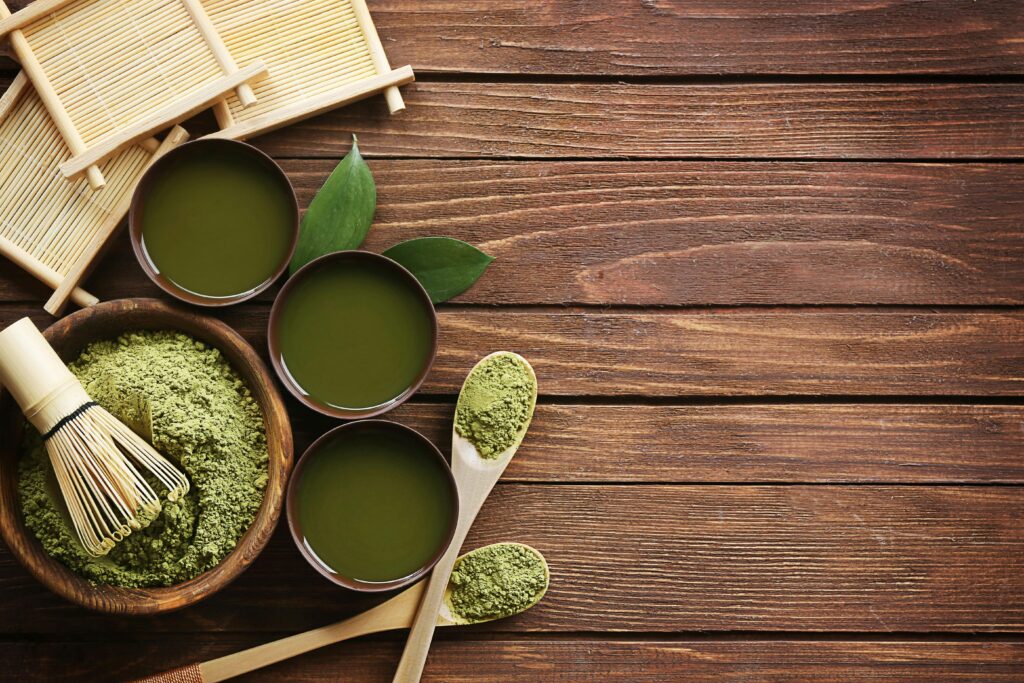
The three matcha grades side by side: ceremonial, latte, and culinary, each a different shade of green.
You’ve seen the words on tins. “Ceremonial.” “Culinary.” “Latte grade.” Maybe “premium” thrown in. They sound official, as if somebody in Japan is checking each batch and stamping it. Here is what those three words actually mean, plus the part most brand pages skip.
Matcha “Grades” Are Marketing, Not Regulation
No agency in Japan or the US certifies one powder “ceremonial” and another “culinary.” Neither the Japan Tea Central Association nor the US Food and Drug Administration defines these tiers; there is no board, no inspection, no standard. The words are chosen by whoever prints the label. One company’s “ceremonial” can sit at the same quality level as another company’s “premium,” and a third brand’s “culinary” might actually taste better than a cheap tin marketed as ceremonial.
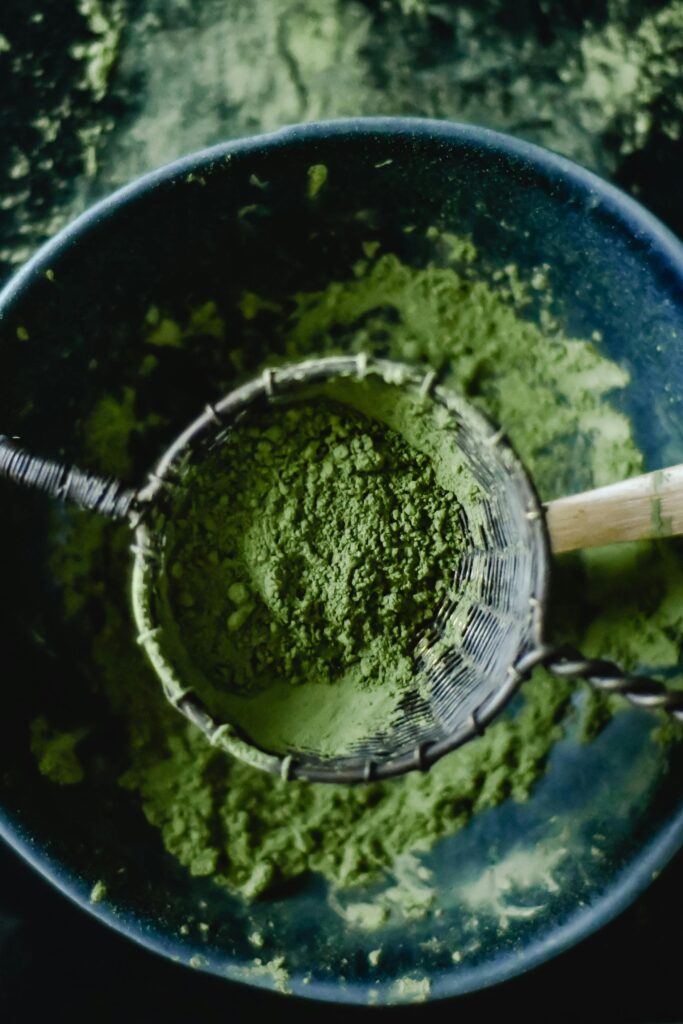
The grade word on the front is a hint, not a guarantee. What you can trust is the powder itself, judged on four signals. Color first: vivid green, not tired olive-khaki. Then texture: a fine matcha runs 5 to 10 microns and should feel like talc or eyeshadow, never gritty. Then aroma: fresh-cut grass and sweetness, not hay or fish. Finally taste. Those four signals tell you more in 30 seconds than any label ever can. For the full breakdown on reading those signals, the guide to high quality matcha walks through each one.
What the Terms Generally Signal
Used honestly, the grade words still carry useful information. They point to three things: when the leaves were harvested, how mature those leaves were, and what the powder was built to do. Ceremonial leans toward the first harvest, around May in Japan, and drinking straight. Culinary leans toward the third and fourth harvests and cooking. Latte grade, usually the second harvest in June, sits between them. Keep that frame in mind and the rest of this page slots into place.
Comparison Table: Matcha Grades at a Glance
| Ceremonial | Latte / Premium | Culinary | |
|---|---|---|---|
| Harvest | First flush (spring), youngest leaves | Usually 2nd harvest | Later harvests, more mature leaves |
| Color | Vivid emerald | Bright green | Duller, more olive |
| Taste | Smooth, umami, sweet, delicate | Balanced, slightly bolder | Bold, more astringent |
| Best for | Drinking with water (usucha/koicha) | Milk drinks, lattes | Baking, smoothies, cooking |
| Harvest order | 1st (ichibancha) | 2nd (nibancha) | 3rd–4th (sanbancha) |
| Grind size | 5–10 microns | 10–15 microns | 15–20 microns |
| Price (approx) | $$$ (~$1–2+/g) | $$ | $ |
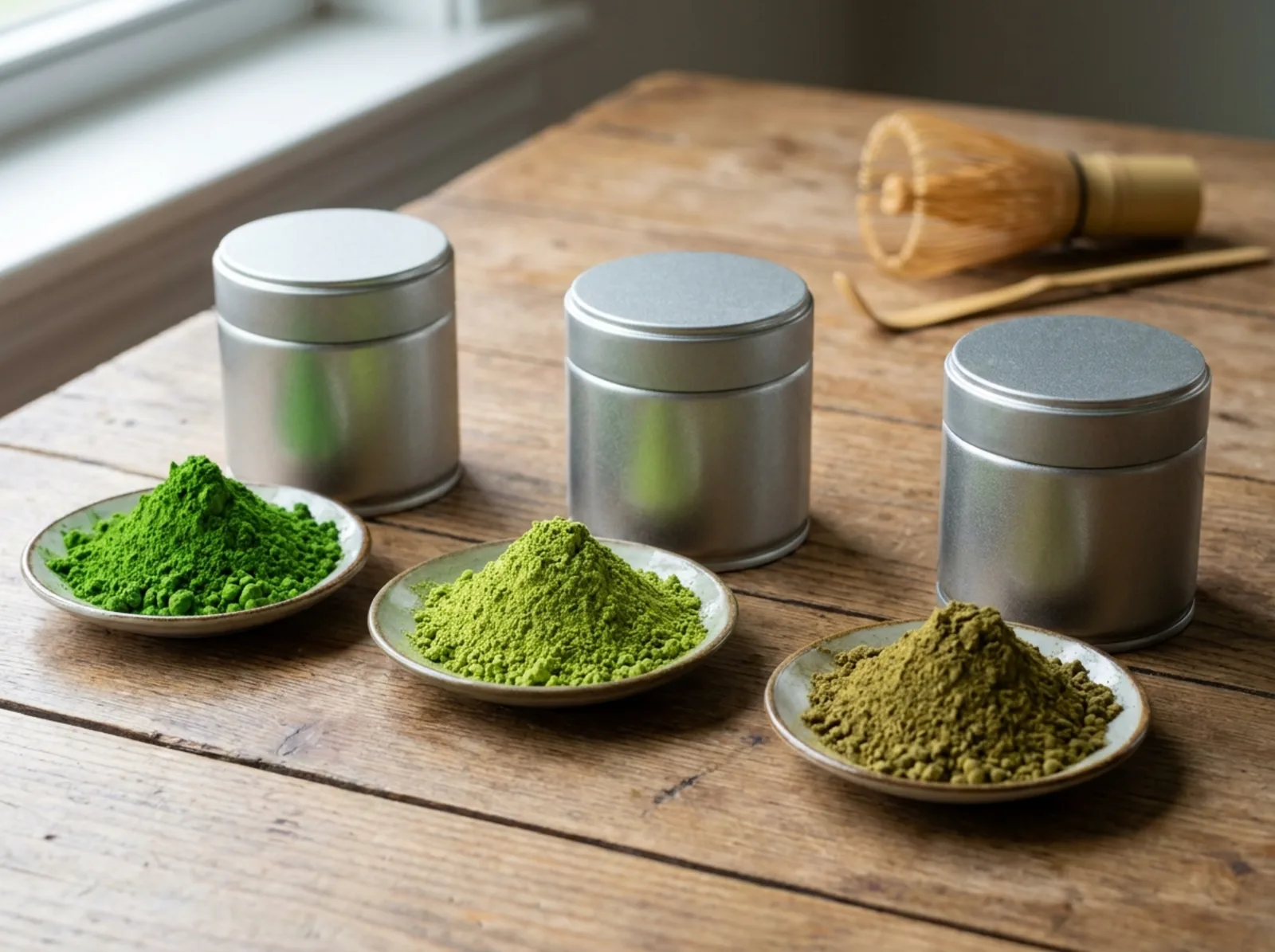
Ceremonial, latte, and culinary powders beside their tins: note the emerald-to-olive color shift and coarser grind.
Pick by what’s going in the cup. Water wants ceremonial, milk wants latte grade, a recipe wants culinary. The 3 rows that matter most are harvest, color, and best-for; price tracks all 3.
Ceremonial Grade Matcha
First harvest, the spring flush picked around early May, gives the youngest leaves on the bush. Most ceremonial comes from the Camellia sinensis cultivars prized for tea, with Samidori, Okumidori, and Asahi the cultivars Uji growers reach for. Ceremonial is made for one job: to be drunk with nothing but hot water, so every bit of flavor lands on your tongue undisguised.
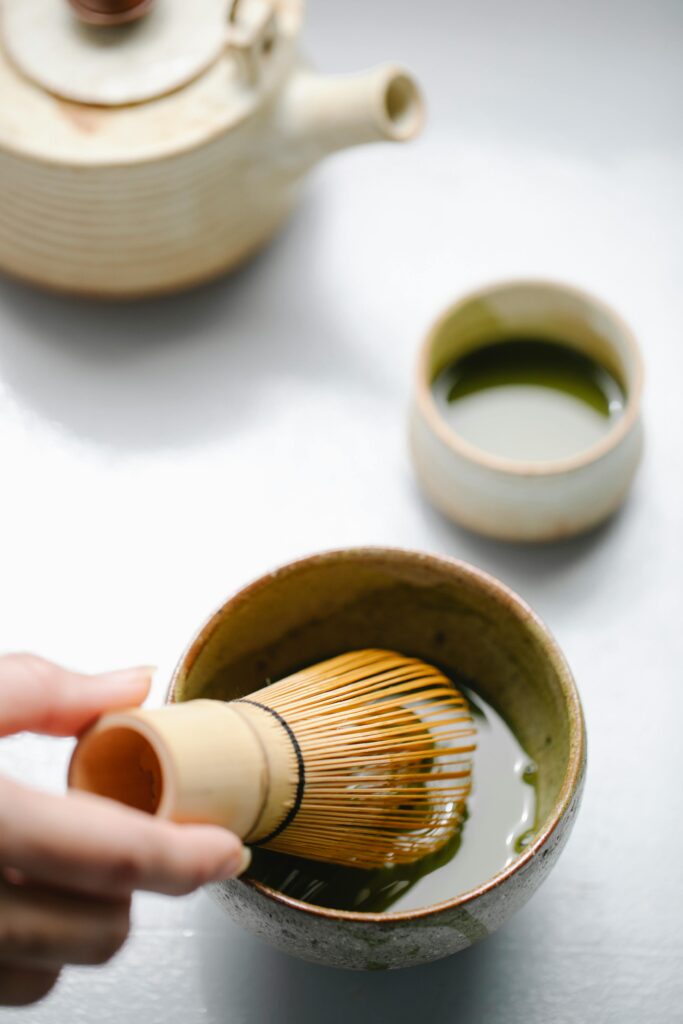
A good ceremonial pours out a vivid, almost glowing emerald, the shade associated with premium first-harvest Uji leaf. The texture is impossibly fine. Taste is umami-forward, savory and round, with a natural sweetness on the back end and very little bitterness. Whisk about 2 grams into 60 ml of water at 70 to 80 Celsius, around 160 to 175 Fahrenheit, with 15 to 20 brisk W-strokes of a chasen, and you get a thick crema of tiny bubbles. This is the powder used in the Japanese tea ceremony, both for thin usucha and the thicker, more intense koicha, where the koicha ratio climbs to roughly 4 grams in 30 ml.
When to Choose Ceremonial
Choose ceremonial when you’re drinking the matcha straight, whisked into water and nothing else. With nothing but water in the cup, a flaw has nowhere to hide and neither does quality, so this is the one case where paying the premium genuinely earns its keep. For everyday straight tea, fresh and mid-priced beats fancy and stale every time. Matcha oxidizes fast: once a tin is open, color and aroma fade within 4 to 6 weeks, so buy small and drink it down. If you want vetted picks at this level, see the ceremonial grade matcha guide.
Latte Grade / Premium Matcha
Latte grade is the sweet spot for milk. Usually a second harvest, picked in June, which makes it a touch bolder and more robust. That boldness is the whole point. Pour ceremonial matcha into a cup of dairy or oat milk and the subtlety you paid for mostly disappears, muffled under fat and sweetness. Ceremonial gets muted by milk; culinary turns harsh and chalky in it. Latte grade threads that gap: bold enough to hold its flavor and green color against 200 ml of dairy or oat milk, smooth enough that you’re not chasing the bitterness with extra syrup.
It also costs less than ceremonial, which matters when you’re making one most mornings. Good color, flavor that reads clearly through milk, smoothness that culinary grade can’t match. A standard 12 oz latte runs about 2 to 4 grams whisked into 30 ml of hot water near 80 Celsius, then topped with 240 ml of steamed milk. For a daily oat-milk matcha, this is the practical choice.
Culinary Grade Matcha
Culinary grade is the workhorse. More mature leaves from the third and fourth harvests, picked across July and September, deliberately bolder and more astringent. Drunk straight it can taste sharp. The color runs duller, more olive than emerald, and the grind often sits coarser, closer to 20 microns than the 5 to 10 of ceremonial. None of that is a defect. It’s the design.
When matcha goes into a batter, a smoothie, an ice cream base, or a frosting, it’s competing with sugar, butter, cream, and flour. A gentle ceremonial would vanish. Culinary grade is loud enough to survive a 180 Celsius bake, roughly 350 Fahrenheit, and still taste like matcha in the finished cookie. Most recipes call for 1 to 2 tablespoons, about 6 to 12 grams, per batch. It’s also the cheapest of the three.
When Culinary Is the Right Call
Reach for culinary whenever matcha is one ingredient among several rather than the whole show. Cakes, heavily sweetened lattes, green smoothies, matcha buttercream, homemade ice cream, even the white chocolate matcha bars popular in Kyoto gift shops. When sugar and fat are doing half the work, a delicate first-flush powder is wasted. A 25 gram bag of culinary grade can run 8 to 10 servings before the green dulls.
Harvest Timing Drives Everything
Almost every difference above traces back to one variable: when the leaves were picked. Japanese growers count harvests as ichibancha, nibancha, sanbancha, and yonbancha across the season. The first flush, ichibancha in May, gives the youngest, tenderest leaves. They carry the most L-theanine, the amino acid behind matcha’s sweetness, umami, and that calm-alertness effect. They’re also the least bitter. That first flush is what becomes ceremonial.
Later flushes produce more mature leaves. Maturity means more catechins, chiefly EGCG, the compounds responsible for astringency and bitterness, which is why later-harvest matcha tastes bolder and sells cheaper. That’s the latte and culinary supply.
Two more variables compound the effect. Shade-growing under tana or kabuse cover for the 3 to 4 weeks before picking boosts L-theanine and deepens the green. Slow stone-milling on a granite mill turns out roughly 30 to 40 grams per hour, which protects the powder’s texture and aroma. Good matcha at any grade gets both. Origin still counts, with Uji in Kyoto Prefecture, Nishio in Aichi Prefecture, and Kagoshima Prefecture the three names worth trusting; Uji and Nishio together account for a large share of premium tencha, the leaf that becomes matcha.
Which Grade Should You Buy?
The decision, stripped to use cases.
For Drinking Tea Straight
Ceremonial. First harvest, whisked with hot water near 75 Celsius, tasted on its own. Buy the freshest tin you can, ideally 30 to 40 grams, from a producer who tells you the harvest date and origin.
For Matcha Lattes
Latte grade. The second-harvest profile holds up in milk without going harsh. If your shop doesn’t carry a latte grade, a budget ceremonial works too, since you don’t need the top tier once milk is in the cup.
For Baking and Cooking
Culinary grade, every time. It’s cheaper, bold enough to read through other ingredients, and a delicate powder here is money wasted.
For Beginners
Start with a fresh, mid-priced ceremonial or a latte grade from a transparent producer, one who lists harvest, origin, and a clear best-by window. The where to buy matcha guide points to sellers who actually disclose this. The rule that runs through all of it: ignore the label word, verify the powder signals.
Grade Is Use Case, Not Certificate
Ceremonial for drinking, latte grade for milk, culinary for recipes. That’s the whole 3-grade framework. None of it is certified by anyone. First harvest for drinking, second and later harvests for milk and cooking, and a marketing word on the front you should read with one eyebrow raised. Match the grade to how you’ll actually use it, then check the 4 signals, color, texture, aroma, and taste, to confirm you got what you paid for. For the broader picture on picking well, see the guide to the best matcha.