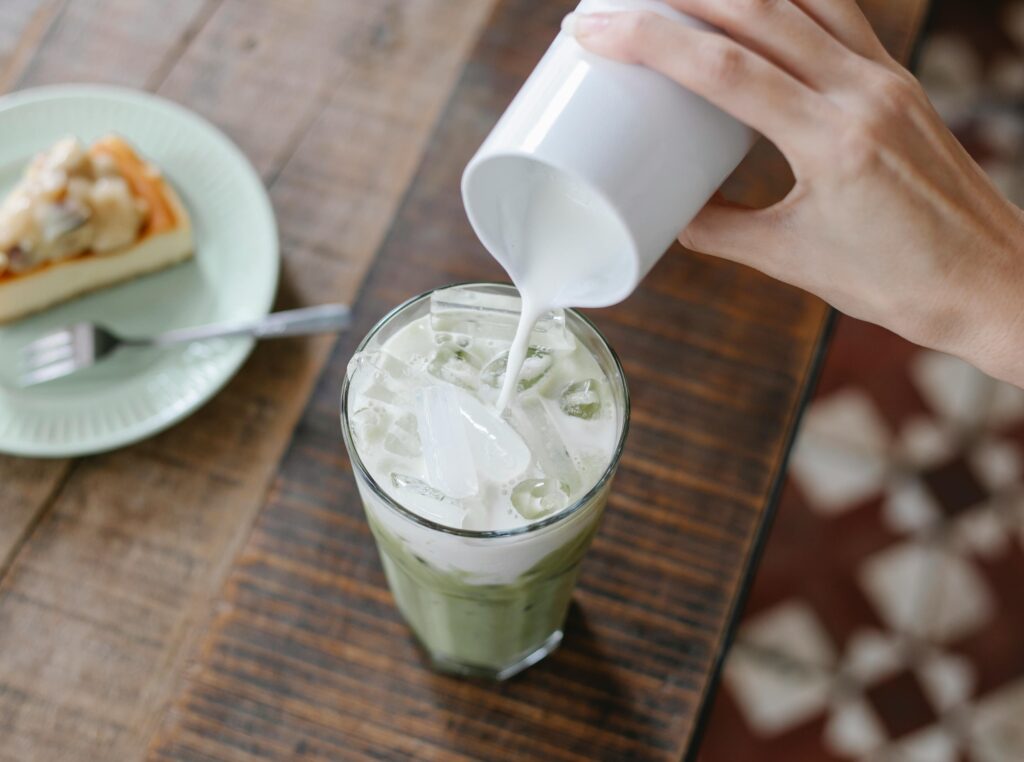
Matcha Latte Preparations and Ratios
Matcha lattes require different calculations than traditional tea preparation, balancing concentrated matcha with milk’s diluting effect. Standard hot latte ratios employ 2 grams matcha powder with 2 ounces (60ml) hot water, followed by 8 ounces (240ml) steamed milk for 12-ounce servings. This 1:30:120 ratio (matcha:water:milk) provides balanced flavor where neither component overwhelms.
Iced matcha lattes demand higher powder concentrations compensating for ice dilution. Use 2.5-3 grams matcha with 2 ounces water and 8-10 ounces cold milk, filling remaining space with ice. The increased matcha maintains flavor intensity as ice melts, preventing the watery finish common in under-dosed iced preparations.
Milk Selection Impact: Dairy milk creates richest body and most stable microfoam, while oat milk offers natural sweetness with good foam stability—ideal for latte art.
Temperature management differs between components. Matcha blooms optimally in 160-175°F (70-79°C) water, while milk steams best at 140-150°F (60-65°C). Exceeding 155°F breaks down milk proteins, creating flat mouthfeel and dulling sweetness perception. Always whisk matcha with water first, creating smooth paste before adding milk—this preserves foam quality and prevents clumping.
Batch Preparation and Scaling
Preparing multiple servings requires linear scaling while maintaining ratio precision. For five servings of standard usucha, multiply both components: 10 grams matcha to 350ml water. However, larger volumes present mixing challenges requiring adapted technique.
Batch preparation benefits from paste method. Combine all matcha powder with quarter of total water volume, whisking thoroughly until completely smooth. Gradually incorporate remaining water while whisking continuously, ensuring even distribution. This prevents clumping that occurs when adding powder to large water volumes simultaneously.
Maintaining consistency across batch servings demands attention to settling. Matcha suspension begins separating within minutes—stir thoroughly before each pour. Some practitioners prefer individual preparation even for multiple guests, arguing that fresh whisking produces superior foam and prevents separation issues inherent to batch methods.
Troubleshooting Common Issues
Clumping represents the most frequent matcha preparation complaint. Powder’s fine particle size causes moisture absorption creating aggregates resistant to dissolution. Always sift matcha through fine mesh strainer before whisking—this single step eliminates most clumping problems. Store powder in airtight containers with moisture-absorbing packets, replacing monthly in humid climates.
Excessive bitterness indicates temperature or quality problems. Water exceeding 80°C extracts harsh tannins overwhelming delicate sweetness. Lower-grade matcha naturally contains more bitterness—if proper temperature yields bitter results, upgrade powder quality rather than adjusting technique. Over-dosing also creates bitterness; reduce powder incrementally until finding personal sweet spot.
Weak, watery flavor suggests insufficient matcha or inadequate extraction. Increase powder by 0.5-gram increments rather than dramatic jumps. Ensure water temperature reaches at least 70°C—cooler water fails extracting soluble compounds. Weak flavor in lattes may indicate milk overpowering matcha; reduce milk volume before increasing powder.
Separation and Texture Problems
Matcha separating from liquid reveals insufficient emulsification. Vigorous whisking in W or M motion—not circular stirring—incorporates air creating stable suspension. Whisk 15-20 seconds minimum until fine foam appears. Bamboo chasen whisks outperform metal alternatives, their flexible tines creating superior froth without damaging delicate powder.
Chalky texture indicates incomplete dissolution. Beyond sifting, ensure adequate whisking duration and proper water temperature. Some practitioners pre-wet whisk in hot water, softening tines for more effective mixing. If chalkiness persists despite proper technique, powder quality likely suffers from age or poor processing—fresh ceremonial grade dissolves more readily than stale or lower grades.
Adjusting Ratios by Cup Size
Scaling ratios for different serving sizes maintains flavor balance across volumes. For 8-ounce hot lattes, use 1.5-2 grams matcha with 1.5-2 ounces water and 5-6 ounces milk. Larger 16-ounce servings require 2.5-3 grams matcha, 2-2.5 ounces water, and 11-13 ounces milk. Proportional scaling preserves flavor intensity regardless of final volume.
Personal preference significantly influences ideal ratios. Some drinkers prefer “matcha-forward” profiles using higher powder concentrations, while others favor milk-dominant lattes where matcha provides subtle flavor and color. Start with standard ratios, adjusting powder in 0.5-gram increments until discovering personal preference. Record successful ratios for reproducible results.
Seasonal variations affect optimal ratios. Summer heat makes lighter, more refreshing preparations appealing—reduce matcha concentration slightly and increase ice. Winter encourages richer, more concentrated drinks—increase powder and reduce milk for warming intensity. These adjustments acknowledge matcha’s role extending beyond nutrition into lifestyle and seasonal harmony.