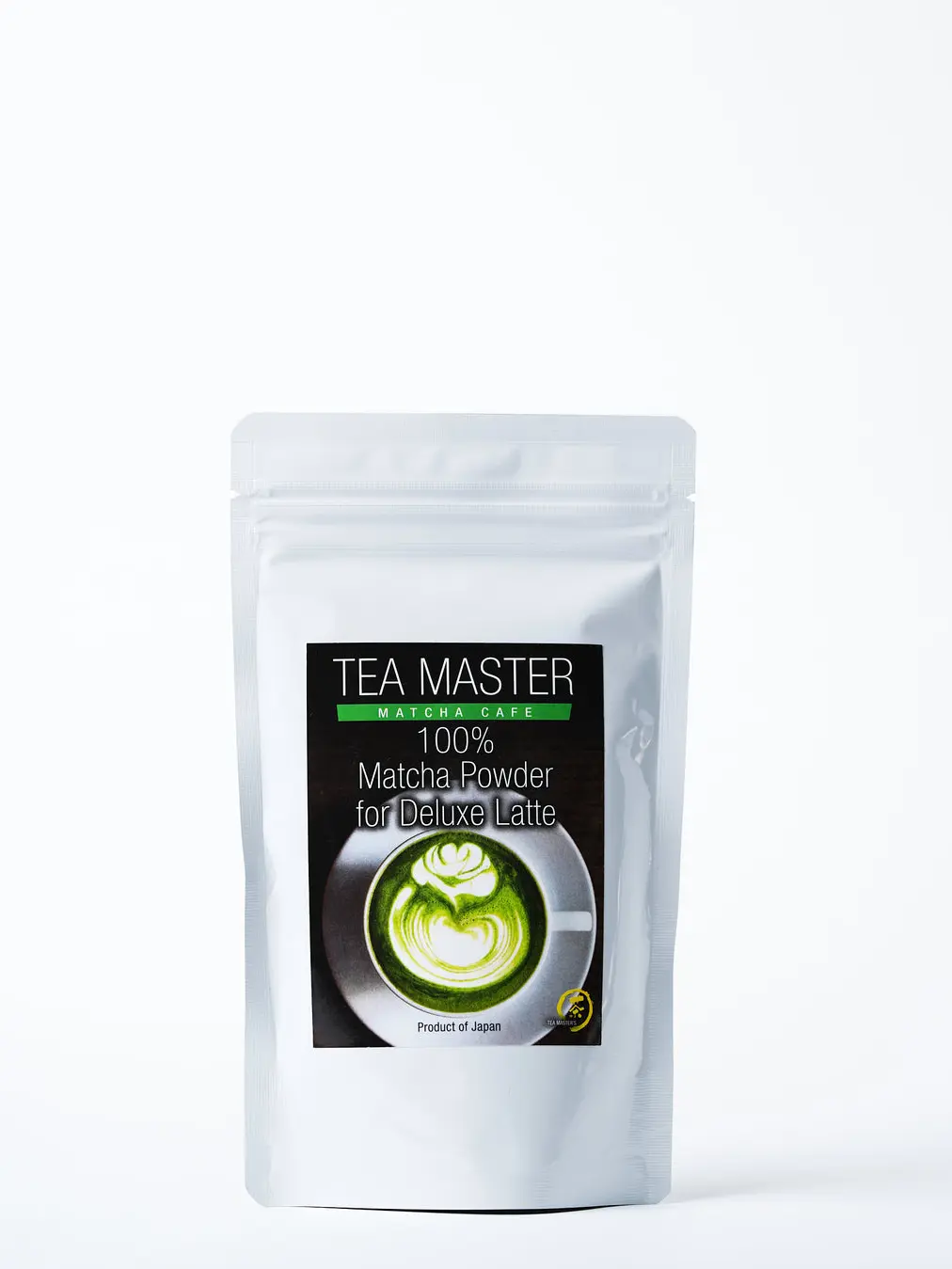


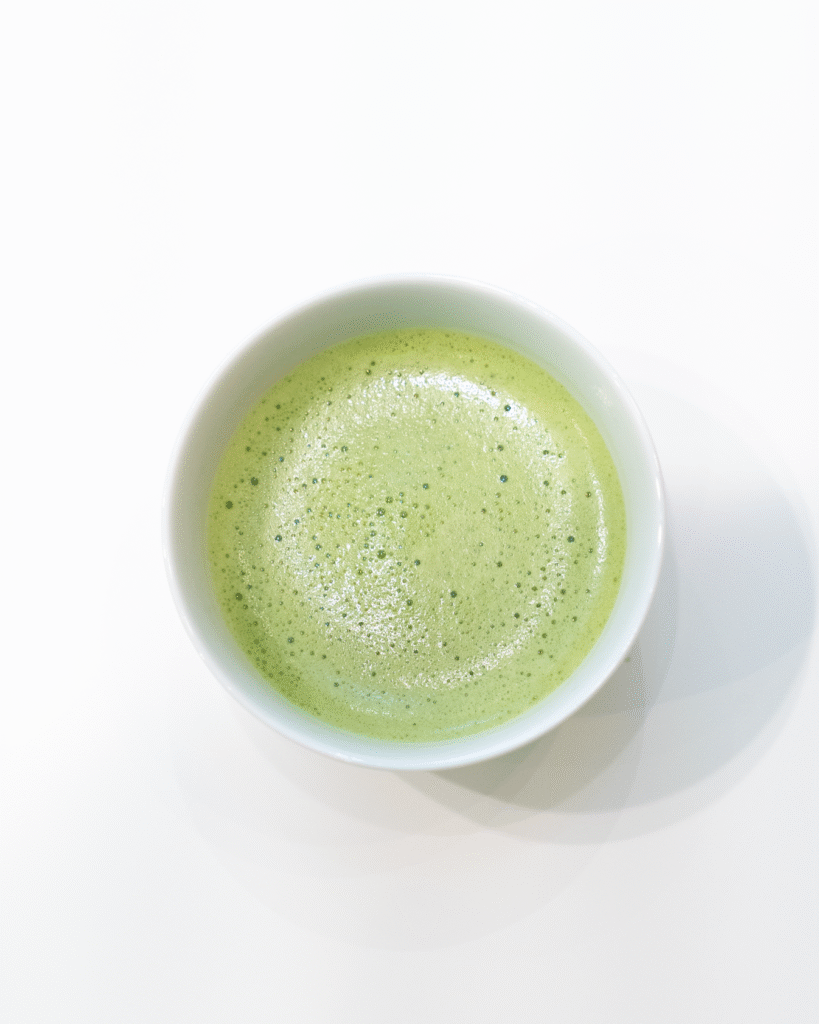
Deluxe Latte Grade Matcha 100g is a first-harvest powdered green tea from Yame, Fukuoka Prefecture, Japan. Its savory, rich profile and emerald color suit hot or cold lattes, where its stronger flavor can remain noticeable alongside milk and sweeteners. Each 100 g resealable plastic pouch is stated to make 20–30 lattes or smoothies.
How does Deluxe Latte Grade Matcha taste?
This matcha has a stronger, more astringent profile than several other matchas in the same range. Drunk on its own, its flavor is described as more aggressive. In a latte, that intensity helps the tea stand up to milk and sweeteners. It is smoother overall than the regular Culinary Grade Matcha, while retaining more astringency than many other matchas from the same producer.
The supplied flavor ratings give richness, bite, and vibrancy scores of 3/5. Aroma and umami each score 2/5. These ratings place the emphasis on richness and bite rather than a pronounced aroma or high umami score.
Why is this matcha intended for lattes?
Deluxe Latte Grade Matcha is used for both hot and cold lattes at a matcha café and green tea shop. Its pronounced flavor is designed to remain present when combined with milk and sweeteners. The powder is also listed for smoothies, and one pouch provides a stated yield of 20–30 lattes or smoothies.
- Intended uses: hot lattes, cold lattes, and smoothies
- Flavor ratings: richness 3/5, bite 3/5, aroma 2/5, vibrancy 3/5, and umami 2/5
- Pack format: 100 g in a resealable plastic pouch
- Stated yield: 20–30 lattes or smoothies
What makes this matcha Deluxe Latte Grade?
The Deluxe designation refers to use of leaves from the year’s first harvest. Compared with regular Culinary Grade Matcha, this first-harvest powder has greater vibrancy and versatility for the uses described. Buyers who plan to drink most of their matcha in a traditional preparation may prefer one of the producer’s other matcha offerings, while this grade is directed toward drinks made with milk or sweeteners.
Where is this matcha produced and processed?
The tea comes from Yame in Fukuoka Prefecture, Japan. Its production includes hand-picking, removal of leaf veins and stems, and stone grinding, which turns Camellia sinensis leaves into matcha powder. Preparation instructions are not provided. The supported serving information is limited to its use in hot or cold lattes and smoothies, plus the stated pouch yield.