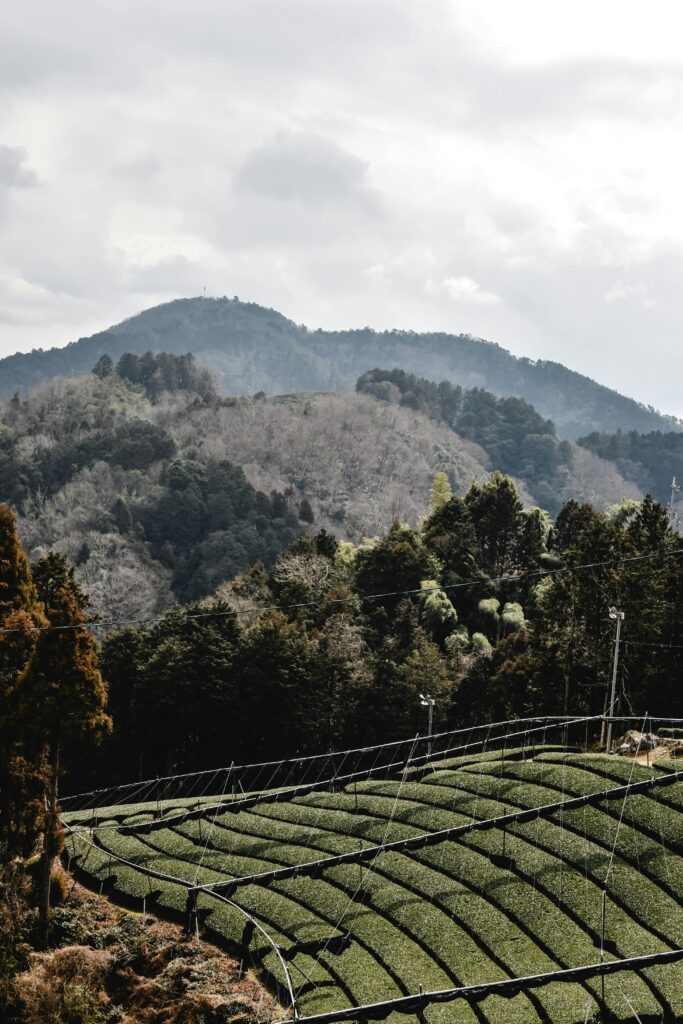
Yame, Fukuoka: Gyokuro Excellence Meets Matcha Mastery
Yame, located in Fukuoka Prefecture’s southern region, represents one of Japan’s most distinguished yet underappreciated matcha production areas. While the region gained international recognition for producing Japan’s finest gyokuro—winning the Minister of Agriculture, Forestry and Fisheries Award at the National Tea Competition repeatedly—this expertise naturally extends to exceptional matcha production. Yame’s matcha heritage stems directly from its gyokuro-growing techniques, particularly the traditional honzu covering method using natural reed screens rather than modern synthetic materials.
The region’s geography creates ideal conditions: mountainous terrain with significant temperature variations between day and night, morning fog from the Yabe River valley, and mineral-rich soil. These factors concentrate amino acids in tea leaves, producing matcha with intensely sweet, mellow umami and minimal bitterness. Yame producers typically shade tea plants for 20-30 days using traditional straw coverings, a labor-intensive process that yields superior L-theanine content. The resulting matcha exhibits a full-bodied, creamy texture with lingering sweetness—characteristics that make it highly prized for formal tea ceremonies and koicha preparation.
Yame’s Distinction: Often described as “liquid gyokuro” when prepared, Yame matcha offers exceptional smoothness with virtually no astringency, though production remains limited compared to major commercial regions.
Beyond the Big Four: Emerging and Specialty Regions
While Uji, Nishio, Kagoshima, Shizuoka, and Yame dominate production, several smaller regions contribute unique characteristics to Japan’s matcha landscape. Mie Prefecture’s Ise region, historically significant as one of Japan’s earliest tea cultivation areas, produces well-balanced matcha known as Yamato Matcha. The region benefits from proximity to Ise Grand Shrine, where tea cultivation dates back over 1,000 years, and produces matcha with a refined, harmonious flavor profile that balances sweetness and slight astringency.
Saitama Prefecture’s Sayama region, part of the “Three Great Teas of Japan” alongside Uji and Shizuoka, has recently expanded into matcha production. Sayama’s cooler climate and unique processing method called Sayama-bi-ire (Sayama fire finishing) traditionally applied to sencha is being adapted for tencha, creating matcha with a distinctive roasted undertone and robust character. Production remains small-scale, making Sayama matcha a specialty item for connoisseurs seeking unconventional flavor profiles.
Kyoto’s Wazuka region, technically part of greater Uji but deserving separate mention, represents traditional small-farm matcha production. The mountainous village’s steep tea fields and artisanal approach yield limited quantities of premium matcha with terroir-driven characteristics. Similarly, Kumamoto Prefecture in Kyushu has emerged as a quality producer, leveraging volcanic soil and innovative organic cultivation methods to create matcha that competes with established regions while offering better value.
How Regional Differences Affect Your Matcha Experience
Understanding regional characteristics helps match matcha to specific uses and preferences. For traditional tea ceremony, Uji and Yame matchas excel, offering the deep umami and smooth texture essential for usucha and koicha. Their premium pricing reflects centuries of refinement and limited production. For daily drinking and matcha lattes, Nishio and Kagoshima provide excellent quality at more accessible prices, with vibrant color and balanced flavor that pairs well with milk and sweeteners.
Culinary applications benefit from Kagoshima and Shizuoka matchas, which maintain color and flavor when mixed with other ingredients in baking, ice cream, and confections. Their bold character doesn’t disappear when combined with sugar, cream, or other flavors. For those exploring organic options, Kagoshima leads in certified organic production, though Uji and other regions increasingly offer organic selections as global demand grows.
Price-to-Quality Considerations: Uji commands premium prices ($40-100+ per 30g for ceremonial grade), while Kagoshima and Nishio offer comparable quality for $20-40 per 30g, making them excellent entry points for new enthusiasts.
Seasonal factors also influence regional matcha. First flush (ichibancha) harvested in late April to May produces the highest quality matcha across all regions, with the most concentrated nutrients and sweetest flavor. Uji and Yame typically harvest later than southern Kagoshima, where warm climate enables earlier picking. Second flush (nibancha) and beyond yield culinary-grade matcha with more robust, less refined characteristics suitable for cooking rather than traditional preparation.
Terroir and the Future of Japanese Matcha Regions
Like fine wine, matcha increasingly emphasizes terroir—the complete natural environment including soil, topography, and climate. Single-origin and single-cultivar matchas highlight specific regional and varietal characteristics, moving beyond traditional blending practices. Kagoshima leads this trend with single-cultivar offerings like Saemidori, Okumidori, and Yutakamidori, each expressing distinct flavor profiles from the same growing conditions.
Climate change poses challenges and opportunities for regional production. Warmer temperatures threaten traditional northern regions like Uji while potentially expanding cultivation possibilities in cooler areas. Kagoshima’s innovative spirit positions it well for adaptation, with research into heat-resistant cultivars and modified shading techniques. Meanwhile, traditional regions invest in preserving heritage methods, recognizing that centuries of accumulated knowledge represent irreplaceable cultural assets.
The global matcha boom strains production capacity, particularly for premium grades. Uji’s hand-picked, traditionally processed matcha cannot scale significantly without compromising quality, creating supply constraints that drive prices upward. This scarcity has elevated Nishio and Kagoshima as essential suppliers of quality matcha to meet international demand, while also spurring innovation in cultivation and processing efficiency without sacrificing fundamental quality standards.
Younger generations of tea farmers bring fresh perspectives to regional traditions. Some Kagoshima producers experiment with unconventional shading durations and hybrid processing methods, while Uji artisans work to codify and preserve traditional techniques before knowledge is lost. This tension between innovation and preservation shapes the future of regional matcha production, with consumers ultimately determining which approaches succeed in the global marketplace.
A Deeper Dive Into Matcha: Regions, Cultivars, Umami, and Ceremony