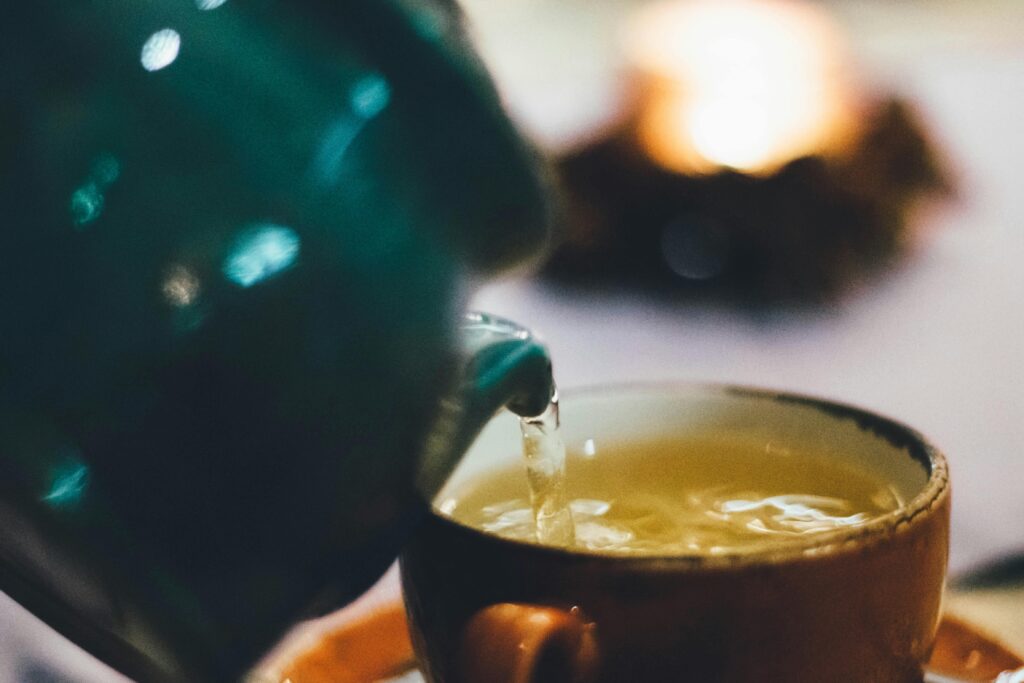
Chanoyu is traditional Japanese art of ceremonially preparing and serving powdered green tea, or matcha, in a ritualized setting. Literally meaning “hot water for tea,” Chanoyu emphasizes disciplined preparation and etiquette, while related terms chado and sado more broadly denote philosophical and spiritual “way of tea.”
Defining Chanoyu: The Art of Hot Water for Tea
Chanoyu (茶の湯) translates literally as “hot water for tea,” but this simple phrase encompasses centuries of Japanese cultural refinement. This term refers specifically to the traditional ceremonial preparation and serving of matcha in a ritualized setting that elevates tea drinking to a spiritual practice. The name emphasizes the fundamental element—carefully heated water—that transforms powdered tea into a meditative experience.
While Western audiences might know this practice as the “Japanese tea ceremony,” the term chanoyu captures something more specific. It highlights the physical act of preparation rather than abstract philosophy. This distinction matters when understanding how matcha functions within Japanese cultural traditions.
Chanoyu Versus Related Terms
Three terms describe Japanese tea practice, each with subtle differences. Chanoyu focuses on the ritualistic preparation using hot water. Sado (茶道) and chado (茶道) both translate as “the way of tea,” emphasizing the broader philosophical and spiritual dimensions beyond physical preparation.
These terms often appear interchangeably in casual conversation. However, practitioners recognize that sado and chado encompass the entire cultural philosophy, while chanoyu describes the specific ceremonial act. Understanding this distinction helps appreciate how matcha preparation evolved into a complete cultural practice.
Historical Foundations and Sen no Rikyū’s Influence
Chanoyu developed during the 15th and 16th centuries, influenced by Zen Buddhism and Chinese tea culture. Early practitioners transformed imported customs into distinctly Japanese aesthetic expressions. The practice evolved from elaborate displays of wealth to refined expressions of simplicity.
Sen no Rikyū (1522-1591) revolutionized chanoyu by establishing its core aesthetic principles. This legendary tea master emphasized rustic beauty, simplicity, and spiritual depth over ostentatious displays. His teachings created the foundation for modern tea schools and continue influencing practitioners today.
Rikyū’s approach democratized tea ceremony by making it accessible beyond aristocratic circles. He developed the small tea room concept, created guidelines for utensil aesthetics, and codified movements that balance efficiency with mindfulness. His influence remains so profound that major tea schools trace their lineage directly to his teachings.
The Four Foundational Principles
Chanoyu rests on four philosophical pillars that guide every aspect of practice. These principles transform tea preparation from mundane task into meaningful ritual, connecting participants to deeper awareness.
Wa: Cultivating Harmony
Wa (和) represents harmony between host, guests, utensils, and natural surroundings. This principle requires careful attention to seasonal elements, appropriate decorations, and interpersonal dynamics. Every choice—from flower arrangements to tea bowl selection—should create cohesive atmosphere.
Practitioners achieve wa by considering how elements interact rather than focusing on individual components. The goal extends beyond aesthetic coordination to genuine connection among participants.
Kei: Expressing Respect
Kei (敬) manifests as mutual respect among all participants and reverence for utensils. Guests bow to acknowledge the host’s preparation efforts. The host handles each implement with care, demonstrating appreciation for craftsmanship. This principle elevates ordinary objects to valued tools deserving mindful treatment.
Sei: Embracing Purity
Sei (清) encompasses both physical cleanliness and spiritual clarity. Guests ritually purify themselves before entering the tea room. The host meticulously cleans utensils during the ceremony, symbolizing removal of mental distractions. This principle creates sacred space separated from daily concerns.
Jaku: Achieving Tranquility
Jaku (寂) represents the inner peace cultivated through chanoyu practice. This tranquility emerges naturally when the other three principles align. Participants experience calm awareness focused entirely on the present moment, free from external worries.
Ceremony Structure and Essential Elements
A formal chanoyu follows prescribed sequences that have remained largely unchanged for centuries. The ceremony typically occurs in a dedicated tea room designed to facilitate mindful practice. Guests enter through a low doorway requiring them to bow, symbolizing humility and leaving status outside.
The host prepares the space with seasonal decorations, typically including a hanging scroll and flower arrangement. These elements reflect natural cycles and create appropriate atmosphere. Utensils are arranged in specific positions, each placement serving both practical and aesthetic purposes.
The Preparation Sequence
- The host warms the tea bowl with hot water, demonstrating care for guests’ comfort
- Matcha powder is measured using a bamboo scoop (chashaku), with precise amounts ensuring proper flavor
- Hot water is added from the kettle, with temperature carefully controlled for optimal extraction
- The mixture is whisked vigorously using a bamboo whisk (chasen) until frothy consistency develops
- The completed tea is presented to guests with the bowl’s most beautiful side facing them
Each movement follows established forms that balance efficiency with grace. Practitioners spend years mastering these motions, which become meditative through repetition. The seemingly simple act of whisking matcha contains layers of technical precision and aesthetic consideration.
Matcha’s Central Role in Chanoyu
Matcha serves as more than an ingredient in chanoyu—it functions as the ceremony’s focal point and primary medium. This powdered green tea is uniquely suited to ceremonial preparation because it suspends completely in water rather than steeping like leaf tea. The whisking process creates visual transformation while requiring focused attention.
Only the highest quality matcha appears in formal chanoyu. Tea masters select specific grades based on ceremony type, with thick tea (koicha) preparations using premium grades that balance sweetness with umami depth. The tea’s flavor, color, and texture directly impact the ceremony’s success, making quality selection crucial.
The act of consuming matcha during chanoyu encourages mindful appreciation. Guests receive the bowl with both hands, rotating it to avoid drinking from the front. They savor the tea slowly, noting its flavor, temperature, and texture. This deliberate consumption contrasts sharply with casual beverage drinking, transforming tea into contemplative practice.
Contemporary Practice and Cultural Significance
Chanoyu remains a living tradition practiced throughout Japan and increasingly worldwide. Major tea schools continue teaching Sen no Rikyū’s principles while adapting to modern contexts. Cultural centers, private homes, and dedicated tea rooms host ceremonies ranging from formal multi-hour events to abbreviated demonstrations.
Modern practitioners value chanoyu as counterbalance to fast-paced contemporary life. The ceremony provides structured opportunity for mindfulness, aesthetic appreciation, and genuine human connection. Many Japanese consider basic tea ceremony knowledge essential cultural literacy, with schools often including chanoyu in educational curricula.
Global Influence and Adaptation
Interest in chanoyu has expanded beyond Japan as global matcha consumption increases. International practitioners adapt the ceremony to available resources while maintaining core principles. This expansion introduces matcha drinkers to the beverage’s cultural context, deepening appreciation beyond flavor alone.
The aesthetic principles developed through chanoyu influence contemporary design, hospitality practices, and mindfulness approaches worldwide. Concepts like wabi-sabi (finding beauty in imperfection) originated in tea ceremony contexts and now shape global artistic movements.
Key Takeaways
Chanoyu represents the formalized ceremonial preparation of matcha, grounded in four principles: harmony, respect, purity, and tranquility. This practice transforms tea preparation into spiritual discipline through prescribed movements and mindful attention. Sen no Rikyū’s 16th-century teachings established the aesthetic foundations that continue guiding practitioners today.
Understanding chanoyu enriches matcha appreciation by revealing the cultural depth behind this powdered tea. Whether participating in formal ceremonies or preparing daily matcha at home, recognizing these principles connects modern drinkers to centuries of refinement. The ceremony reminds us that how we prepare and consume tea matters as much as the tea itself.
Chanoyu is the traditional Japanese ceremonial practice of preparing and serving matcha in a ritualized setting. Its name literally means “hot water for tea,” emphasizing the physical act of preparation. The practice uses prescribed movements and mindful attention to elevate preparing, presenting, and drinking powdered green tea into a culturally refined and spiritual discipline.
Chanoyu specifically emphasizes the ceremonial act of preparing matcha with hot water. Chado and sado both mean “the way of tea” and refer more broadly to the philosophical, spiritual, and cultural dimensions of Japanese tea practice. Although the terms may be used interchangeably in casual conversation, practitioners recognize this difference in emphasis.
The four foundational principles of chanoyu are wa, kei, sei, and jaku. Wa represents harmony among the host, guests, utensils, and surroundings. Kei expresses mutual respect and care for objects. Sei concerns physical cleanliness and spiritual clarity. Jaku is the tranquility that emerges when harmony, respect, and purity align.
During chanoyu, the host warms the tea bowl, measures matcha with a bamboo scoop, and adds carefully controlled hot water. The tea is vigorously mixed with a bamboo whisk until frothy, then presented with the bowl’s most beautiful side facing the guest. Each movement follows an established form balancing practical efficiency with grace.
Sen no Rikyū established aesthetic principles that became foundational to modern chanoyu. He favored rustic beauty, simplicity, and spiritual depth rather than ostentatious display. He also developed the small tea room concept, created guidance for utensil aesthetics, and codified movements that combine efficiency with mindfulness. Major tea schools continue to trace their lineage to his teachings.