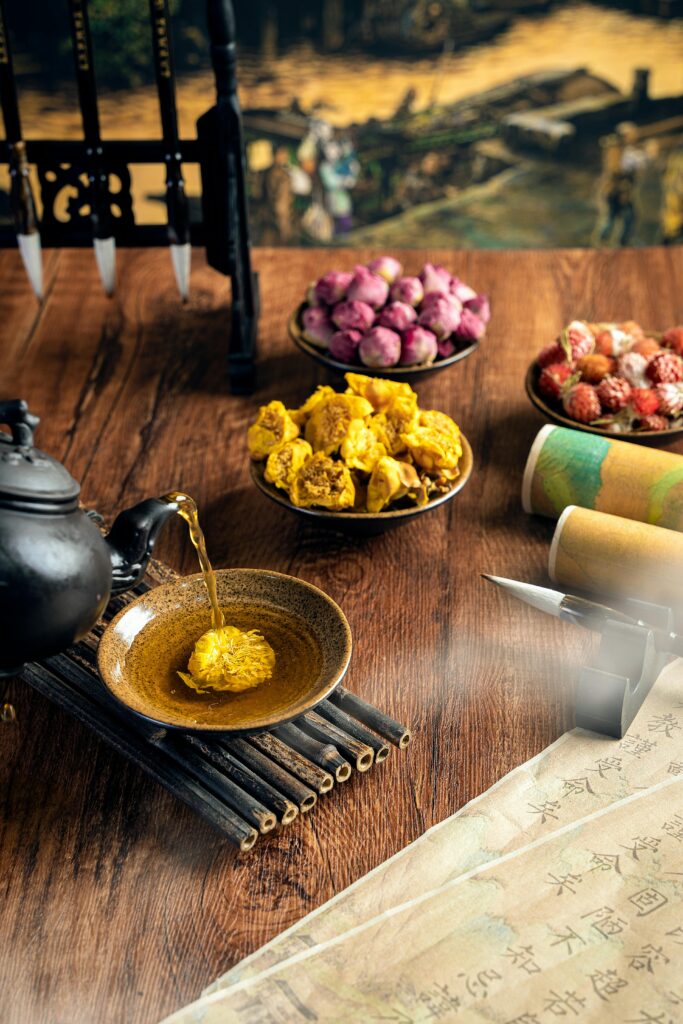
Shaoxing is a historic tea region in Zhejiang Province, China, producing green tea varieties since the Song Dynasty that shaped Chinese tea traditions.
Shaoxing Tea and Its Role in Traditional Chinese Tea Culture
Shaoxing tea comes from the Zhejiang Province region of China, where tea cultivation stretches back before the Song Dynasty. This area produced some of China’s most celebrated green teas, including varieties that shaped how people across Asia understand tea quality and processing. The region’s warm subtropical climate, slightly acidic volcanic soils with pH levels between 5 and 5.5, and mountainous terrain at elevations around 750 meters create conditions that yield tender leaves with distinct flavor profiles. Shaoxing’s tea culture became woven into Chinese social customs, influencing everything from daily hospitality to ceremonial practices.
Historical Roots in Chinese Tea Production
Lu Yu’s classical text “The Book of Tea” mentions Shaoxing as a notable tea-producing area, and historical records from the Song, Yuan, Ming, and Qing dynasties document the region’s tea craftsmanship. Tea makers in Shaoxing developed techniques that balanced flavor preservation with efficient processing. The area’s most famous contribution, Longjing tea (West Lake Dragon Well), displays bright green leaves and a sweet, refreshing taste that became a benchmark for Chinese green tea quality. Other varieties like Majian tea, Xianhao tea, and Shengzhou Qiangang Hui White Tea each developed unique characteristics tied to specific microclimates within the broader region.
Traditional Processing Methods Passed Through Generations
Shaoxing tea production relies on manual techniques involving precise timing and temperature control. The process starts with selective picking, followed by light fixation called sun green, then careful pan-firing that stops oxidation while shaping the leaves. Tea makers adjust heat levels and hand movements based on leaf moisture content and desired final texture. These methods require years to master, and families pass down knowledge about when to harvest, how long to fire leaves, and which growing areas produce specific flavor notes. The craftsmanship represents more than agricultural practice—it’s a form of cultural expression that connects modern producers to centuries of regional identity.
Integration Into Social and Daily Life
Tea in Shaoxing functions as both beverage and social tool. People serve it during:
- Family gatherings where multiple generations share stories over freshly brewed cups
- Business meetings where tea service signals respect and facilitates conversation
- Festivals and celebrations that mark seasonal changes or community events
- Casual visits where offering tea demonstrates hospitality without formality
This integration extends beyond consumption. Tea garden tourism draws visitors who want to see traditional processing firsthand, while tea culture festivals create spaces for tastings, performances, and educational exchanges. The practice of manual tea-making continues through teaching programs that train younger generations in techniques their ancestors developed. What makes Shaoxing tea culture particularly notable isn’t just the quality of its leaves—it’s how the region transformed tea from agricultural product into a symbol of local identity and social cohesion that resonates throughout Chinese tea traditions.
Shaoxing's tea heritage centers around Gunpowder tea, also called Pingshui Zhucha, which traces back to the Tang Dynasty. The Pingshui district in Shaoxing became famous for its distinctive rolling technique that shapes tea leaves into tight pellets resembling gunpowder grains.
Beyond production, Shaoxing sits within Zhejiang Province—China's premier green tea region. The area produces multiple varieties including Xinchang Big Buddha Longjing and Zhuji Green Sword tea. What's interesting is how Shaoxing's tea culture intertwined with its renowned wine traditions, creating a dual identity where tea represented intellectual refinement while wine symbolized celebration.
Tea drinking in Shaoxing wasn't just about the beverage. It became a vehicle for spiritual and cultural expression among scholars and artists. The literati used tea gatherings as opportunities for poetry composition, philosophical discussion, and artistic exchange.
This connection made sense given Shaoxing's rich literary heritage. Tea symbolized clarity and purity—qualities the literati valued. The practice of preparing and sharing tea reflected the region's broader cultural sophistication, distinguishing it from wine's more intoxicating effects.
Yes. Shaoxing, particularly the Yucha Village area, ranks among China's three major matcha production centers alongside Guizhou and Hangzhou. The region produces powdered green tea known for its strong taste profile and quality.
This modern production connects to China's historical tradition of powdered tea that eventually influenced Japanese matcha culture. Shaoxing's matcha contributes to both domestic consumption and the growing global market for this finely milled tea powder.
Shaoxing produces several distinctive teas:
- Shaoxing Pingshui Pearl tea (the famous Gunpowder tea)
- Xinchang Big Buddha Longjing
- Zhuji Green Sword tea
- Zhuji Xishi Yinya
Each variety reflects local terroir and processing traditions. The Pingshui district alone has the largest tea acreage and highest production volume in the area, making it a powerhouse within Zhejiang's tea landscape.
Pingshui Gunpowder tea became one of China's traditional export green teas, introducing Western markets to Chinese tea culture. The rolling technique preserves flavor and aroma by creating those characteristic pellets, which also gave the tea exceptional shelf life for long-distance trade.
The name comes from Pingshui Town in Shaoxing, where factories refined and distributed this tea style. Its longevity—from Tang Dynasty origins to modern production—demonstrates both quality and cultural staying power.
Zhejiang is China's leading green tea province, and Shaoxing plays a key supporting role. While Hangzhou produces the famous West Lake Longjing, Shaoxing's Pingshui district handles the largest tea acreage and highest processing volumes in certain categories.
The region participates in Zhejiang's natural and organic tea initiatives, contributing to quality standards across the province. Shaoxing's tea culture has become a local cultural symbol that complements rather than competes with other Zhejiang tea regions, creating a diverse provincial tea identity.