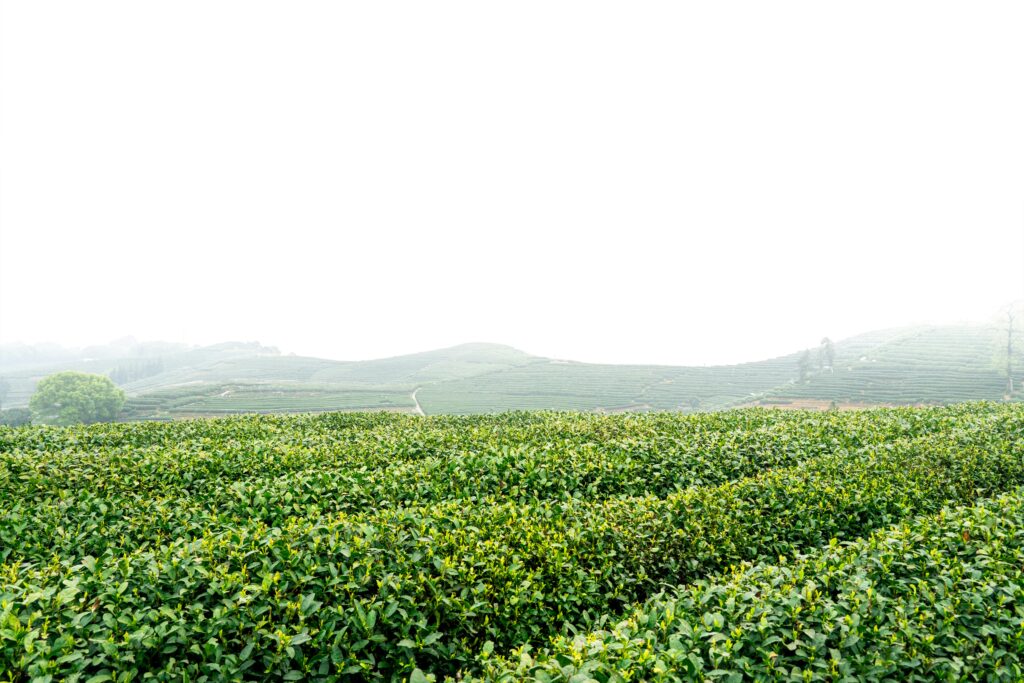
Longyou is a tea-growing county in Zhejiang Province, China, with plantations and processing facilities that shape matcha quality through cultivation practices.
Longyou’s Role in China’s Tea Landscape
Longyou is a county in Zhejiang Province, China, where tea cultivation has thrived for centuries in conditions that shape leaf quality and flavor profiles. Located in a subtropical monsoon climate with red loam soil, this region produces tea with distinctive characteristics influenced by its environment. While Longyou is historically known for its yellow tea variety, it sits within Zhejiang Province, which now produces over half of China’s matcha output and serves as the world’s largest matcha supplier with production values nearing 900 million yuan.
Climate and Soil Conditions That Define Quality
Longyou experiences an average annual temperature of 18°C with rainfall between 1,000-1,900 mm and roughly 1,769 hours of sunshine yearly. The region’s red loam soil contains phosphorus, calcium, iron, and sulfur that directly impact tea leaf biochemistry. This soil composition boosts theanine content, which creates the sweet and umami characteristics prized in quality tea. The relative humidity stays around 79%, though spring frost poses challenges for early tea buds. Compared to traditional Japanese matcha regions with 2,000+ hours of annual sunshine, Longyou’s lower light exposure affects chlorophyll accumulation and photosynthesis rates in tea plants.
Cultivation Practices and Processing Methods
Tea farmers in Longyou work with natural sunlight cultivation rather than the shade-growing techniques typical of Japanese matcha production. Shade-growing involves covering plants for weeks before harvest to increase chlorophyll and amino acids, but Longyou’s approach focuses on sun-grown tea that develops different flavor compounds. The region’s signature Longyou Yellow Tea undergoes partial oxidation with combined heat and moisture, creating a mellow profile. This differs from matcha processing, which requires immediate steaming or pan-firing to prevent oxidation and maintain vibrant green color. Tea cultivation here supports local economies, with processing facilities handling everything from traditional methods to modern instant tea production.
Connection to Modern Matcha Production
While Longyou itself isn’t a primary matcha production center, its position within Zhejiang Province connects it to China’s matcha industry. Zhejiang pioneered Chinese matcha production and now supplies both domestic and international markets. The province’s established infrastructure and tea-growing expertise enable large-scale matcha manufacturing. Tea leaves from regions like Longyou contain the amino acids, catechins, and chlorophyll needed for quality matcha, though processing methods differ from historical practices. The red loam soil’s influence on theanine levels makes Zhejiang-grown tea suitable for matcha production when processed correctly. Modern cultivation includes controlled irrigation and soil management to maintain fertility, with producers increasingly pursuing organic certifications to meet global standards. This evolution positions Longyou and surrounding areas as contributors to China’s growing role in the matcha supply chain.
Longyou County sits in Zhejiang Province, China's most productive matcha region that now accounts for over half of China's total matcha output. The area features low hilly terrain with ferrosol and entisol soil types, plus a warm climate that supports early spring growth—perfect conditions for tea plants.
Tea processing has become a pillar industry in Longyou, particularly in townships like Sheyang where it provides the main income for local farmers. The region's red soil resources and agricultural infrastructure make it well-positioned within Zhejiang's expanding matcha production landscape.
Longyou is known for producing Longyou Yellow Tea, a rare variety cultivated at altitudes above 800 meters on Shengtang Mountain. This specialty tea has earned national recognition and grows across more than 400 mu of plantation area.
While Longyou doesn't have a historical reputation for matcha specifically, its location in Zhejiang Province—the world's largest matcha production base—means it has the infrastructure and expertise to potentially produce green tea powder. The county already operates multiple tea processing workshops that could adapt to matcha production methods.
Chinese matcha production typically involves shorter shading periods before harvest compared to Japan's 20-50+ day shading process. This affects chlorophyll content and amino acid development in the leaves.
The biggest difference? Processing methods. Chinese producers often use pan-frying to stop oxidation, while Japanese matcha relies on steaming. Here's what that means:
- Steaming preserves more nutrients and creates vibrant green color
- Pan-frying produces a different flavor profile with potentially lower nutritional density
- Japanese stone-grinding is more labor-intensive than some Chinese grinding methods
That said, Zhejiang's matcha industry has invested heavily in quality improvements since 2016, making high-grade Chinese matcha increasingly competitive.
Look for these key indicators: shading duration before harvest (longer shading increases L-theanine and umami flavor), processing method (steamed leaves retain more antioxidants than pan-fried), and cultivation altitude (higher elevations often produce better quality, like Longyou's 800+ meter tea gardens).
Color tells you a lot—vibrant jade green suggests proper shading and fresh processing. Texture matters too. Fine, silky powder indicates careful stone-grinding, while coarse, gritty powder may signal industrial processing. You'll also want to check harvest timing, as first-flush spring leaves deliver the best flavor and nutritional profile.
Absolutely. Zhejiang's transformation into the world's largest matcha production base shows how traditional tea regions can pivot. Areas like Longyou already have the fundamentals: suitable climate, established tea farms, processing facilities, and agricultural knowledge.
What's needed? Implementing shade-growing structures 3-4 weeks before harvest, adjusting processing from traditional methods to steaming or careful pan-frying, and investing in stone-grinding equipment. The soil conditions and tea cultivars in Longyou—particularly its high-altitude plantations—could support matcha production with these modifications.
Economics and scale. Zhejiang produces more than half of China's matcha and has become the world's largest production base through strategic investment since 2016. The province benefits from centuries of tea cultivation expertise, ideal growing conditions, and modern processing infrastructure.
Chinese matcha typically costs less than Japanese matcha while meeting growing global demand. Regions within Zhejiang—from Hangzhou and Shaoxing to smaller counties like Longyou—contribute to this output. As quality standards improve and producers adopt more Japanese-style cultivation techniques like extended shading and steaming, the gap between Chinese and Japanese matcha continues to narrow.