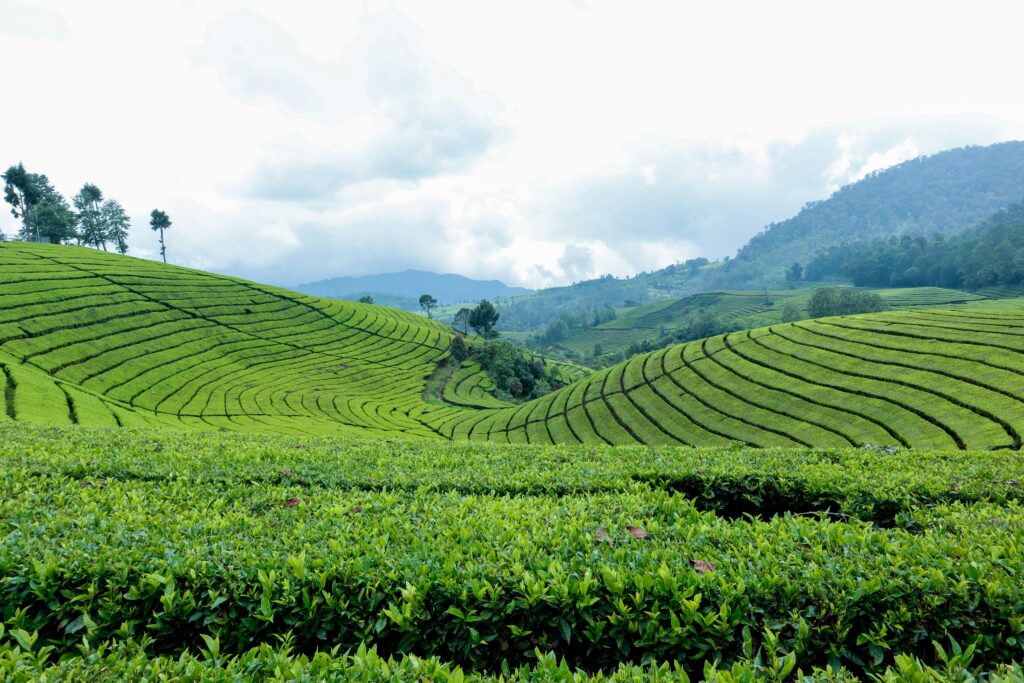
Quzhou, in western Zhejiang, features 70% forest cover and varied elevation that creates unique microclimates for rich, distinctive matcha tea flavors.
Quzhou’s Tea-Growing Landscape in Western Zhejiang
Quzhou is a mountainous prefecture in western Zhejiang Province with a tea cultivation history stretching back to the Tang Dynasty. The region sits on the upper course of the Qiantang River, where 49% mountains, 36% hills, and 15% plains create varied microclimates for tea production. While Quzhou isn’t traditionally associated with matcha production, it’s earned recognition for green teas like Jiangshan Lvmudan and Longding tea, plus its status as China’s “Town of Tea Processing Machines.”
Climate and Growing Season Characteristics
Quzhou’s subtropical monsoon climate delivers 1000 to 1900 mm of annual rainfall with temperatures averaging 15.3°C to 17.9°C throughout the year. The frost-free period extends 230 to 270 days, giving tea plants a growing season exceeding 200 days. This compares to Japan’s matcha regions, which typically see shorter growing seasons. Spring frost remains a cultivation hazard, requiring farmers to monitor temperatures during the critical first flush period when tender shoots emerge.
Annual sunshine hours range between 1600 and 2000, providing adequate light without the intense exposure that can stress tea plants. The consistent moisture and moderate temperatures support steady vegetative growth, though the region’s focus remains on traditional leaf teas rather than the shade-grown cultivation methods essential for authentic matcha production.
Soil Composition and Terrain
The region’s acidic to neutral soils feature the red and yellow earth typical of southern China’s tea-growing zones. These well-drained soils combine with elevations ranging from lowland valleys to peaks over 1000 meters, creating drainage patterns that prevent waterlogging during heavy monsoon rains. The mountainous topography provides natural windbreaks and temperature moderation.
Tea gardens occupy hillside slopes where elevation influences flavor development. Higher plantations experience cooler nights and slower leaf maturation, characteristics that enhance amino acid content and reduce bitterness. This terrain differs from the gentler hills around Hangzhou’s West Lake Longjing region, giving Quzhou teas their distinct profile.
Tea Varieties and Processing Heritage
Quzhou’s tea heritage centers on several notable varieties:
- Jiangshan Lvmudan, a green tea that served as Ming Dynasty tribute tea
- Longding tea from Kaihua county, dating to the late Tang Dynasty
- Longyou yellow tea, representing the region’s processing diversity
The area’s reputation extends beyond cultivation to tea machinery manufacturing, supplying processing equipment across China. This industrial capacity reflects centuries of accumulated knowledge in tea processing techniques, though it’s focused on pan-fired and rolled green teas rather than the stone-grinding required for matcha powder. Tea processing remains a pillar industry and primary income source for local villages throughout the prefecture.
Quzhou sits in Zhejiang Province, China, an area blessed with mountainous terrain and over 46 peaks exceeding 1,000 meters in altitude. The region's natural landscape creates a microclimate that's perfect for growing high-quality tea plants. Clean water sources and lush mountain environments provide the ideal foundation for matcha production, while the elevation slows leaf growth—a factor that enhances flavor complexity and nutrient density in the final product.
Higher elevations in Quzhou create slower leaf growth, which directly impacts matcha quality. When tea plants grow more gradually, they develop richer flavor profiles and higher concentrations of beneficial compounds like amino acids and antioxidants. The cooler temperatures at altitude also reduce pest pressure naturally, allowing for cleaner cultivation practices that preserve the tea's delicate characteristics.
Quzhou's climate features temperatures between 15-30°C, which tea plants love. The region gets sufficient rainfall and maintains humidity levels that keep soil moisture consistent throughout the growing season. This combination of warmth, water, and mountain mist creates what growers call the 'golden triangle' conditions—where temperature, moisture, and elevation all work together to produce leaves with exceptional aroma and taste.
Tea from Quzhou is recognized for its strong floral aroma and clean taste profile. The region has earned recognition for producing teas like Quzhou Huoshao Cha, which has been listed among China's top teas. The area's unique growing conditions—particularly the acidic, organic-rich soil and mountain climate—contribute to teas with bright color, smooth texture, and aromatic qualities that stand out when processed into matcha powder.
Quzhou has a long-standing tradition of tea planting and production that spans centuries. The region's tea industry developed alongside other famous Zhejiang tea areas, benefiting from the province's reputation as a premier tea-growing zone in China. Local knowledge passed down through generations has refined cultivation techniques specific to the mountainous terrain, creating expertise in growing tea varieties that thrive in high-altitude conditions.
Yes, Quzhou's soil is typically acidic and rich in organic matter—exactly what tea plants need to flourish. The mountainous terrain provides natural drainage while retaining enough moisture for healthy root development. This soil composition allows tea plants to absorb minerals and nutrients that influence the umami flavor and vibrant green color that define premium matcha powder.