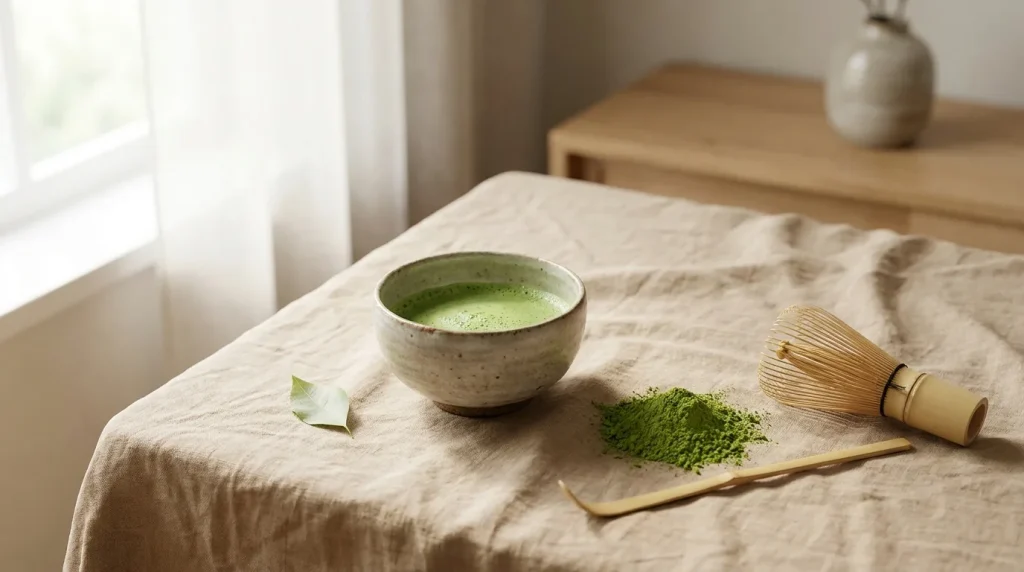
Matcha is shade-grown Japanese green tea that is stone-milled into a fine powder and whisked into water. Unlike brewed leaf tea, matcha is consumed whole, so its flavor, texture, caffeine, amino acids, and color all depend heavily on leaf quality and preparation. A beginner does not need expensive equipment or the highest-priced tin. Start with fresh Japanese matcha, soft water below boiling, a small dose, and a method you can repeat.
This Matcha 101 guide explains what matcha is, how it differs from ordinary green tea, what quality labels can and cannot tell you, how to shop by use and budget, and how to prepare a balanced bowl. It also covers storage, daily habits, common problems, and the basic evidence behind matcha’s best-known compounds.
What is matcha?
Matcha begins with tea plants, usually Camellia sinensis, grown under shade for several weeks before harvest. Shading changes leaf chemistry and slows growth. It tends to preserve chlorophyll, raise amino acid levels, and produce the deep green color and savory sweetness associated with good matcha. Producers steam the harvested leaves to halt oxidation, then dry and refine them into tencha. Stems and veins are removed before the tender leaf material is ground into powder.
That production chain matters. Matcha is not any green tea run through a grinder, and it is not the same as powdered sencha. For a closer look at terminology, cultivation, tencha, and milling, read the definition of matcha as a Japanese green tea.
When matcha is whisked, its tiny particles remain suspended rather than dissolving. This creates body and a light foam, but it also means powder eventually settles. A short stir or swirl is normal if a drink sits for several minutes.
How matcha differs from regular green tea
Most green tea is infused and removed. Hot water extracts part of the leaf’s soluble material, while the spent leaves stay behind. With matcha, the ground leaf enters the drink. This produces a fuller texture, more concentrated flavor, and a different serving profile. It also makes freshness and particle quality easy to notice.
Matcha is usually shade-grown and made from refined tencha, while sencha is commonly sun-grown and rolled during processing. Both can be excellent. Neither is automatically healthier or more authentic than the other. They are distinct forms of tea with different production methods and drinking experiences. See the full matcha versus green tea comparison for brewing, taste, caffeine, and serving differences.
How to buy your first matcha
Buy for the drink you plan to make. Straight matcha exposes every flavor, so it benefits from a sweeter, less astringent powder. A latte can use a stronger matcha because milk softens bitterness and covers subtle aromas. Baking needs color and enough tea intensity to survive sugar, fat, and heat. Paying premium prices for cookies rarely improves the result.
Look first for a clear Japanese origin, a packed or best-before date, sealed light-resistant packaging, and a seller that explains intended use. Region can be useful, but famous names are not guarantees. Uji, Nishio, Yame, Kirishima, and other producing areas contain many farms, cultivars, harvests, and quality levels.
Color should be lively green, not dull olive or brown. Aroma should suggest fresh greens, sweet peas, sea air, nuts, or gentle cream, depending on the tea. Flavor may include bitterness, but harshness should not dominate a well-made bowl. Texture should feel fine rather than sandy.
The phrase ceremonial grade has no universal legal definition. Treat it as a seller’s positioning term, then inspect origin, harvest information, freshness, tasting notes, and return policy. Likewise, organic certification describes farming and handling standards. It does not rank flavor.
For a decision process covering pack size, label clues, use case, and seller questions, use the first matcha purchase guide. If price is the main concern, the budget-friendly matcha guide explains where spending matters and where it does not.
| Use | What to prioritize | Practical starting point |
|---|---|---|
| Straight bowl | Freshness, sweetness, low harshness, fine texture | 20 to 40 gram tin from a tea specialist |
| Usucha with more water | Balanced umami, clean finish, stable foam | Mid-range drinking matcha |
| Latte | Strong green color and flavor that holds up to milk | Latte or daily grade from Japan |
| Baking | Color, value, assertive tea flavor | Culinary matcha in a larger pouch |
| Gift | Recent packing, traceable producer, useful size | Small sealed tin plus preparation notes |
How to make matcha step by step
A bamboo whisk, called a chasen, gives the easiest fine foam, but beginners can learn with a small kitchen whisk, handheld frother, or sealed jar. A sieve has more effect on smoothness than a decorative bowl. Use a scale if possible, since spoon shapes and powder density vary.
- Heat and cool the water. Start near 75 to 80°C, or 167 to 176°F. Boiling water often makes beginner matcha taste sharper. If you lack a thermometer, boil water and let it rest briefly in an open cup.
- Measure the matcha. Use about 2 grams, roughly one level teaspoon depending on the spoon, for a standard bowl. Strong or weak results are easier to fix when the dose stays consistent.
- Sift the powder. Push matcha through a fine mesh sieve into a wide bowl. This breaks compacted powder and reduces stubborn clumps.
- Add a little water first. Pour in 20 to 30 milliliters and mix into a smooth paste. This step is especially helpful with a frother or kitchen whisk.
- Add the remaining water. Bring the total to about 60 to 80 milliliters for a concentrated bowl, or more for a lighter drink.
- Whisk quickly. Move a chasen from the wrist in a loose M or W pattern for 15 to 25 seconds. Keep the whisk near the surface near the end to refine large bubbles.
- Taste before changing everything. If it is too bitter, lower water temperature or add water. If it is thin, use slightly more powder or less water next time.
For a latte, whisk the matcha with water before adding warm or cold milk. Pouring powder straight into a full glass makes clumps likely. Sweeten after tasting, since fresh matcha and naturally sweet milk may need less syrup than expected.
Build a daily ritual and keep matcha fresh
Consistency beats complexity. Keep matcha, sieve, scoop, and whisk together. Choose one default recipe and repeat it for several days before adjusting. That gives you a useful baseline and turns preparation into a short habit rather than a new experiment each morning. The daily matcha ritual guide offers simple routines for busy mornings, quiet bowls, and iced drinks.
Matcha reacts to oxygen, heat, light, moisture, and strong odors. Keep it tightly sealed in an opaque container. For an unopened package, follow the producer’s storage directions. After opening, a cool cupboard works for matcha used quickly in a mild home. Refrigeration may extend freshness, but condensation can damage powder. If chilled, keep the container sealed while it returns to room temperature, then open it.
Buy a size you can finish while it still tastes bright, often within four to eight weeks after opening. Never dip a wet spoon into the tin. Clean the rim before closing it, and avoid storing matcha beside spices or coffee.
Common matcha problems and quick fixes
- It tastes bitter or drying.
- Cool the water, reduce the dose, add more water, or try a fresher matcha intended for straight drinking.
- It has clumps.
- Sift before whisking and make a paste with a small amount of water. Check that tools are fully dry.
- It will not foam.
- Use a wide bowl, whisk from the wrist, avoid pressing hard on the base, and check whether the chasen tips are crowded or damaged. Foam is pleasant, not a quality test by itself.
- It tastes weak in milk.
- Reduce milk volume or choose a stronger latte matcha. Adding more expensive delicate matcha may not solve the balance.
- Its color faded quickly.
- Limit air, light, and heat. A large half-empty bag oxidizes faster than a small well-sealed tin.
Most disappointing bowls come from a few repeatable errors, not lack of talent. Review these common matcha mistakes before replacing your tools or tea.