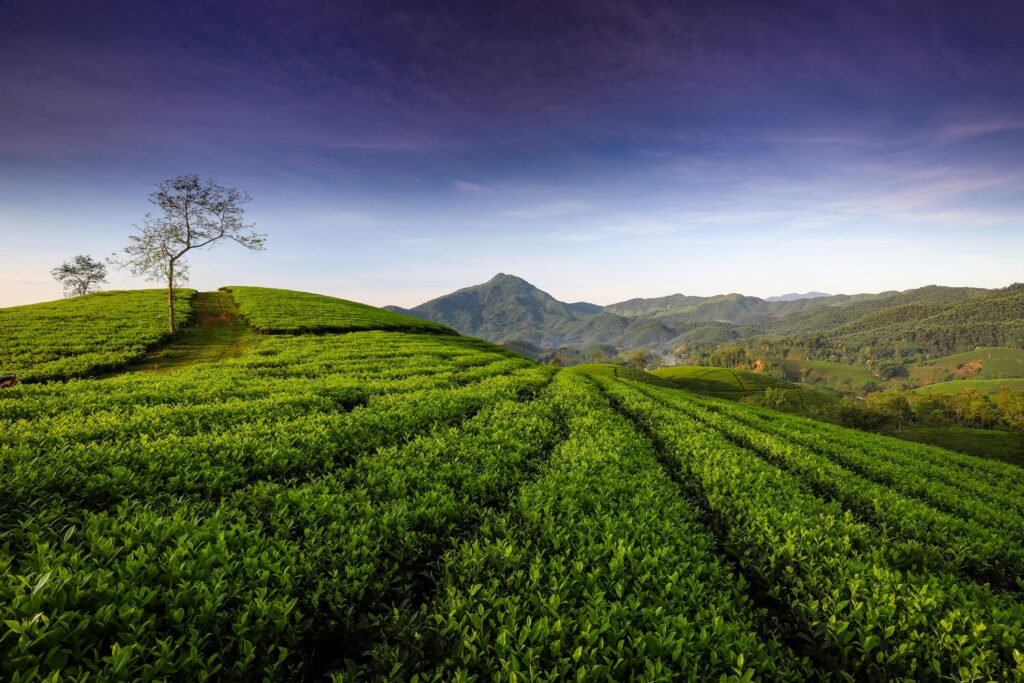
Vietnam is a major tea producer ranked seventh globally, with 124,000 hectares growing green teas in northern regions like Thai Nguyen, not traditional matcha.
Vietnam’s Emerging Role in Green Tea and Matcha Production
Vietnam stands as the world’s fifth-largest tea producer, cultivating approximately 128,000 hectares with over 230,000 tons of dried tea produced annually. While Vietnamese tea culture traces back over 4,000 years to the Hung Kings dynasty, the country’s foray into matcha production represents a modern evolution of its ancient traditions. Northern mountainous regions like Thai Nguyen, Tuyen Quang, and the Van Ho-Moc Chau plateau create ideal terroirs for specialty green tea cultivation, combining mist-shrouded hills with diverse microclimates that influence flavor profiles.
Ancient Tea Traditions Meet Modern Matcha Innovation
Vietnam’s tea heritage differs from Japanese and Chinese ceremonial practices. The culture here emphasizes social connection over formal ritual, with tea served in small cups from clay kettles in everyday settings rather than designated tea rooms. Traditional varieties include lotus tea, where green tea is scented overnight with fresh lotus flowers, and jasmine tea blended with jasmine blossoms. Commercial matcha production started recently, with companies like Future Generation Company establishing full processing lines. Thai Nguyen entrepreneurs now produce matcha commercially, adapting Japanese stone-grinding techniques to local cultivars grown in Vietnam’s unique terroir.
Regional Growing Conditions and Cultivation Methods
Vietnam’s long, narrow geography creates distinct microclimates across tea-growing regions. The northern areas produce most specialty teas, benefiting from clean mountain air and natural fog cover. Traditional farming practices include planting by seed and cuttings, with many bushes grown organically in these pristine environments. The terroir imparts a fresh, slightly bitter flavor profile influenced by altitude and soil composition. Tea leaves are harvested early morning, then processed through traditional pan-frying methods and hand-rolling for green teas. For matcha production, shade-growing techniques borrowed from Japanese methods are adapted to Vietnamese conditions, though the country’s approach remains less rigid than Japan’s centuries-old protocols.
Vietnamese Matcha in the Global Market
Vietnamese matcha producers position their products as specialty items distinct from mass-market green tea powders. The Van Ho-Moc Chau plateau provides favorable conditions for shade-grown tea, producing leaves with concentrated chlorophyll and amino acids needed for quality matcha. Processing involves:
- Shade cultivation to boost chlorophyll content
- Careful leaf selection from young spring harvests
- Stone-grinding to achieve fine powder texture
- Quality control adapted from Japanese standards
Vietnam exports tea to over 100 countries, with specialty products gaining traction. While the country lacks Japan’s ceremonial tea tradition, it’s building reputation for affordable, quality green tea powders. The focus shifts from quantity to quality as producers target premium markets, leveraging ancient tea genetics and modern processing technology to create products that bridge Vietnamese terroir with global matcha demand.
Vietnam is an emerging origin for matcha-style products, though it doesn't yet have the centuries-old matcha tradition that Japan does. You'll find Vietnamese producers developing matcha cultivation and processing, particularly in northern highland regions like Thái Nguyên and Lâm Đồng. The country's matcha tends to show fresh, vegetal flavors with good antioxidant properties, though quality varies since the industry is still relatively young.
What's interesting is that Vietnamese matcha often appears in ready-to-drink beverages and functional blends rather than traditional ceremonial preparations. Producers are working to improve quality through organic cultivation methods and modern processing techniques, positioning Vietnam as an alternative source with lower production costs and diverse growing conditions.
Thái Nguyên Province holds the title as Vietnam's tea capital, famous for high-quality green tea with that distinctive bitter-sweet flavor profile. The nationally protected Tan Cuong tea comes from here.
Other notable regions include:
- Lâm Đồng Province in the Central Highlands produces aromatic Oolong teas, with cooler climates and altitude perfect for semi-oxidized varieties
- Hà Giang, Sơn La, and Yên Bái are home to wild and ancient Shan Tuyết tea trees, creating teas with complex, mellow characteristics
- Phú Thọ Province focuses on CTC black teas, mainly for export markets
The diversity of terroirs across altitudes from 1,000 to over 2,000 meters creates a broad range of tea profiles.
Japanese matcha remains the global standard, backed by centuries of cultivation expertise, refined shading techniques, and stone-grinding traditions. Vietnamese matcha production is nascent by comparison and generally doesn't yet match the refined flavor, texture, and cultural prestige of Japanese varieties.
That said, Vietnamese matcha brings its own advantages. It's typically more affordable due to lower production costs, and producers are increasingly adopting organic farming practices. The flavor profile tends to be fresh and vegetal with moderate to high antioxidant levels, but you'll notice variability since processing standards aren't as uniform. Vietnam's strength lies in its diverse terroirs and emerging organic cultivation, making it a practical option for those exploring different matcha sources or looking for cost-effective alternatives in blends and ready-to-drink products.
Vietnam cultivates both indigenous and imported tea varieties. Traditional cultivars like Trung Du are used in Thái Nguyên, while PH1 (Camellia sinensis var. assamica) came from Assam for black tea production. You'll also find TRI 777 from Sơn La for green tea and Taiwanese cultivars like Kim Tuyen (Jin Xuan) for Oolong and green teas.
Wild tea trees called Shan Tuyết grow in northern provinces, providing unique raw material for specialty teas. Chinese hybrids like Phuc Van Tien and locally bred varieties such as LDP1 and LDP2 round out the diversity. This mix of cultivars across different altitudes and microclimates creates the wide range of flavor profiles you'll find in Vietnamese teas.
Tea consumption in Vietnam goes back over a thousand years, deeply woven into daily life and social rituals. What sets it apart is the emphasis on simplicity and purity, with a preference for green teas that balance fresh, slightly bitter notes with lingering sweetness.
Flower-scented teas hold special cultural significance. Lotus tea (Trà Sen) and jasmine tea (Trà Lài) involve labor-intensive scenting processes where tea leaves are layered with fresh flowers to absorb their aroma. Lotus tea is often reserved for ceremonial occasions. Offering tea symbolizes respect and connection, making it a gesture of hospitality that builds trust.
The production remains largely artisanal and small-batch, preserving regional character. While this approach is about 50 years behind Chinese and Japanese tea production in terms of modernization, it's also what gives Vietnamese tea its authentic, handcrafted quality.
Some Vietnamese matcha and tea products carry organic certifications, but it's not universal across all producers. You'll find teas certified under VietGAP (Vietnamese Good Agricultural Practices), GlobalGAP, and USDA Organic standards, especially from producers targeting export markets.
The organic tea sector is growing in Vietnam, supported by government initiatives and private sector investment in sustainable practices. Since tea production is often fragmented among smallholder farms, certification can be inconsistent. When shopping for Vietnamese matcha, check product listings for specific certification details if organic status matters to you. The industry is moving toward better quality control and certification, but it's still a work in progress compared to more established tea-producing countries.