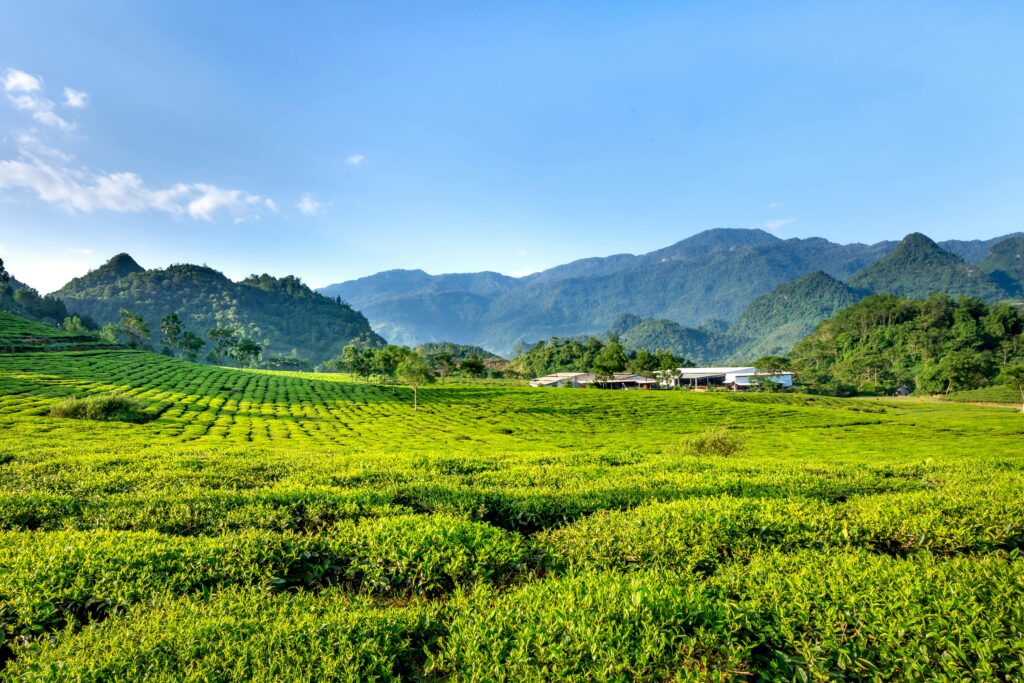
Nuwara Eliya is a Sri Lankan highland tea region at 6,200 feet with cool temperatures and mountain mist that slow leaf growth for concentrated flavor profiles.
Nuwara Eliya’s High-Altitude Tea Growing Environment
Nuwara Eliya sits in Sri Lanka’s Central Highlands at elevations between 1,200 and 1,900 meters, creating one of the world’s coolest tea-growing climates. The region receives 2,028 to 2,550 mm of annual rainfall, with temperatures ranging from 8.3°C to 22.2°C throughout the year. While traditionally known for producing delicate black teas, this high-altitude district now hosts emerging matcha cultivation that leverages its unique environmental conditions. The cool, misty climate and fertile mountain soils create growing conditions that share surprising similarities with Japanese tea regions.
Climate Characteristics That Influence Tea Growth
The cool temperatures at Nuwara Eliya’s elevation slow tea plant growth considerably compared to lowland regions. This slower development allows leaves to accumulate higher concentrations of amino acids and chlorophyll, compounds that determine tea quality and flavor complexity. Daily temperature fluctuations between cool mornings and mild afternoons create stress responses in Camellia sinensis plants that enhance their biochemical composition. The region’s abundant rainfall and persistent mist maintain consistent moisture levels, eliminating the need for irrigation on most estates. These conditions mirror aspects of Japan’s Uji and Shizuoka regions, where matcha production thrives at elevations between 200 and 800 meters but with warmer base temperatures.
Soil and Cultivation Practices
Nuwara Eliya’s well-drained mountain soils provide the nutrient profile tea bushes need for healthy growth. Many estates practice organic and biodynamic farming methods that preserve soil health without synthetic inputs. Traditional cultivation here focuses on hand-plucking using the two-leaves-and-a-bud method, which selects only the youngest, most tender growth. For matcha production specifically, some growers have adapted Japanese shading techniques, covering tea plants with cloth or nets 20 to 30 days before harvest. This shading process boosts chlorophyll content and increases L-theanine levels, creating the vibrant green color and umami flavor profile that defines quality matcha. The adaptation represents a departure from Nuwara Eliya’s open-field black tea traditions but capitalizes on the region’s natural advantages.
Processing and Quality Potential
Ceylon matcha from Nuwara Eliya requires specialized processing beyond what traditional black tea production demands. After shade-growing and harvest, leaves must be steamed to halt oxidation, then dried and stone-ground into fine powder. The region’s high-altitude leaves naturally develop smaller sizes and concentrated flavors, characteristics that translate well to matcha when properly processed. Teas from this area typically show bright, floral notes with mild astringency and a golden-hued liquor when brewed as leaf tea. When processed as matcha, these same leaves can produce a powder with distinctive flavor profiles that differ from Japanese varieties while maintaining smooth texture and natural sweetness. The cooler growing temperatures contribute to amino acid development that supports the creamy mouthfeel matcha drinkers value, though direct biochemical comparisons with Japanese matcha remain limited in published research.
Nuwara Eliya sits at roughly 1,800 meters (about 6,000 feet) above sea level, making it Sri Lanka's highest tea-growing region. This altitude creates a unique microclimate where tea plants grow more slowly due to cooler temperatures and reduced oxygen levels. Slower growth means leaves develop higher concentrations of amino acids like L-theanine and chlorophyll—both critical for matcha's sweet, umami-rich flavor profile.
The cool, misty conditions at this elevation also protect plants from excessive sun exposure, naturally moderating photosynthesis rates. This allows leaves to maintain the tender texture and vibrant green color that matcha production demands.
Temperatures in Nuwara Eliya can drop to freezing at night, especially during the dry season between February and April. These cold nights, combined with warmer daytime temperatures, create significant diurnal temperature variation that stresses tea plants in a beneficial way. The stress response triggers plants to produce more polyphenols and aromatic compounds as protective mechanisms.
However, frost poses real risks. Tea plants can suffer damage when temperatures dip below freezing, particularly young shoots destined for matcha. Growers need to monitor weather patterns carefully and sometimes delay harvests after particularly cold nights to avoid damaged leaves.
Rainfall is moderate throughout most of the year, with the region experiencing high humidity and frequent misty precipitation typical of central highland climates. That said, there's a notable dry season from February to April when rainfall decreases substantially. This seasonal variation actually benefits tea cultivation by creating natural stress periods that can enhance flavor complexity.
For matcha specifically, consistent moisture is important during the shading period before harvest. The misty conditions help maintain humidity around shaded plants, preventing leaf dehydration while chlorophyll concentrations increase.
The combination of high altitude, cool temperatures, and slow leaf growth produces teas with remarkably light and aromatic characteristics. Nuwara Eliya teas—often called the Champagne of Ceylon Teas—typically show:
- Pale golden to light green infusions
- Fruity and floral aromatic notes
- Delicate, refreshing taste without astringency
- Subtle complexity from extended leaf maturation
For matcha, these same conditions translate to powder with bright color, smooth texture, and nuanced sweetness rather than bitter or grassy notes common in lower-elevation teas.
January to February represents the prime quality harvest period in Nuwara Eliya. During these months, temperatures are cool but stable, and plants have recovered from any dry season stress. Leaves harvested during this window tend to have the most concentrated flavors and optimal tenderness for stone-grinding into matcha powder.
The timing also avoids the dry season that follows in late February through April, when reduced rainfall can affect leaf quality. Growers typically plan shading schedules to align with this optimal harvest window, covering plants 20-30 days before picking to maximize chlorophyll and amino acid content.