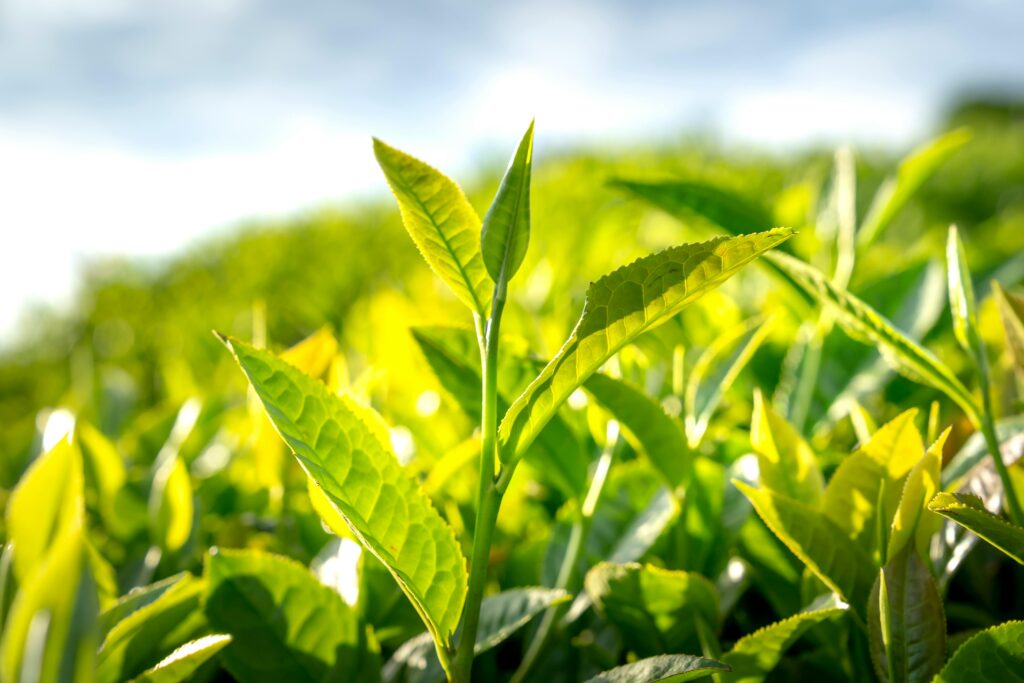
Lin'an is a tea-growing district in Hangzhou, Zhejiang Province where shade-grown matcha uses mountain terroir and organic methods for distinct flavor profiles.
Lin’an Matcha Production and Its Unique Characteristics
Lin’an, a district nestled in the Tianmu Mountains near Hangzhou, Zhejiang Province, holds the distinction of being China’s birthplace of organic tea production. Since 1990, this mountainous region has developed a matcha industry that combines traditional Chinese tea cultivation with modern organic farming practices. The area’s subtropical monsoon climate, acidic red soils, and elevations ranging from 300 to 1,556 meters create conditions that rival Japan’s famous tea-growing regions.
Geographic Advantages and Growing Conditions
The Tianmu Mountain area provides Lin’an with natural advantages for tea cultivation. Dense forest cover creates a stable microclimate with high humidity and moderate temperatures throughout the year. Red soils dominate elevations below 600 meters, while yellow soils appear between 600 and 1,200 meters, both offering the acidic pH levels tea plants prefer. The region receives abundant rainfall during summer months, and the subtropical marine monsoon climate produces four distinct seasons. These environmental factors contribute to slower leaf growth, which concentrates amino acids and creates the sweet, umami-rich flavor profile matcha drinkers seek.
Cultivation and Processing Methods
Lin’an producers use pre-harvest shading techniques similar to Japanese tencha cultivation, covering tea plants 20 to 30 days before harvest to boost chlorophyll and theanine content while reducing bitter polyphenols. After hand-picking the youngest leaves, processors steam them for approximately 2 minutes to halt oxidation and preserve the vibrant green color. The leaves are then dried, carefully sifted to remove stems and veins, and ground into fine powder. Companies like Hangzhou Lin’an Oriental Tea Applied Technology Research Institute, established in 1992, operate facilities spanning 133 hectares of certified organic farmland. The region’s focus on organic certification under China’s GB/T 19630 standard, along with EU and USDA compliance, ensures strict controls on pesticides and fertilizers.
Distinguishing Features of Lin’an Matcha
Lin’an matcha exhibits characteristics that set it apart from both Japanese varieties and other Chinese green teas. The powder displays a bright jade-green hue with high chlorophyll content, and it’s known for a distinctive seaweed-like aroma that appeals to Chinese palates. The flavor profile tends toward mellow sweetness with less astringency than some Japanese ceremonial grades, reflecting the region’s unique terroir. By 2019, Hangzhou’s broader tea production reached 31,000 tons annually, with Lin’an contributing a portion of the organic matcha segment. The district’s tea operations range from small family farms to large-scale enterprises with factory buildings covering 6,000 square meters, equipped with specialized grinding equipment that maintains the delicate flavor compounds during processing.
Lin'an sits in the Tianmu Mountains of western Zhejiang Province, where nature created perfect conditions for growing tea. The region gets about 1500mm of annual rainfall and maintains an average temperature of 15.3°C. What's really special here is the 77.8% forest coverage that surrounds the tea plantations.
The monsoon climate brings synchronized rain and heat during spring and summer, exactly when tea plants need it most. Plus, the mountainous terrain provides natural shading that helps tea leaves accumulate more amino acids and chlorophyll. This clean, protected environment in national nature reserves means less pollution and better quality leaves for grinding into matcha powder.
Both regions use shading cultivation to boost theanine and chlorophyll, but that's where the similarities end. Lin'an pioneered organic tea production in China starting in 1990, giving their matcha a distinct ecological advantage. The Tianmu Mountains' unique terroir and Chinese tea cultivars like Zhongcha 108 and Longjing 43 create a different flavor profile.
Japanese regions like Uji focus on ceremonial matcha with a smoother umami taste, while Lin'an matcha tends to have a richer, slightly different character. The processing methods and cultural approaches vary too, though both produce high-quality stone-ground tea powder.
Lin'an farms use pre-harvest shading and covering technology to manipulate the leaf chemistry before harvest. This increases theanine content while reducing polyphenols, which means more umami and less astringency in the final powder.
The organic approach includes:
- Scientific fertilizer management without synthetic chemicals
- Comprehensive pest control using natural methods
- Ecological protection practices that maintain biodiversity
- Soil management to prevent acidification
After harvest, leaves are steamed to stop enzyme activity, dried, and ground into fine powder using traditional methods.
Lin'an has over 1200 years of tea planting history, but the modern matcha and organic tea story started in 1990. That's when the first organic tea base was established and certified by international agencies like SKAL from the Netherlands. This made Lin'an the birthplace of organic tea in China.
The certified organic tea area grew from 270 hectares in 2004 to 730 hectares by 2015. Research institutions and cooperatives developed throughout the 1990s, helping refine the cultivation and processing methods that now produce Lin'an's distinctive matcha.
Lin'an farmers cultivate specific tea varieties selected for their suitability to shading and matcha processing. Zhongcha 108 (ZC108) and Longjing 43 are two main cultivars adapted to the region's conditions. These aren't the same as Japanese varieties like Tencha—they're Chinese cultivars that thrive in the Tianmu Mountains' climate and soil.
The selection focuses on plants that develop desirable biochemical profiles under shade, with good amino acid content and the right balance of compounds for grinding into smooth, flavorful powder.
Lin'an earned this title by pioneering organic tea development starting in 1990, becoming the first region in China to establish internationally certified organic tea bases. The combination of pristine mountain environment, high forest coverage, and commitment to ecological farming made it the perfect testing ground.
The region developed comprehensive organic cultivation practices that emphasized natural pest control, biodiversity, and soil health—all while maintaining traditional tea production knowledge spanning over 1200 years. This blend of ancient wisdom and modern organic certification standards set the template for organic tea production across China, including the matcha that's now grown there.