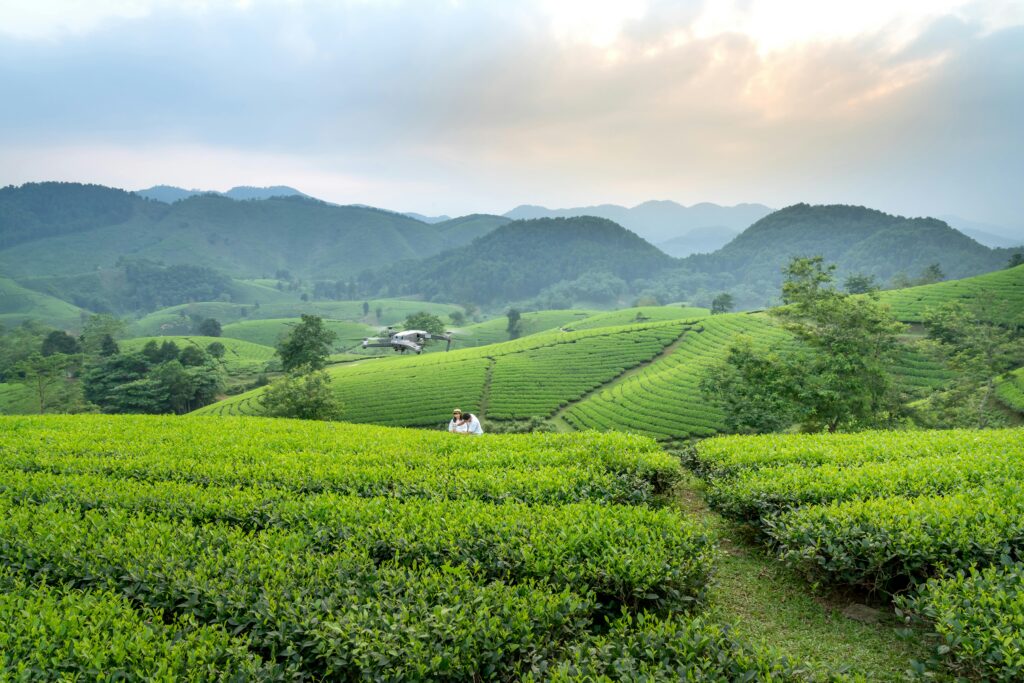
Hadong is South Korea's oldest tea region with 1,200 years of history, producing premium green tea through traditional hand-harvesting and natural methods.
Hadong Matcha Traditions And Growing Practices Explained
Hadong is a mountainous region in South Gyeongsang Province, South Korea, where tea cultivation began around 828 AD during the Silla Dynasty. Recognized by the FAO as a Globally Important Agricultural Heritage System in 2017, this area produces about 20% of Korea’s total tea output using methods that have remained largely unchanged for over 1,200 years. What sets Hadong apart is its commitment to natural cultivation in wild mountain ecosystems rather than managed plantation fields.
Mountain-Based Growing Conditions
Tea plants in Hadong grow naturally between rocks and valleys along the slopes of Jirisan Mountain, where 91% of the terrain is steep mountainous land. The Hwagae Stream and Seomjin River create a microclimate with abundant rainfall, frequent morning fog, and mineral-rich soil that shapes the tea’s flavor profile. Unlike the orderly rows you’ll find in Japanese tea plantations, Hadong’s tea plants spread organically through insect and wind pollination. This creates genetic diversity unique to the region, with each plant adapting to its specific rocky niche.
Traditional Cultivation Techniques
Farmers in Hadong practice gaengsin, a pruning method that shapes tea trees into vertical or oval forms to maximize growth in the mountainous terrain. Weed control follows the pulbibae technique, where workers manually pull weeds by hand and apply organic manure mulch to prevent soil acidification and moisture loss. These low-impact methods preserve the surrounding forest biodiversity while maintaining tea quality. Hand-harvesting happens in early spring, with pickers carefully selecting budding leaves like the prized Woojeon first flush. About 801 out of 951 households in Hwagae-myeon engage in tea farming, passing down cultivation knowledge through family lines and monastic traditions.
Processing And Cultural Heritage
After harvest, leaves undergo traditional hand-roasting in iron pots, a method documented in historical Korean texts and preserved by local monks. This produces teas with distinctive aromatic profiles shaped by both the mountain terroir and artisanal processing. The region’s tea culture intertwines with folk songs, poetry, and social practices that date back to when Hadong tea served as royal tribute during the Goryeo and Joseon Dynasties. The area produces approximately 1,700 kg of tea annually in Hwagae-myeon alone, accounting for 87% of Hadong’s total output. Recognition as Korea’s Important Agricultural Heritage System in 2015 and global designation two years later highlights how these sustainable practices maintain both cultural identity and environmental balance.
What Makes Hadong Tea Distinct
The natural growing conditions create teas with complex flavor layers you won’t find in mechanized production systems. Tea plants develop deeper root systems navigating rocky soil, accessing minerals that contribute to taste depth. The morning mist acts as natural shade, similar to Japanese kabuse techniques but without artificial covering. This environment produces fresh, aromatic teas that reflect 1,200 years of genetic adaptation and human stewardship. While Hadong farmers have begun exploring powdered tea production, their methods remain rooted in wild cultivation principles rather than the controlled shade-growing typical of Japanese matcha farms.
Hadong sits at the base of Jiri Mountain in South Korea, where steep terrain and the Seomjin River create a one-of-a-kind growing environment. Tea plants thrive in valleys and even rock crevices, benefiting from misty mornings and mineral-rich soil. The mountainous landscape—covering 91% of the region—made traditional rice farming difficult, which pushed locals toward tea cultivation over 1,200 years ago. This challenging terrain actually enhances tea flavor while preserving biodiversity.
Hadong farmers use minimal artificial intervention, letting tea plants grow naturally within the mountain ecosystem. They practice gaengsin, a technique that shapes tea trees vertically or into oval forms to optimize growth. Here's what sets it apart:
- Hand weeding using the pulbibae method instead of chemicals
- Pruned branches spread across fields to prevent soil acidification
- Individual leaf picking by hand to preserve quality
- Natural manure applied after grass cutting for nutrients
This contrasts sharply with intensive monoculture plantations that rely on mechanization and synthetic inputs.
Tea cultivation in Hadong dates back over 1,200 years to 828 AD, when King Heungdeok of the Silla Dynasty ordered tea planting at Jiri Mountain after envoy Daeryum-gong brought seeds from China's Tang Dynasty. Hadong tea became so prized that it was used in royal ceremonies and sent as tribute to the court during the Goryeo and Joseon dynasties. Monks and local families preserved these traditions through generations, maintaining the same cultivation and processing methods that make Hadong tea unique today.
No, it's quite different. Hadong relies on natural mountain shading rather than the elaborate covering systems used in Japanese matcha cultivation. Tea plants grow in valleys and among rocks where the mountainous terrain provides organic shade. Japanese producers use tarps or screens to block 80-90% of sunlight for weeks before harvest, boosting chlorophyll and amino acids for that signature umami flavor. Hadong's approach emphasizes working with the natural environment instead of controlling it.
Harvest starts in early spring with delicate teas like Woojeon, continuing through different seasons to produce various tea types. Every leaf is picked individually by hand—no mechanical harvesters here. This labor-intensive method maintains the quality that Hadong tea is known for. The community produces around 1,700 kg of tea annually, with each harvest carefully processed using traditional hand-roasting in iron pots to retain aroma and taste.
While you can adopt some practices, replicating Hadong's system elsewhere is tough. The methods evolved specifically for Jiri Mountain's steep, barren terrain over 1,200 years. You'd need similar mountainous geography, the right climate with misty conditions, and mineral-rich soil. Plus, Hadong's tea plants have unique genetic diversity adapted to that specific environment. That said, the principles—minimal intervention, hand cultivation, working with natural terrain—can inform sustainable tea growing anywhere if you adapt them to your local conditions.