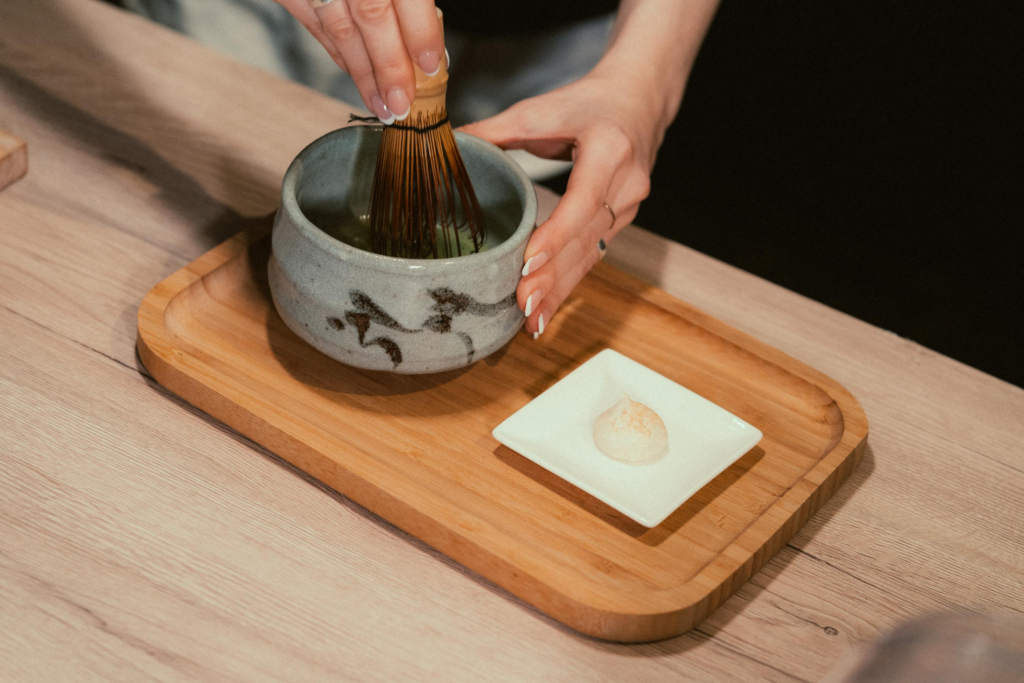
Aroma-tachi is a Japanese sensory term in matcha evaluation describing how fragrance rises, emerges, and develops during preparation and tasting. Combining “aroma” with Japanese “tachi” (立ち), meaning standing or rising, it concerns scent lifting from the bowl, intensifying during whisking, or becoming apparent as tea approaches the lips.
Defining Aroma-tachi in Matcha Terminology
Aroma-tachi is a Japanese sensory term used in matcha evaluation to describe the rising or emerging quality of fragrance. The term combines “aroma” (fragrance) with “tachi” (立ち), meaning “standing” or “rising,” to capture how a matcha’s scent presents itself during preparation and tasting. This concept helps matcha enthusiasts and professionals articulate the dynamic nature of matcha’s aromatic profile.
Unlike static aroma descriptions, aroma-tachi emphasizes the movement and evolution of fragrance. It describes how the scent lifts from the bowl, intensifies with whisking, or emerges as the tea reaches your lips. This dynamic quality distinguishes exceptional matcha from ordinary grades.
The Components of the Term
The word breaks down into two meaningful parts that reveal its sensory purpose. “Aroma” refers to the fragrance or scent characteristics, while “tachi” conveys the action of rising or standing upward. Together, they describe the vertical dimension of matcha’s scent experience.
This terminology reflects the Japanese tea culture’s sophisticated approach to sensory evaluation. Rather than simply noting whether an aroma exists, aroma-tachi captures how that fragrance behaves and presents itself to the drinker.
How Aroma-tachi Manifests in Matcha
The rising aroma quality becomes apparent at specific moments during matcha preparation and consumption. Each stage offers opportunities to evaluate this characteristic and understand your matcha’s aromatic strength.
Key Moments to Assess Aroma-tachi
- Opening the container – The initial burst of fragrance when you first access the powder
- Adding hot water – How the steam carries the aroma upward from the bowl
- During whisking – The intensification and release of volatile aromatic compounds
- Bringing bowl to lips – The concentrated fragrance that greets you before sipping
- After swallowing – The retronasal aroma that rises through the nasal passage
Characteristics of Strong Aroma-tachi
Matcha with excellent aroma-tachi displays several distinguishing features. The fragrance doesn’t simply exist—it actively rises and fills the space around your bowl. You’ll notice the scent without needing to bring your nose close to the tea.
Premium matcha typically shows immediate and sustained aroma-tachi. The fragrance emerges quickly when water hits the powder and maintains its presence throughout the drinking experience. Lesser grades may have weak or fleeting aromatic presence.
Evaluating Quality Through Aroma-tachi
Professional matcha buyers and tea sommeliers use aroma-tachi as one indicator of overall quality. The strength and character of the rising aroma correlate with factors like freshness, cultivation method, and processing quality. This makes it a valuable assessment tool for both vendors and consumers.
What Strong Aroma-tachi Indicates
- Recent harvest and proper storage conditions preserving volatile compounds
- Shade-growing practices that concentrate aromatic precursors in the leaves
- Careful stone-grinding that doesn’t overheat and damage delicate aromatics
- Higher chlorophyll and amino acid content contributing to fresh, vegetal notes
Common Aroma-tachi Profiles
Different matcha grades and styles exhibit distinct aroma-tachi characteristics. Ceremonial grade matcha often presents bright, fresh, and vegetal rising aromas with notes of steamed greens and umami richness. The fragrance lifts cleanly and persistently.
Culinary grades typically show more subdued aroma-tachi. The rising quality may be less pronounced, and the aromatic notes tend toward grassier or more astringent profiles. This doesn’t make them inferior for their intended baking and cooking purposes.
Aroma-tachi Versus Other Aromatic Terms
The matcha vocabulary includes several aroma-related concepts that work together to create a complete sensory picture. Understanding how aroma-tachi differs from these related terms helps you develop more precise tasting skills.
Kaori (香り) refers to the general fragrance or scent quality without emphasizing movement. Nioi (匂い) describes smell more broadly, including both pleasant and unpleasant odors. Aroma-tachi specifically captures the dynamic, rising nature of how the fragrance presents itself.
Practical Application for Matcha Drinkers
When evaluating matcha, pay attention to how actively the aroma reaches you. Does the fragrance remain flat in the bowl, or does it rise to meet your senses? This distinction helps you identify matcha with better preservation of volatile aromatic compounds.
Try comparing two different matchas side by side. Notice which one demonstrates stronger aroma-tachi—the fragrance that actively rises and fills the air around your bowl. This comparison develops your ability to detect quality differences through aromatic evaluation.
Factors Affecting Aroma-tachi
Several variables influence how pronounced a matcha’s aroma-tachi will be. Understanding these factors helps you optimize your preparation technique and storage practices to preserve this desirable quality.
Temperature and Preparation
Water temperature significantly impacts aromatic release. Hotter water (around 80°C/176°F) volatilizes aromatic compounds more aggressively, creating stronger aroma-tachi. Cooler water produces gentler aromatic emergence but may not fully showcase the tea’s potential.
Whisking vigor also matters. Energetic whisking incorporates air and agitates the liquid, helping aromatic molecules escape the surface and rise. Gentle stirring produces less pronounced aroma-tachi even with excellent matcha.
Storage and Freshness
Matcha loses aromatic compounds over time, especially when exposed to air, light, or heat. Fresh matcha stored in airtight, opaque containers in cool conditions maintains robust aroma-tachi. Oxidized or stale matcha shows diminished rising aroma regardless of its original quality.
Once opened, matcha begins losing its aromatic intensity. The most vibrant aroma-tachi appears in the first few weeks after opening. This is why smaller package sizes often provide better aromatic experiences for home consumers.
Developing Your Aroma-tachi Awareness
Training yourself to notice and evaluate aroma-tachi enhances your overall matcha appreciation. This skill develops through mindful attention during your regular matcha practice.
Exercises to Improve Detection
- Pause at each preparation stage to consciously notice how the aroma presents itself
- Compare the same matcha prepared with different water temperatures
- Evaluate matcha immediately after opening versus two weeks later
- Practice describing the intensity and character of the rising aroma in specific terms
Keep simple notes about the aroma-tachi of different matchas you try. Over time, you’ll build a personal reference library that helps you identify quality indicators and personal preferences more quickly.
Key Takeaways About Aroma-tachi
Aroma-tachi represents the dynamic, rising quality of matcha’s fragrance—how actively and persistently the aroma presents itself during preparation and consumption. This concept goes beyond simple scent description to capture the movement and intensity of aromatic experience. Strong aroma-tachi indicates fresh, well-processed matcha with preserved volatile compounds.
Developing sensitivity to aroma-tachi enhances your ability to evaluate matcha quality and optimize your preparation technique. Pay attention to how the fragrance rises at different stages, from opening the container through the final sip. This awareness deepens your connection to matcha’s sensory complexity and helps you make more informed purchasing decisions.
Related reading: how to spot high-quality matcha.
Aroma-tachi is a Japanese sensory term describing the rising or emerging quality of matcha fragrance. It focuses on how scent behaves during preparation and tasting, including how it lifts from the bowl, intensifies during whisking, and becomes apparent as the tea approaches the lips, rather than merely identifying which aromas are present.
Assess aroma-tachi when opening the matcha container, adding hot water, whisking, bringing the bowl toward your lips, and after swallowing. These stages reveal the initial fragrance burst, the aroma carried by steam, the release of volatile compounds during whisking, the concentrated scent before sipping, and the retronasal aroma afterward.
Kaori refers generally to fragrance or scent without emphasizing its movement. Nioi is a broader word for smell that can include pleasant and unpleasant odors. Aroma-tachi is more specific: it describes the dynamic way matcha fragrance rises, emerges, and presents itself to the drinker during preparation and consumption.
Hotter water releases volatile aromatic compounds more aggressively, creating stronger aroma-tachi, while cooler water produces gentler aromatic emergence. Energetic whisking also incorporates air and agitates the tea, helping aromatic molecules escape the surface and rise. Gentle stirring can therefore produce less pronounced aroma-tachi, even when the matcha itself is excellent.
Store matcha in an airtight, opaque container under cool conditions to protect its rising fragrance. Exposure to air, light, or heat causes aromatic compounds to diminish over time. Fresh, properly stored matcha maintains stronger aroma-tachi, whereas oxidized or stale powder can show a reduced rising aroma regardless of its original quality.