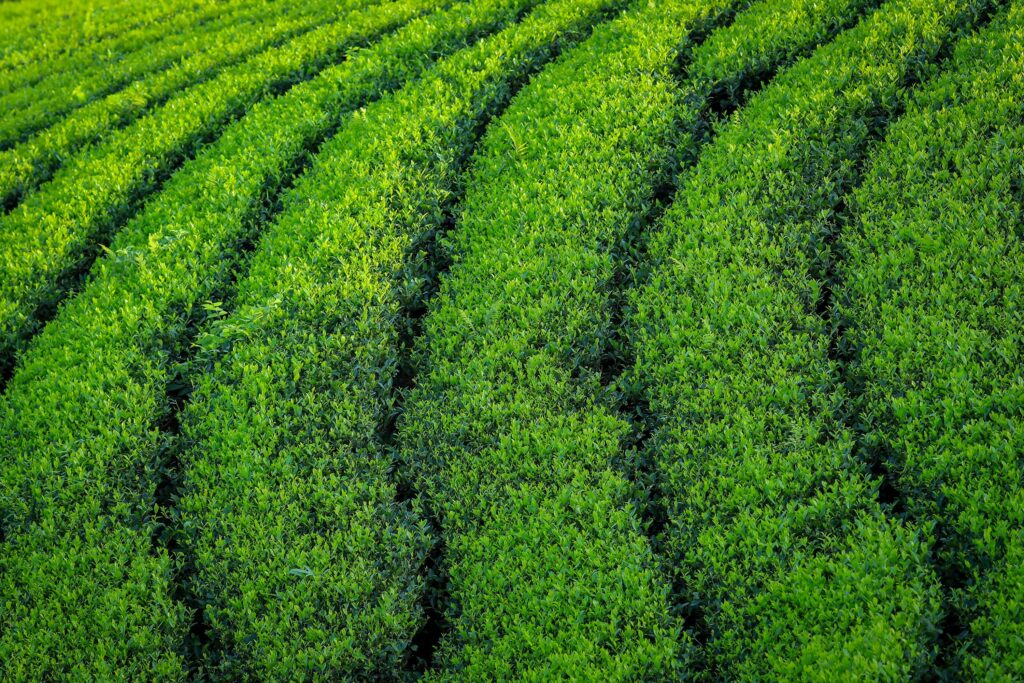
Chiran is a matcha-producing region in Kagoshima, Japan, where volcanic soils and deep-steaming techniques create matcha with rich umami and vibrant color.
{“”question””:””What makes Chiran’s cultivation practices sustainable?””
Chiran sits in Minamikyushu City, Kagoshima Prefecture, on the southwestern tip of Kyushu island. The region nestles between the Pacific Ocean and steep mountains, directly under the shadow of active volcanoes like Mount Sakurajima.
This geography creates fertile volcanic soil enriched with ash—including Kuroboku, Kuroniga, and Akahoya soil types. These provide excellent drainage and acidity that tea plants love. The volcanic minerals contribute to matcha's distinctive flavor profile, adding earthy notes and mineral richness you won't find in other regions. Plus, the warm, humid climate with steady ocean winds allows Chiran to harvest the earliest first flush tea in Japan, starting in March.
Tea plants destined for Chiran matcha are shaded for 3 to 7 weeks before harvest, blocking up to 90% of sunlight. This process triggers the plants to produce more chlorophyll and amino acids, particularly L-theanine, which creates that signature sweet umami taste.
Farmers often use the Jikagise method to balance the region's intense sunlight. The shading period is typically shorter than Uji's six-week approach, but it's calibrated for Chiran's specific climate conditions. The result? A bright green color and creamy, mellow flavor that sets Chiran matcha apart.
Chiran matcha offers a milder, creamier umami with nutty and earthy undertones. You'll notice a natural sweetness balanced by gentle bitterness, plus a slight minerality from the volcanic soil.
- Uji matcha typically has more pronounced vegetal or marine notes with a mellow, traditional profile
- Nishio matcha leans toward floral sweetness with a deep green color, often used in lattes and baking
- Chiran matcha stands out with its early harvest freshness and mineral-rich complexity from volcanic terroir
The shorter shading period and organic cultivation in Chiran create a distinct regional expression that's smooth yet vibrant.
Chiran farmers cultivate several cultivars, each bringing unique characteristics. Yabukita is the most common, offering balanced flavor. Yutaka Midori thrives in warm climates with rich aroma and high catechin content. Sae Midori delivers bright sweetness with elevated theanine levels. The rare Asatsuyu—nicknamed "natural Gyokuro""—provides fragrant aroma and thick sweetness.
This diversity lets producers blend cultivars to create matcha with layered complexity you can't achieve with single-variety production.