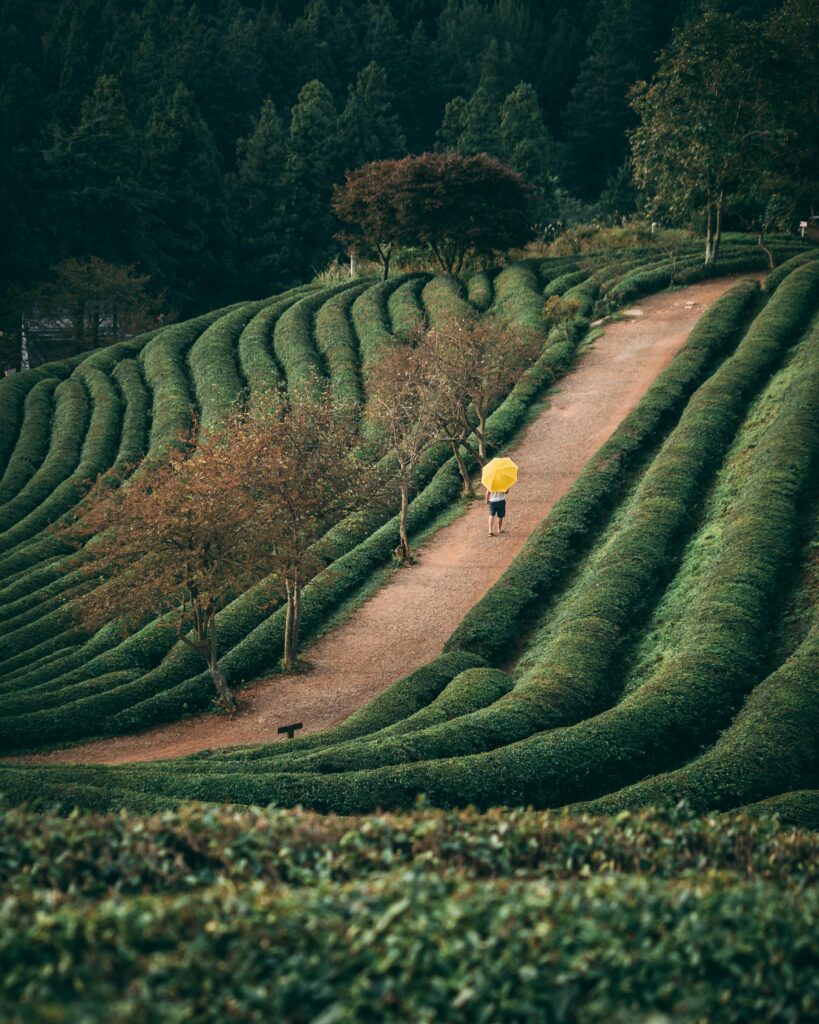
Boseong is South Korea's largest tea region, producing 40% of the nation's tea on terraced hillsides with mild climate and sea breeze perfect for matcha.
Boseong Matcha and Its Unique Growing Conditions
Boseong County in South Jeolla Province stands as Korea’s largest tea-producing region, accounting for 46.4% of the country’s green tea output. Located along the southern coast of the Korean peninsula, this area has cultivated tea for nearly 1,600 years. The region’s terraced plantations, rolling across mountain slopes up to 100 hectares in size, create an environment where climate, soil, and topography converge to produce teas with distinctive flavor profiles.
Climate and Coastal Influence
Boseong’s climate delivers exactly what tea plants need. Average annual temperatures sit at 12.6°C, with warm summers reaching 27.8°C and mild winters dropping to just 0.5°C in January. The region receives 1,647 mm of rainfall yearly, distributed consistently throughout growing seasons. What really sets this area apart is the morning fog that rolls in from the nearby coast. These mists blanket the tea fields, protecting leaves from harsh sunlight and maintaining steady moisture levels. This natural canopy helps develop the smooth, naturally sweet character that Boseong teas are known for.
Soil Composition and Terrain
The mountainous landscape provides well-drained sandy loam soil that tea roots thrive in. This soil type prevents waterlogging while retaining enough moisture and nutrients for healthy growth. The terrain’s natural drainage, combined with the fertile composition, contributes directly to the tea’s distinctive taste and aroma. Plantations cascade down hillsides in carefully maintained terraces, a design that started appearing widely in the 1970s. These terraced farms allow for efficient water runoff and create microclimates within the larger plantation areas. The elevation variations across these slopes mean different sections of the same farm can produce subtly different leaf characteristics.
Production Scale and Quality Standards
Between 1997 and 2005, Boseong’s tea cultivation area expanded from 325 hectares to 885 hectares, with production jumping from 505 tonnes to 1,246 tonnes. The region now represents 29.3% of Korea’s total green tea acreage. In 2002, Boseong became the first Korean product to receive geographical indication status, which brought standardized quality controls across 18 main producers. Farm sizes range from small operations under 2 hectares to large estates exceeding 100 hectares. Producers hold regular quality evaluation meetings and have adopted scientific cultivation methods alongside organic farming initiatives.
Flavor Profile and Terroir
The combination of coastal fog, balanced rainfall, specific soil composition, and mountainous terrain creates what tea professionals call terroir. Boseong teas typically present gentle, clean flavors with balanced astringency and subtle mineral notes. The natural sweetness comes through without heavy bitterness, a direct result of the protective morning mists and consistent growing conditions. When processed into matcha, these characteristics translate into a powder with smooth texture and refreshing taste. Compared to volcanic soils of Jeju or the high-altitude conditions of Jiri Mountain, Boseong’s sandy loam and coastal influence produce what many consider the classic Korean green tea flavor profile.
Boseong sits in South Jeolla Province where oceanic influences create a mild, humid environment with over 1,500mm of annual rainfall. The region gets frequent fog from nearby mountains and the South Sea, which naturally shades the tea plants and keeps soil moisture levels consistent.
Temperature ranges stay moderate year-round, averaging around 14°C, while warm sea breezes reduce frost risk during winter months. This combination allows tea bushes to develop slowly, concentrating amino acids and chlorophyll—exactly what you want for quality matcha production.
The terraced design isn't just for looks. Tea plants thrive on well-drained slopes between 10-40 degrees, and Boseong's mountainous terrain naturally provides this. The silty loam soil has a slightly acidic pH around 4.6-4.8, perfect for tea cultivation.
Hillside placement also creates microclimates where cool air settles at night and warm air rises during the day. This daily temperature variation—often around 15°C difference—helps develop the complex flavor profiles that distinguish Boseong matcha from teas grown on flat land.
Commercial tea farming took root here during the 1930s, and the Daehan Dawon Tea Plantation—established in 1957—became Korea's largest tea farm. Boseong's combination of favorable climate, skilled labor, and established infrastructure turned it into the country's tea capital.
The region benefits from:
- Expansive terraced fields that maximize growing space on hillsides
- Consistent weather patterns that support year-round cultivation
- Proximity to coastal areas providing natural fog and moisture
- Generations of tea farming expertise passed down locally
Yes. Tea bushes destined for matcha get covered with shade cloth for several weeks before harvest, blocking 70-90% of direct sunlight. This technique—borrowed from Japanese methods—boosts chlorophyll content and amino acids like L-theanine while reducing bitterness.
But here's what's interesting: Boseong already gets natural shading from mountain mist and ocean fog rolling through the valleys. Growers combine this environmental advantage with artificial shading to achieve the deep green color and umami-rich flavor that matcha drinkers look for.
Tea fields in Boseong aren't monocultures. Plants like bamboo, chestnut, and apricot trees grow alongside tea bushes, creating a forest-garden ecosystem. This biodiversity influences tea flavor through soil composition and microclimate effects.
The region follows pesticide-free farming practices, allowing beneficial insects, birds, and soil organisms to naturally control pests. Native tea varieties have adapted genetically over decades to these conditions, developing taproots that resist drought and frost while absorbing nutrients from the rich, rocky soil.
While Boseong has grown green tea commercially since the 1930s, matcha production intensified more recently as global demand increased. The region adapted traditional green tea cultivation to include shade-growing techniques specifically for powdered tea.
Today, growers harvest young leaves from shaded plants, steam them quickly to preserve color, then stone-grind them into matcha powder. The same environmental conditions that made Boseong perfect for green tea—acidic soil, fog, temperature swings—translate beautifully to matcha production when combined with proper shading protocols.